
A Homeowner’s Guide to Deck Glass Panels
Deck glass panels are a fantastic way to secure your outdoor space without sacrificing the view. Using panes of incredibly […]

Deck glass panels are a fantastic way to secure your outdoor space without sacrificing the view. Using panes of incredibly […]
Deck glass panels are a fantastic way to secure your outdoor space without sacrificing the view. Using panes of incredibly tough safety glass, they create a protective barrier that feels open, elegant, and modern.
It’s all about blending safety with style, giving your deck a high-end finish that lets in maximum light.
Picture yourself relaxing on your patio, looking out over your garden with a completely uninterrupted view. That’s the simple, powerful promise of a glass balustrade.
For homeowners all across the North of England, from the rolling Yorkshire Dales to the breezy coast in Hull, making the most of natural light and scenery is a huge priority. A glass railing system does away with traditional wood or metal spindles—which can often feel like a cage—and replaces them with a clean, almost invisible barrier.
This one change can completely transform how you use your outdoor space. It blurs the line between your home and the garden, making your deck feel bigger, brighter, and far more welcoming. It’s about holding onto those panoramic views you cherish while keeping everyone safe.
Opting for glass on your decking project is an investment in both looks and long-term function. The advantages are obvious from day one and add real value for years to come.
Here’s what you stand to gain:
To understand the full spectrum of ways glass can enhance your outdoor living area, you might find it useful to read about the various types of glass systems and materials available when transforming your outdoor space.
A glass balustrade for your deck might look elegantly simple, but it’s actually a precision-engineered system. Each component is carefully selected to work together, ensuring both beauty and strength. Getting to know these parts takes the mystery out of the process and helps you understand exactly what you're investing in.
Think of it like building a secure garden wall – every single piece, from the footings right up to the capping stones, is crucial for the final structure's integrity and look.
At the very bottom of any system, you have the structural supports. These are the unsung heroes doing all the heavy lifting, providing the strength and rigidity needed to keep everything safely in place.
You’ll generally come across two main approaches: a continuous base channel that the glass slots into for that seamless, 'frameless' appearance, or individual posts that the glass panels are secured to. The best choice often boils down to the look you're after and the specific layout of your decking.
This diagram highlights the key advantages a well-designed glass panel system can bring to your home.
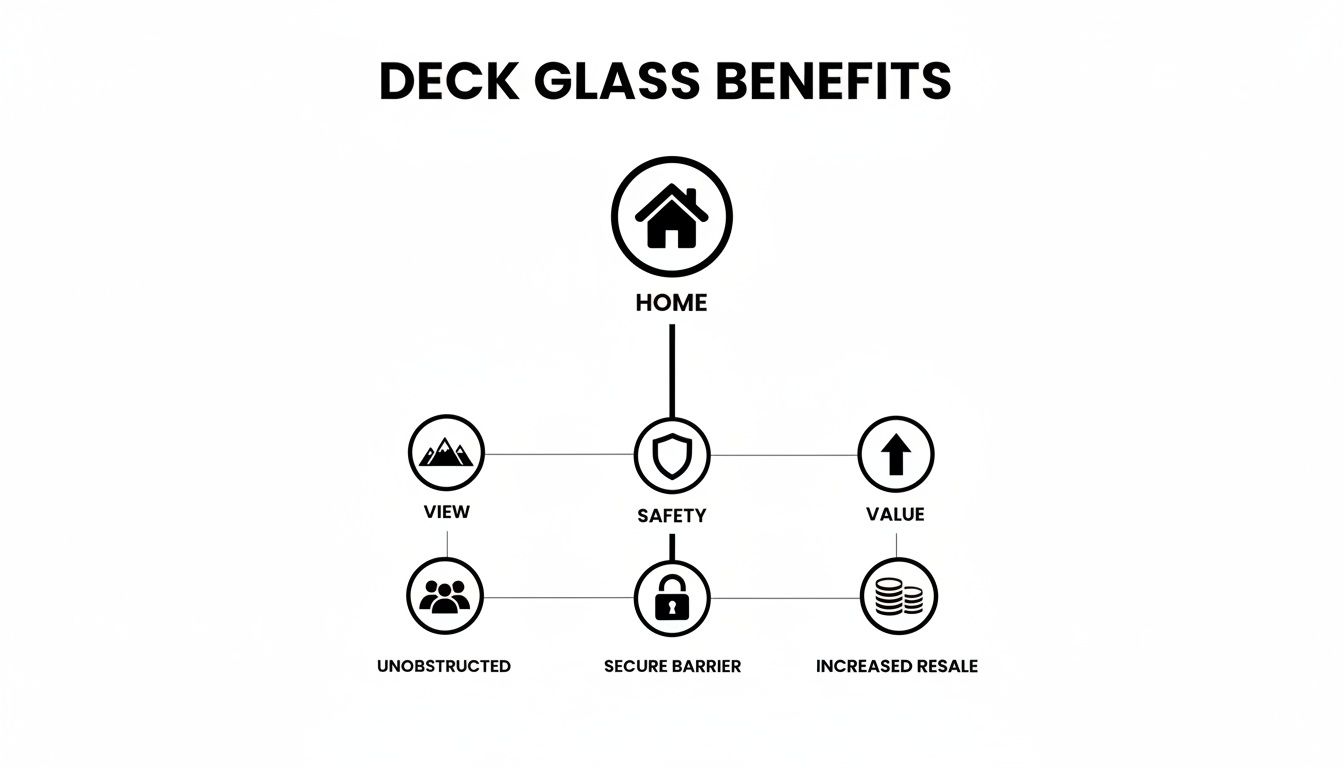
As you can see, the benefits go far beyond just a pretty view—they have a real impact on your home's safety and even its market value.
The glass itself is obviously the star of the show. But you can't use just any old glass. For balustrades, only specific types of safety glass are allowed by UK building regulations. This is a non-negotiable point designed to keep you, your family, and your guests safe.
Your two main options are toughened glass and toughened laminated glass, and they behave very differently.
Toughened Glass: This glass goes through an intense heating and rapid cooling process. The result? It's about four to five times stronger than standard glass. If it ever does break, it crumbles into small, dull, pebble-like chunks instead of dangerous, sharp shards.
Toughened Laminated Glass: This is the top tier for safety. It’s made by bonding two layers of toughened glass together with a tough, clear plastic interlayer (PVB). If a panel breaks, the interlayer holds all the fragments together, keeping the barrier in one piece and preventing a dangerous gap from opening up.
For many homeowners, especially those with high decks or balconies in exposed spots like the windswept Cumbrian coast, toughened laminated glass offers complete peace of mind. It guarantees that even if the worst happens, the barrier remains secure.
Choosing the right one depends on things like the height of your deck and local building codes. We've put together a handy table to help you compare them at a glance.
This table breaks down the key differences to help you decide which glass is right for your project, factoring in safety needs and location.
| Feature | Toughened Glass | Toughened Laminated Glass |
|---|---|---|
| Breakage Behaviour | Shatters into small, blunt cubes. | Cracks but stays in place, held by the interlayer. |
| Strength | Very strong, 4-5x standard glass. | Extremely strong, with two toughened layers. |
| Safety Level | Good. Prevents sharp-edged shards. | Excellent. Maintains a physical barrier after breaking. |
| Common Use | Ground-level decks, internal partitions. | Raised decks, balconies, 'fall from height' areas. |
| Cost | More budget-friendly. | Higher initial investment. |
Ultimately, both are fantastic safety products, but for any area where a fall is possible, laminated glass is the superior choice. You can learn more by reading our detailed guide on the differences between laminated and toughened glass.
Finally, you have the hardware that pulls it all together. These are the small but vital components that secure the glass and add those final stylistic flourishes.
These fixings include things like:
Navigating building regulations can feel a bit daunting, but they're really just a common-sense set of rules designed to do one thing: keep you and your family safe. When it comes to glass panels for your deck, these aren't just polite suggestions—they're legal requirements that make sure your balustrade is strong, secure, and absolutely fit for purpose.
For any homeowner in the North of England, whether you're in a new build in Cheshire or a period property in Harrogate, getting your head around the basics is essential. The regulations ensure that your glass system can stand up to everyday use without any risk of failure. It’s all about giving you peace of mind so you can simply enjoy your outdoor space.
One of the first things to get right is the balustrade height. This rule isn’t just a random number; it changes depending on how high your decking is from the ground, because a bigger drop means a bigger risk.
For a low-level deck or patio where the drop is less than 600mm (about two feet), you're not legally required to have a barrier. That said, many people still choose to install one to define the area and for the look of the thing.
It's when you get to elevated areas that the rules really kick in.
These heights are specifically designed to provide a safe, effective barrier that prevents anyone from accidentally falling over.
It's not just about height; a glass balustrade also has to be strong enough to handle specific forces, which are known as load requirements. Think of it as a strength test. The system must be able to take the weight of someone leaning heavily against it, or a group of people gathering nearby, without any part of it giving way.
These forces are measured in kilonewtons per metre (kN/m). For a standard single-family home, the balustrade needs to withstand a uniformly distributed line load of 0.74 kN/m. This ensures that the entire structure—from the base channel holding the glass to the very top edge—provides reliable protection.
In essence, these regulations guarantee that your beautiful, view-enhancing glass barrier does its most important job correctly. It's the clever engineering behind the elegance, ensuring style never compromises safety.
The market for these systems is growing steadily at 4.6% a year, largely because they perfectly align with UK building regulations. They offer fantastic safety without blocking those lovely views, making them ideal for modernising patios and balconies. Homeowners across Leeds, York, and Cheshire are increasingly choosing toughened or laminated glass, which provides robust protection while boosting property values. You can dive deeper into these trends by exploring the full industry report.
Meeting these load requirements has a direct impact on the type of glass you need. Using glass that’s too thin for the job is a major safety hazard and simply won't pass a building inspection. For instance, a frameless system on a high balcony in Cumbria will require much thicker, stronger glass than a posted system on a ground-floor patio in York.
For any area where there's a risk of a fall, toughened laminated glass is the go-to choice. Its layered construction means that even if one pane of glass breaks, the plastic interlayer holds everything together, so the barrier remains intact. This is why it’s non-negotiable for raised decks and balconies. For a more detailed breakdown, have a look at our dedicated guide on how building regulations for glass balustrades work.
Working with an expert means every component specified for your project is fully compliant, giving you complete confidence in its safety and longevity.
Now that we’ve navigated the technical bits and safety rules, we can get to the fun part: the look. Choosing the right deck glass panels is where your creative vision for your outdoor space really comes alive. This is your chance to create something that feels like a natural extension of your home and its surroundings, whether you're in Leeds, York, or nestled in the Lake District.
Glass is a fantastic material to work with because it's so adaptable. It can be used to make a bold, contemporary statement or create a subtle, almost invisible barrier that lets your view take centre stage. Think of the next few paragraphs as a lookbook to help you find the style that will turn your patio, terrace, or garden deck into a place you truly love.
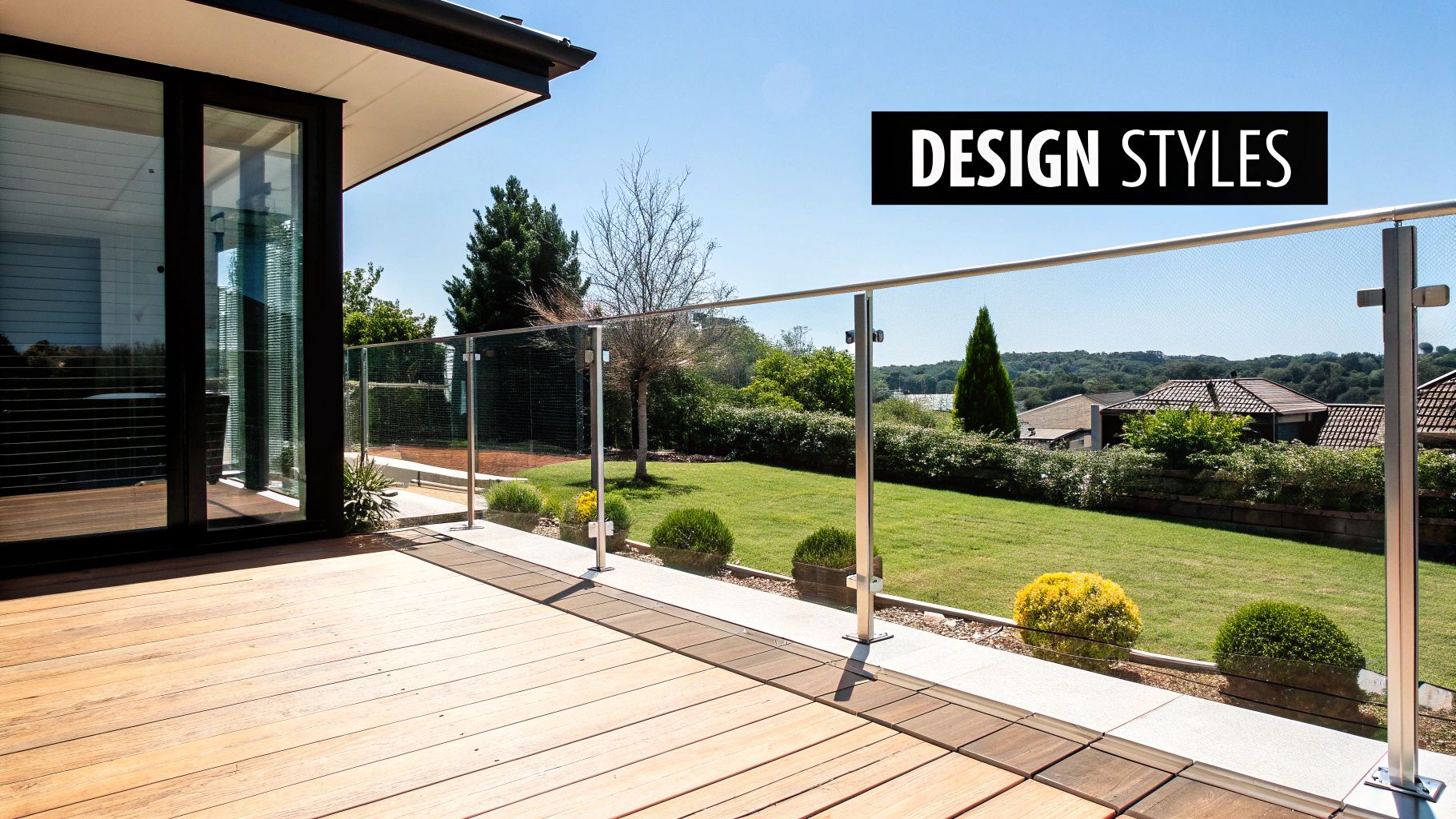
If what you're after is a seamless connection to your garden, then a frameless glass balustrade is the ultimate solution. This design hides the fixings completely, using a base channel to support the glass from below. The result? A stunning, uninterrupted wall of glass with no posts or clamps to get in the way.
The effect is pure minimalism. It’s the perfect choice for framing a gorgeous view of the Yorkshire Dales or making a compact city terrace in Harrogate feel much bigger and more open. By getting rid of all the visual clutter, you achieve an ‘infinity’ look that’s both luxurious and modern, flooding your space with light from every angle.
Perhaps you prefer a look with more definition and structure. In that case, a posted glass balustrade system offers a brilliant mix of classic and contemporary design. With this style, the glass panels are secured between sturdy posts, which can be made from materials like stainless steel or powder-coated aluminium.
This approach gives a clear sense of boundary and security without sacrificing transparency. It's a great way to echo the architectural lines of your home. For instance, sleek stainless steel posts are a natural fit for a modern property, while posts with a matte black finish can create a striking, industrial-chic contrast against traditional brickwork.
The beauty of a posted system is how adaptable it is. You can bring in different materials and finishes to customise the final look, matching it to your home's unique character without losing that open, airy feeling that only glass can provide.
It’s often the small details that make the biggest difference. The finish you choose for your hardware—the clamps, handrails, and posts—is crucial for tying the whole design together.
Here are a few popular options to consider:
As you explore the aesthetic possibilities, looking at different online design galleries can really help you nail down your perfect design style. For more focused inspiration on glass systems, have a look at our gallery of balustrade ideas for your deck to see real-world examples.
Trying to figure out the cost of a glass balustrade can feel a bit like asking, "how long is a piece of string?" While a simple price-per-metre figure might seem helpful, it rarely tells the whole story. The final investment really comes down to a few key decisions you’ll make along the way.
Getting a handle on these factors from the start means you can plan with confidence and avoid any unwelcome surprises when the final quote arrives. It’s all about understanding how your choices in materials, design, and the specifics of your space all add up.
When we put together a quote, we’re essentially looking at three core components. How these three interact is what really shapes your budget.
Here’s a breakdown of what drives the price:
It’s easy to get focused on the upfront cost, but a quality glass balustrade is one of those home improvements that keeps paying you back. Think about it – unlike timber railings that need sanding and staining every year, glass just needs a quick clean to look as good as new.
That durability saves you real money and effort over time. But beyond the low maintenance, a well-designed glass system is a huge visual upgrade. It brings a clean, modern feel to your property that can seriously boost its kerb appeal.
A modern glass balustrade isn't just an expense; it's an investment in your property. It elevates your home's appearance, requires minimal upkeep, and delivers lasting value that you can enjoy for years.
In fact, property developers have seen that these kinds of modern upgrades can lead to 20-30% uplifts in property value. It's a smart move for homeowners and facilities managers in residential blocks across Yorkshire and Cumbria. You can read the full research on the UK balustrade market to see the data for yourself.
Tired of guesswork? We’ve taken the frustration out of budgeting by creating a simple tool that gives you a clear, tailored price for your project in just a couple of minutes.
Our online Balustrade Calculator walks you through the whole process.
The calculator does the rest, generating an instant, detailed quote. It’s the easiest way to turn your ideas into a real-world budget and get your project off the ground.
Let's be honest, one of the best things about a glass balustrade is how little work it takes to maintain. Forget the yearly ritual of sanding and staining timber, or touching up chipped paint on metal railings. Glass simply shrugs off the worst of the British weather, leaving you with more time to actually enjoy your deck in Harrogate or Hull, not just work on it.
All it really takes is a simple cleaning routine and the odd visual check to keep your view perfect and the whole system secure for years.
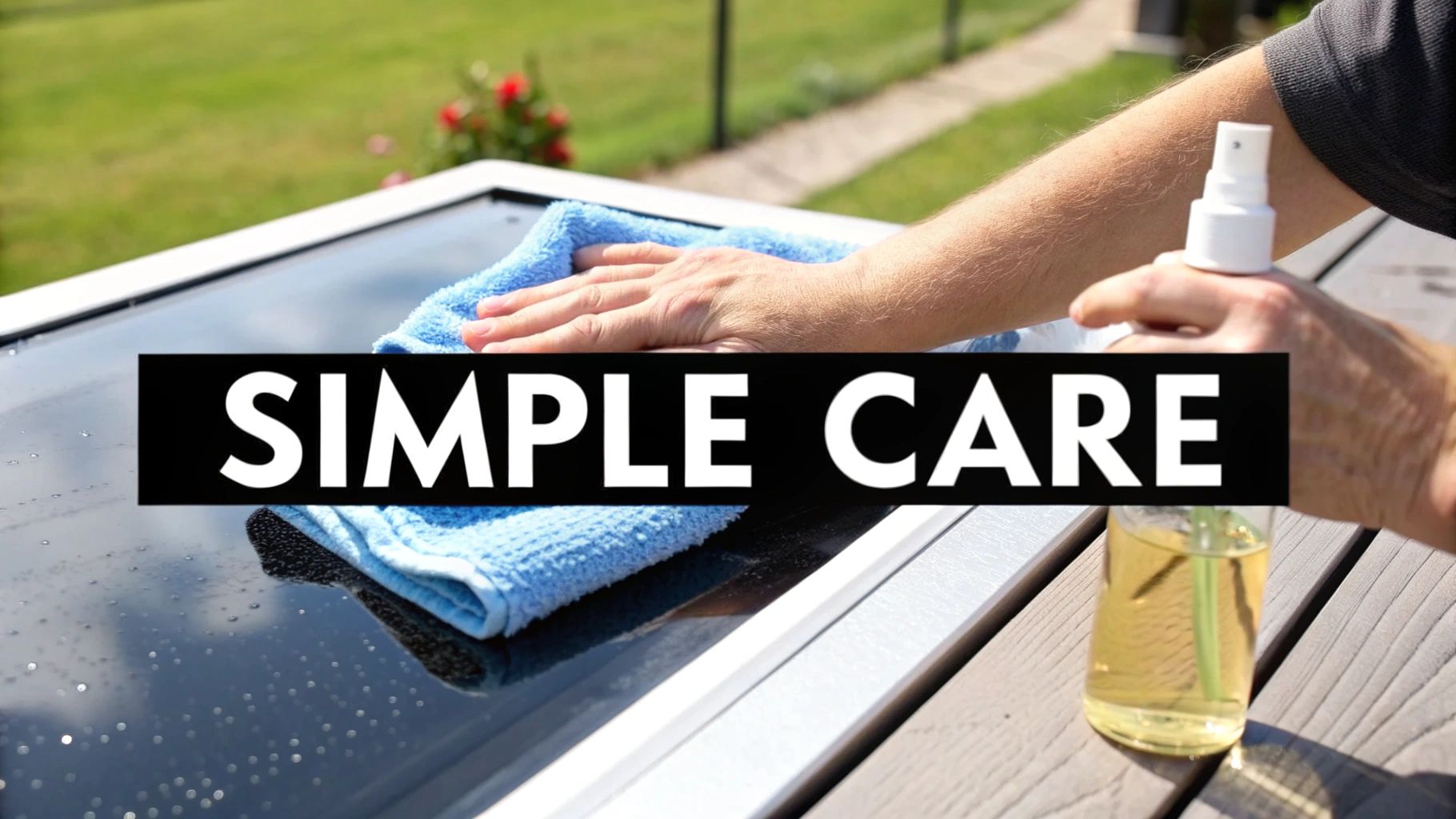
You don’t need any fancy, expensive sprays to keep your glass panels sparkling. In fact, the best tool for the job is probably already under your sink. A bucket of warm water with a squirt of washing-up liquid is perfect for cutting through dust, grime, and the inevitable water spots.
Here's a straightforward approach for a streak-free finish:
A word of warning: steer clear of abrasive cleaners and scouring pads. They can easily put fine scratches in the glass or damage the protective coating on the stainless steel fittings, which you definitely want to avoid.
Beyond cleaning, it’s a great habit to give your balustrade a quick once-over a couple of times a year. Think of it as a five-minute job at the start of spring and again before winter sets in. You’re just making sure everything is as solid and secure as the day it was installed.
Here’s a simple checklist:
These quick checks are all about peace of mind. They confirm that your balustrade isn’t just looking great, but is also doing its most important job: keeping everyone safe while they enjoy that fantastic view.
This minimal effort is exactly why deck glass panels are such a brilliant and practical choice for homes across Northern England. You get maximum style for minimum fuss.
To finish up, let's tackle some of the most common questions we hear from homeowners. Getting these details straight is the best way to feel confident as you plan your project.
This is a big one, especially for those of us living in the North of England. You can rest easy. Our glass panels are made from toughened or toughened laminated safety glass, which is specifically engineered to handle whatever the weather throws at it.
They are incredibly tough and can take strong winds, driving rain, and the frosty temperatures we see across Yorkshire, Cumbria, and Cheshire. The best part? Unlike timber, the glass won't rot, warp, or weaken from moisture, so you get a beautiful balustrade that lasts for years.
In most cases, absolutely. Glass balustrade systems are surprisingly adaptable and work well with different surfaces, including:
The most important thing is that the structure underneath is solid enough to handle the weight and forces the glass system will place on it.
The timeline really comes down to the size and complexity of your project. For a fairly standard rectangular deck, we can often have the entire installation done in just a day or two.
Naturally, more intricate designs with lots of corners, staircases, or custom-cut angled panels will take a bit longer. We'll always give you a clear and realistic timeline with our quote, so you’ll know exactly what to expect from the start.
A professional installation isn't just about looks—it's about safety. Our experienced teams work efficiently to fit your deck glass panels perfectly, ensuring everything complies with building regulations and leaves you with a stunning, flawless finish.
This really depends on the system you go for. If you want a view that is truly seamless and uninterrupted, a frameless system is your best bet. With this design, the glass panels are held securely in a base channel at the bottom, so there are no posts to get in the way of your line of sight.
A posted system will have sleek vertical posts spaced out along the balustrade. While not completely invisible, the posts are typically minimalist and add their own architectural touch while still keeping things feeling open. Either way, you're getting a much clearer view than you ever would with traditional railings.
Ready to bring clarity, style, and safety to your outdoor space? The team at Binks Glass Solutions is here to help you every step of the way. Get in touch with our local experts today to discuss your project.
Contact Us for a Personalised Quote