
A Homeowner’s Guide to stainless steel handrail for stairs
Picture a staircase that's more than just a way to get from one floor to another; imagine it as a […]

Picture a staircase that's more than just a way to get from one floor to another; imagine it as a […]
Picture a staircase that's more than just a way to get from one floor to another; imagine it as a striking piece of design in its own right. A stainless steel handrail for stairs brings together timeless style and serious durability, making it the clear choice for modern homes, both inside and out. This guide is for homeowners and specifiers across the North of England, from Harrogate to Leeds, who want a straightforward, practical roadmap to choosing and installing a handrail that will genuinely lift a property's value and safety.
When you're designing or upgrading a staircase, the handrail material has a huge say in the final look, feel, and lifespan of the space. While traditional materials like wood certainly have their charm, stainless steel has firmly established itself as the go-to for contemporary homes, and for very good reasons. It offers a unique combination of strength, elegance, and practicality that few other materials can touch.
The beauty of a stainless steel handrail for stairs is in its clean, crisp aesthetic. Its sleek lines and subtle sheen can make a room feel brighter and more spacious, perfectly complementing minimalist, industrial, or ultra-modern designs. It’s also incredibly versatile, working seamlessly alongside other materials like glass and wood to create a sophisticated, cohesive look.
Looks are one thing, but performance is another. Stainless steel delivers in spades. Its inherent strength provides a secure, sturdy support system — something that’s absolutely critical for staircase safety. On top of that, its natural resistance to corrosion and wear makes it an incredibly low-maintenance option, especially for a busy family home.
Here are the key advantages:
A well-chosen stainless steel handrail does more than just guide you up the stairs; it becomes a permanent architectural feature that enhances light, creates a sense of space, and gives you a dependable, secure grip, day in and day out.
This shift towards steel isn't just a feeling; the numbers back it up. The UK's stainless steel handrail market is booming, with sales revenue hitting $324.486 million in a recent base year and projected to climb even higher. This trend shows a clear preference among homeowners and specifiers for materials that promise both top-tier performance and lasting good looks. You can explore more data about the stainless steel handrail market to see where things are heading.
As your local specialist, Binks Glass Solutions is here to help you navigate every decision, ensuring your project meets the highest standards of quality and design.
Picking the right type of stainless steel for your handrail is one of the most critical decisions you'll make. It's a choice that directly impacts how your handrail looks and, more importantly, how long it lasts. Think of it like choosing the right coat for the unpredictable Yorkshire weather – you wouldn't wear a light jacket in a coastal storm, and the same logic applies to steel.
The two main players you'll come across are Grade 304 and Grade 316 stainless steel. They might look identical to the naked eye, but a small difference in their chemical makeup creates a huge difference in performance, especially when it comes to fighting off corrosion.
Grade 304 is the world's go-to stainless steel. It’s the reliable, everyday workhorse of the steel family, offering fantastic strength and corrosion resistance in most normal environments.
This makes it the perfect choice for any stainless steel handrail for stairs that lives indoors. For a staircase in a Leeds townhouse or a landing in a Harrogate new-build, Grade 304 provides all the durability you'll ever need. Tucked away from the rain, frost, and coastal salt, it will stay looking pristine for decades with just a simple clean.
Grade 316 is the tougher, more resilient sibling. Its secret weapon is an element called molybdenum. Adding this to the mix massively boosts its ability to resist corrosion, particularly from chlorides – the nasty stuff found in salty sea air and the grit we use on our roads in winter.
This flowchart helps visualise the key considerations when choosing your ideal handrail material.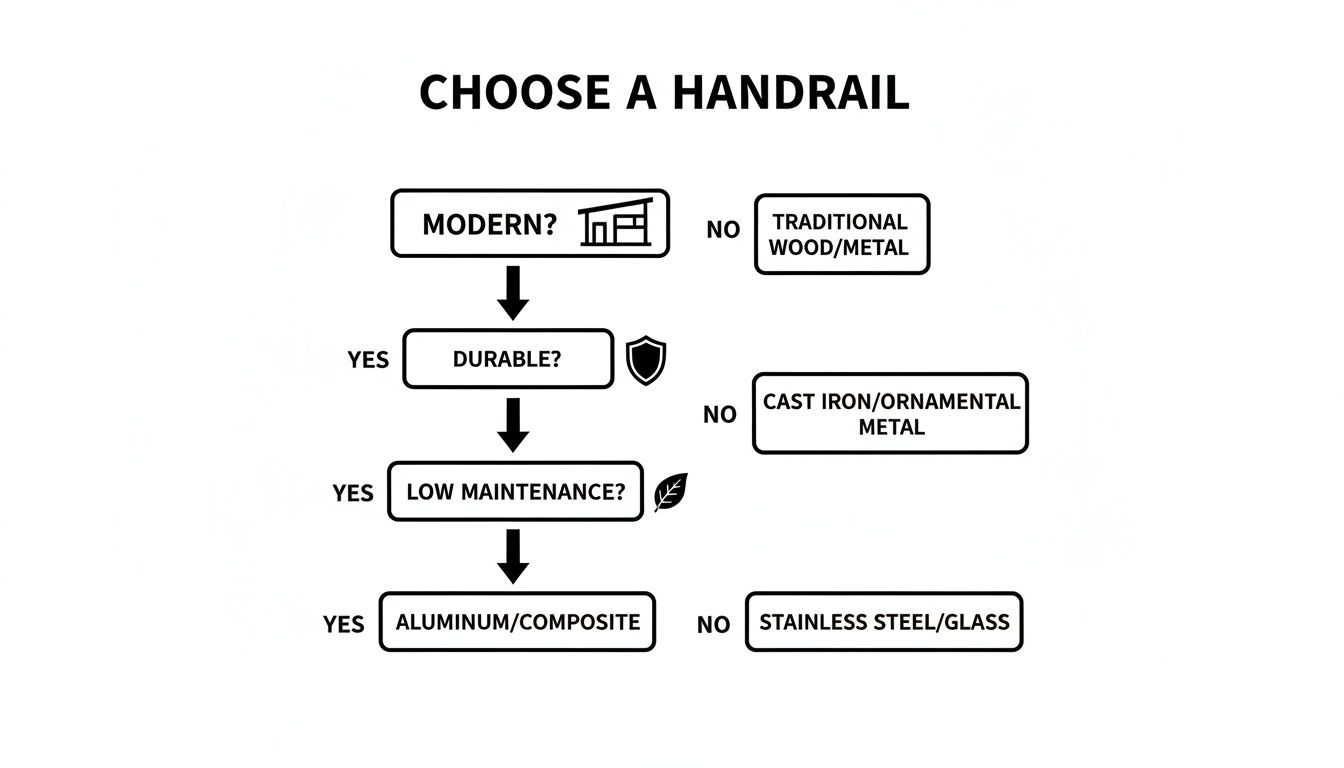
As the guide shows, when you need a modern, durable, and low-maintenance solution, stainless steel is the logical conclusion.
For any outdoor project in the North, Grade 316 isn't just a good idea; it's essential. Think about a glass balcony overlooking the Cumbrian coast or a patio balustrade in Hull. The very air in these places is loaded with salt that will relentlessly attack lesser materials. Choosing Grade 304 for these jobs is a false economy, one that will almost certainly lead to unsightly tea staining and rust spots down the line.
Choosing the wrong grade for the location is the single biggest mistake people make when specifying a stainless steel handrail. Grade 316 provides essential long-term protection against the elements, safeguarding your investment and keeping your home looking sharp.
A simple rule of thumb we use is: 304 for inside the door, 316 for anything outside.
To make the decision even clearer, here’s a straightforward comparison of the two grades. This table breaks down the key differences, helping you choose the right material for your project.
| Feature | Grade 304 Stainless Steel | Grade 316 Stainless Steel |
|---|---|---|
| Best Use Case | Interior staircases, landings, and indoor balustrades. | Exterior balconies, patios, coastal properties, and areas exposed to harsh weather. |
| Corrosion Resistance | Good resistance to general atmospheric corrosion. | Excellent resistance, especially against chlorides (salt) and acidic environments. |
| Key Component | Contains 18% chromium and 8% nickel. | Contains 16% chromium, 10% nickel, and 2% molybdenum for added protection. |
| Cost | More affordable, making it a cost-effective choice for protected indoor applications. | Higher initial cost due to the molybdenum, but provides essential long-term durability. |
By getting this one choice right, you guarantee your stainless steel handrail for stairs doesn't just look fantastic on day one, but continues to perform flawlessly for its entire lifespan. At Binks Glass Solutions, we guide every client in the North through this decision, ensuring the steel we install is perfectly matched to its environment.
With the crucial decision of steel grade sorted, we can move on to the aesthetics—the shapes and surfaces that give your staircase its unique character. A stainless steel handrail for stairs is so much more than a functional safety rail; it's a statement piece that sets the tone for your entire home. From the feel under your hand to the way it catches the light, every detail counts.
This is where your personal style really comes into play. Whether you’re finishing a modern new-build in Cheshire or renovating a classic home in North Yorkshire, the right blend of profile and finish will bring your vision to life. Let’s walk through the key choices that will help you create a handrail that’s both beautiful and perfectly suited to your daily life.

The profile is simply the cross-sectional shape of the handrail itself. This choice dictates not only the visual style but also the ergonomics—how comfortable and secure it feels to grip as you go up and down the stairs.
Round Profile: This is the timeless classic. A round handrail is universally comfortable to hold, with no sharp edges, making it a safe and popular option for family homes. Its clean, simple lines work well in just about any interior, from traditional to contemporary.
Square Profile: If you’re after a sharper, more architectural look, a square or rectangular profile makes a bold statement. It’s a perfect match for minimalist designs and modern aesthetics, creating a strong, geometric line that really draws the eye.
Oval Profile: Offering the best of both worlds, an oval profile gives you a wide, flat surface to rest your hand on while keeping soft, rounded edges. This ergonomic shape feels substantial and secure, adding a touch of unique, considered design.
Often, the overall design of the staircase guides the choice. A grand, sweeping staircase might call for a classic round profile, whereas a straight, floating staircase is often perfectly complemented by a crisp square tube.
Once you’ve settled on a shape, the finish is the final layer of personality. How the surface of the stainless steel is treated dramatically changes its appearance and how practical it is day-to-day. The two most common options offer very different benefits.
A brushed satin finish is arguably the most popular choice for a stainless steel handrail for stairs today, and for good reason. This finish has a soft, muted lustre, created by brushing fine, parallel lines into the surface.
Its main practical advantage is its ability to cleverly conceal fingerprints, smudges, and minor scuffs. This makes it an incredibly forgiving and low-maintenance option for high-traffic areas and busy family homes.
In contrast, a polished mirror finish is all about making a high-impact statement. As the name suggests, the steel is polished to a flawless, reflective shine, almost like a chrome surface. This stunning finish bounces light around a room, creating a feeling of brightness and luxury. It’s a fantastic choice for making a feature of an entrance hall or a contemporary living space, but be aware its pristine surface will show fingerprints more readily and need a bit more wiping to maintain its sparkle.
So, which is right for you? A family with young children might prioritise the sheer practicality of a brushed satin finish. On the other hand, someone designing a showpiece staircase might be drawn to the glamorous appeal of polished steel.
For many homeowners across the North of England, the elegant yet resilient nature of a brushed finish offers the ideal balance of style and everyday usability. Ultimately, the best stainless steel handrail for stairs is one that not only looks fantastic but also feels right for your home and lifestyle.
A stainless steel handrail is often the perfect finishing touch for a stunning glass balustrade, creating a partnership where modern materials meet to maximise both light and safety. But how do these two elements actually connect?
Understanding the different ways to bring them together is key to achieving that seamless, professional look that perfectly matches your home's aesthetic, whether it's a landing in Leeds or a balcony in Harrogate. The method you choose has a huge impact on the final visual effect, defining the style and influencing the feeling of space. Let's walk through the three main approaches.
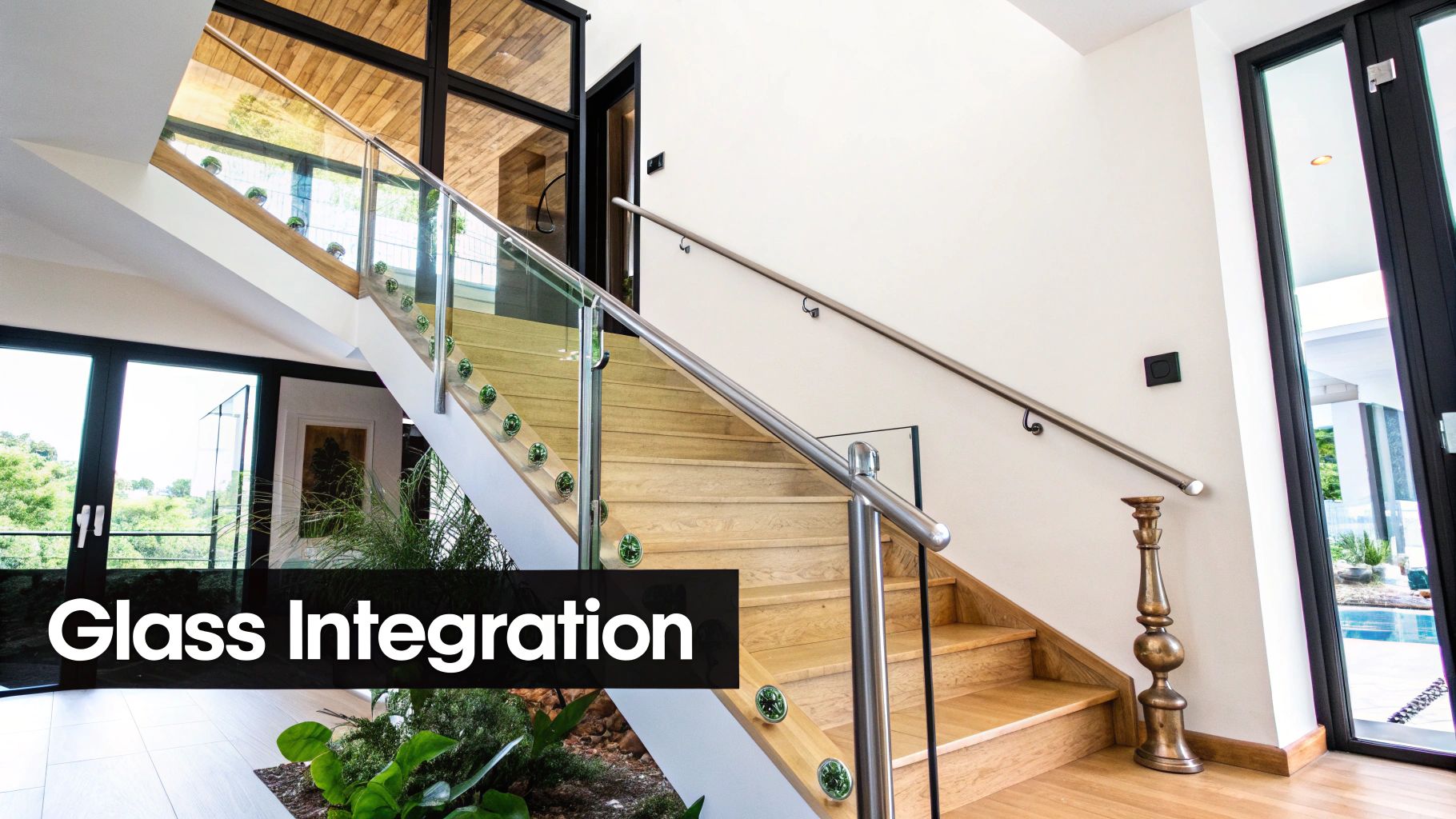
One of the most common and robust methods is the post-mounted system. Think of it as the classic, tried-and-tested approach. In this setup, strong stainless steel posts are securely fixed to the floor or the side of the staircase. The glass panels are then clamped neatly between them, and the stainless steel handrail for stairs sits right on top, connecting each post to create a sturdy, unified frame.
This approach gives you exceptional strength and a clear, structured look. The visible steel posts add a sense of architectural definition, framing the glass and providing a reassuring feeling of solidity.
This method is incredibly versatile and can be adapted to suit almost any staircase design, from straight flights to complex turns.
For staircases that run alongside a solid wall, a wall-mounted handrail is a brilliantly straightforward and effective solution. Here, the two elements have distinct jobs. The glass balustrade acts purely as a safety barrier on the open side of the stairs, while the handrail is installed independently on the adjacent wall.
This separation of roles ensures both perform perfectly. The glass provides an almost invisible safety screen, letting light flood in, while the wall-mounted handrail offers continuous, unwavering support for anyone using the stairs.
A wall-mounted handrail offers an uninterrupted grip from the bottom of the stairs to the top, which is a significant safety and accessibility feature. This continuous flow is often a key requirement in building regulations.
This setup is ideal for creating a clean, uncluttered look, as the handrail doesn't interfere with the glass panels at all. You get the best of both worlds: an open, light-filled balustrade and the practical support of a perfectly placed handrail. Learn more about how Binks Glass Solutions combines stainless steel and glass balustrading for a flawless finish.
For the ultimate minimalist design, a top-rail system is the only way to go. In this elegant configuration, the stainless steel handrail sits directly on top of the structural glass panels themselves. The glass does all the heavy lifting, providing the full safety barrier, while the slender top rail adds rigidity and a comfortable place to rest your hand.
This 'frameless' effect is incredibly popular in modern homes, as it maximises views and creates an unparalleled sense of openness. The handrail appears to float above the glass, resulting in a sleek, high-end finish that can make any space feel larger and brighter.
Ultimately, choosing the right way to integrate your stainless steel handrail for stairs comes down to a balance of your design vision, structural needs, and budget. Each option provides a safe and stylish solution, ensuring your staircase is not just a way to get from A to B, but a true centrepiece of your home.
While the design and finish of your stainless steel handrail for stairs are the exciting parts, making sure it meets UK safety standards is without doubt the most important part of any installation.
Getting this right isn’t just about ticking a box; it’s about the safety of your family and visitors, day in and day out. Fortunately, the rules are straightforward and designed with practical, common-sense safety in mind.
In the UK, the key document is Approved Document K, better known as Part K of the Building Regulations. This is the rulebook that lays out the non-negotiable requirements for handrails and balustrades to prevent falls. Working with a specialist who knows these rules inside and out, like Binks Glass Solutions, removes any guesswork and ensures your project is fully compliant from the start.
One of the most critical measurements in Part K is the handrail height. For domestic properties, the rules are refreshingly clear.
These heights aren't just random numbers; they’re carefully set to give stable support at a comfortable level for the average person, dramatically reducing the risk of a stumble turning into a serious fall.
"Compliance is not an obstacle to design; it's the foundation of it. A correctly installed handrail, meeting all aspects of Part K, provides true peace of mind, ensuring that your beautiful staircase is as safe as it is stylish."
Beyond just height, the regulations also cover how strong the handrail needs to be and how easy it is to hold. It’s not enough for a handrail to simply be in the right place; it has to do its job under pressure.
A handrail must be able to take specific loads without failing, so you know it will support someone who leans heavily or grabs it to stop a fall. It also needs to be continuous, providing an unbroken guide all the way from the bottom of the stairs to the top. Any sudden gaps or awkward joins are a potential hazard.
Finally, the handrail itself should feel comfortable and secure to grasp. This is why round or smooth oval profiles are so popular—they fit naturally in your hand. The rules also specify that there should be enough space between the handrail and the wall (usually 50-75mm) so you can run your hand along it without catching your knuckles. You can find more details in our complete overview of building regulations for balustrades.
As stairs are often vital escape routes, it's also worth understanding the wider context of building regulations fire safety. Making sure your stainless steel handrail for stairs meets all these established rules means your installation isn't just legally sound, but fundamentally safe for everyone who uses it.
So, now you’re armed with a solid understanding of what goes into a high-quality stainless steel handrail for stairs. You know the difference between the robust reliability of Grade 304 for indoors and the essential weather-proofing of Grade 316 for outside. You’ve even got a feel for the design choices that will truly reflect your style.
The next step? Turning all that knowledge into a tangible, beautiful part of your home. Whether you've settled on the practical elegance of a brushed satin finish or a bold, polished statement, bringing that vision to life is all about local expertise and precision installation.
As a specialist serving communities across the North of England, from the historic streets of York to the scenic landscapes of Cumbria, Binks Glass Solutions provides the dedicated, hands-on service your project deserves. We focus on giving tailored, practical advice to homeowners in Harrogate, Cheshire, and beyond, making sure every single installation meets our exacting standards.
We’re here to help you navigate those final decisions and deliver a flawless installation that is both incredibly safe and visually stunning. Our expertise is your guarantee that the finished balustrade or handrail system will perfectly match your specifications. For homeowners planning projects in the northeast, our experience with Newcastle balustrade installation showcases our deep commitment to getting it right for our regional customers.
Translating a great design into a perfectly executed reality is where professional craftsmanship makes all the difference. The goal is a finished handrail that not only looks exceptional but feels solid and secure for years to come.
Ready to move forward? We’ve made it simple to get a clear idea of costs for your specific needs. Our online Balustrade Calculator can give you a customised quote in just a few clicks.
For a more personal chat about your stainless steel handrail for stairs, our local phone numbers will connect you directly with our team. We're here to guide your project from that first spark of an idea right through to a successful completion, offering expert advice every step of the way.
When you're thinking about a new staircase, it's natural for questions to pop up about the practical side of things. We get asked a lot about choosing and living with a modern stainless steel handrail, so we’ve put together some straightforward answers to the most common queries we hear from homeowners across the North of England.
Here’s some quick insight into day-to-day care, installation flexibility, and making the right style choice for your home.
Keeping your handrail looking brand new is surprisingly simple. For an indoor Grade 304 handrail, a quick weekly wipe with a soft microfibre cloth, some warm water, and maybe a drop of mild washing-up liquid is all it takes to shift fingerprints and dust. A top tip: always wipe in the direction of the grain on brushed finishes to keep it looking perfect.
Outdoor Grade 316 handrails need just a little more care to stop surface contaminants from settling in. Using a specialised stainless steel cleaner now and then helps maintain the protective layer that shields it from the Great British weather, ensuring it stays corrosion-free for years.
Absolutely. The versatility of stainless steel systems is one of their greatest strengths. They can be expertly adapted to fit almost any staircase design you can think of.
A professional survey is the best way to figure out the safest and most visually appealing mounting method for your specific staircase.
This really comes down to balancing the look you love with a bit of practicality. A brushed satin finish is fantastic at hiding minor scuffs and fingerprints, which makes it the go-to choice for busy family homes or high-traffic areas. Its soft, non-reflective appearance is modern and very forgiving.
A polished mirror finish, on the other hand, delivers pure drama and luxury. It brilliantly reflects light and makes a real statement. While absolutely stunning, it will show smudges more easily and needs more frequent wiping to maintain that pristine, gleaming surface.
Ultimately, the right finish is the one that fits seamlessly with your home’s style and your own lifestyle.
Ready to take the next step and transform your staircase? The team at Binks Glass Solutions provides expert advice and precision installation across the North of England. Contact us today for a free, no-obligation quote.