
Your Guide to Double Glazed Panels for Balustrades
You’ve probably heard of double glazing for windows—it's been a standard feature in modern homes for years. But what you […]

You’ve probably heard of double glazing for windows—it's been a standard feature in modern homes for years. But what you […]
You’ve probably heard of double glazing for windows—it's been a standard feature in modern homes for years. But what you might not realise is that the same technology can bring incredible benefits to glass balustrades, turning a simple safety barrier into a high-performance part of your home.
Essentially, a double glazed panel is an Insulated Glass Unit, or IGU. It’s made by taking two panes of glass and separating them with a spacer bar. The entire unit is then sealed around the edges to create a completely airtight gap in the middle.
That gap is where the magic happens. It acts as a powerful thermal barrier, slowing down the transfer of heat from one side to the other. For a bit more background, you can read up on the basics of What Is Double Glazing and how the fundamental principles work.
To boost performance even further, most modern units have this gap filled with a dense, inert gas like argon. It’s far more effective at insulating than just plain air.
Think of a single pane of glass as being like wearing a thin t-shirt on a chilly Yorkshire morning—it doesn’t offer much protection against the cold. A double glazed panel, on the other hand, is like putting on a thick, insulated coat. The sealed, gas-filled gap is the "insulation" that keeps the warmth in and the cold out.
This works in two key ways:
The result is a glass unit that can slash heat loss by up to 75% compared to a standard single glazed panel. This makes your home warmer, quieter, and more energy-efficient, whether the glass is in your windows or your balustrade.
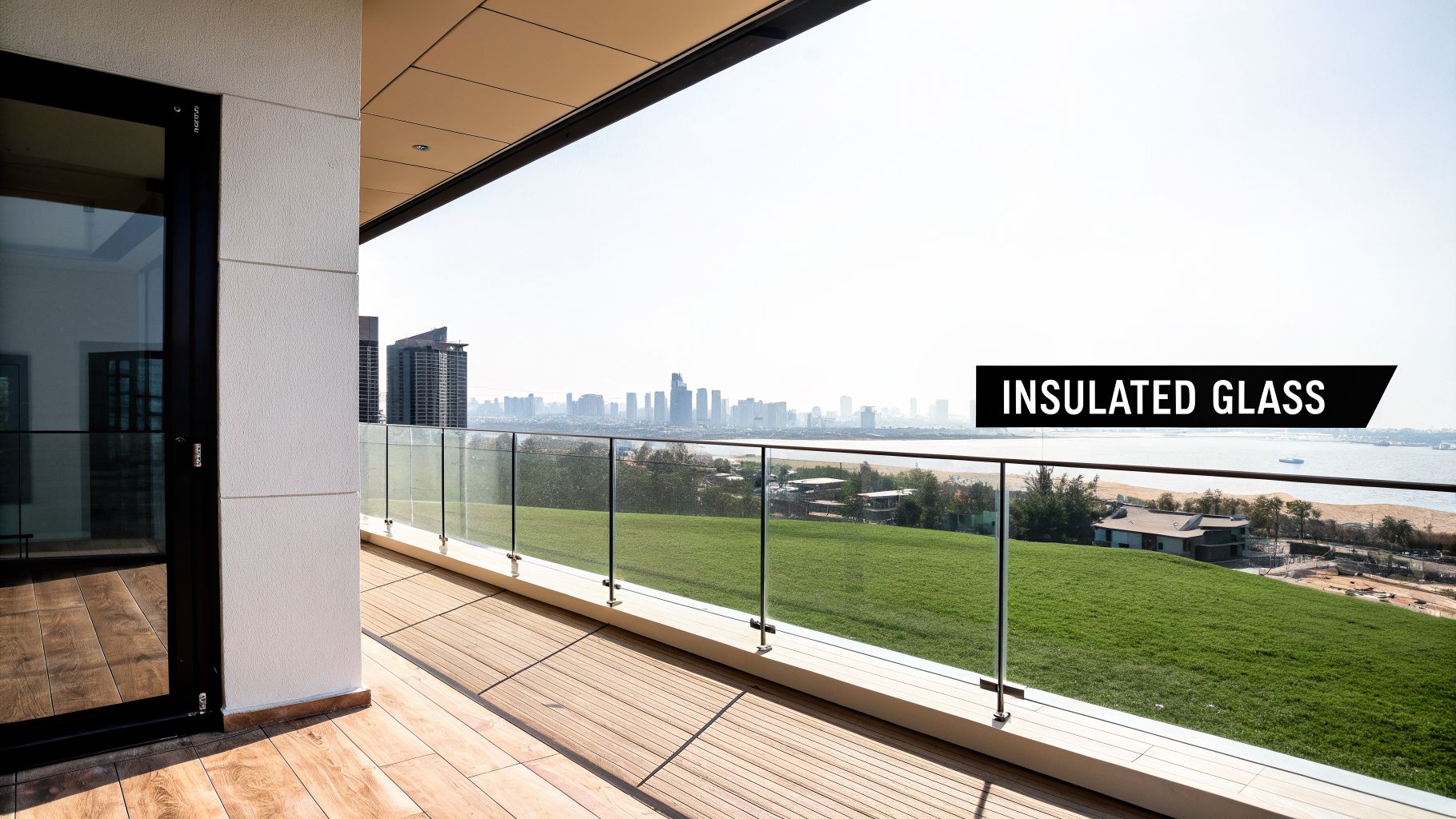
While windows are the obvious application, using double glazed panels in balustrades for balconies, terraces, and Juliet balconies is a smart move that’s becoming hugely popular. For homeowners in Leeds or architects designing projects in Harrogate, it just makes sense.
These panels help maintain the thermal envelope of your property by preventing "thermal bridging"—a weak spot where heat can easily escape through the building’s structure. They also provide fantastic acoustic insulation, muffling the sound of traffic or noisy neighbours and helping you create a peaceful outdoor sanctuary.
It’s about creating a space you can truly relax in, perfect for enjoying a quiet morning coffee on your terrace. Our guide to glass balustrade panels dives into all the available options in more detail.
You might think of double glazed panels as a fairly modern home improvement, but their roots stretch back much further than most people realise. The idea wasn't dreamt up in some high-tech lab; it was born out of pure, practical necessity. It all started in 19th-century Scotland, where resourceful homeowners battled the biting cold by fixing a second pane of glass to their windows, desperate to keep the warmth in and their fuel costs down.
This simple, DIY approach was the first whisper of what was to come. We can see evidence of this primitive double glazing in Scottish homes as far back as the 1870s. For the better part of a century, though, it was a niche solution, really only found in the UK's chilliest corners.
The real game-changer was the 1970s energy crisis. Almost overnight, the entire country became acutely aware of just how much energy was being wasted through heat loss. Double glazing transformed from a clever trick to an essential upgrade, especially in the North of England where unforgiving winters in places like Yorkshire and Cumbria were the norm. Homes that made the switch saw a huge reduction in draughts and condensation.
With this surge in demand, the technology had to keep up. The bulky, often inefficient aluminium frames of the 70s were soon replaced by the much sleeker, better-insulating, and more affordable uPVC frames of the 1980s. This single development made double glazing a realistic option for millions, cementing its place as a standard feature in British homes.
What began as a makeshift fix for a cold house has become a cornerstone of modern building. It's a perfect example of how a simple, practical idea can evolve into an essential piece of technology for comfortable living.
The adoption numbers really paint a picture of this journey. Back in 1970, only about 8-10% of UK homes had any form of double glazing. By the end of the decade, that figure had climbed to around 16%. You can dive deeper into the historical journey and surge in popularity to see just how significant its impact has been.
This chart shows the incredible leap in the use of double glazed panels across UK properties.
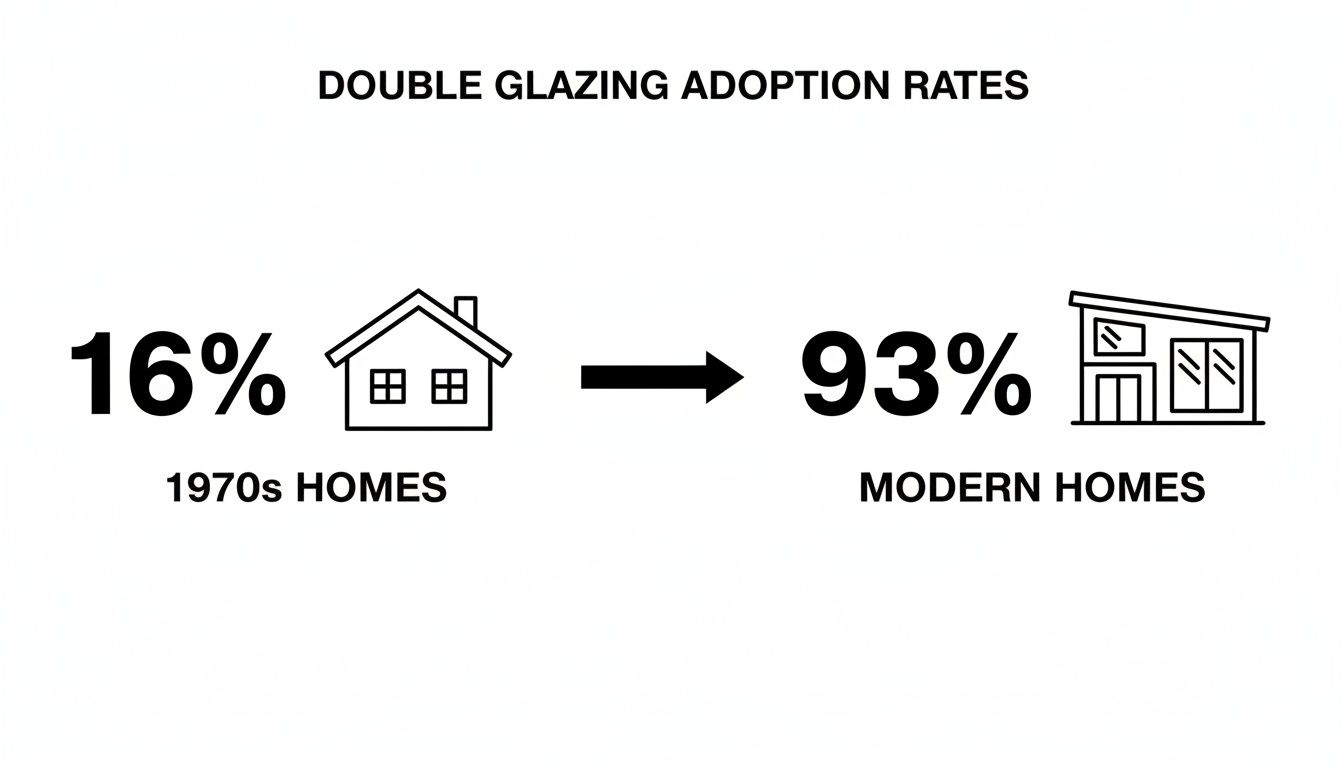
The contrast is stark. It shows just how far the technology has come, shifting from a rare luxury to an almost universal standard.
Today, an incredible 93% of homes nationwide feature double glazing. This widespread acceptance has naturally paved the way for the technology to be used in other parts of the home. The very same principles of insulation, safety, and efficiency are now being applied to create high-performance balustrade systems. It shows how an invention born from a need for warmth is now a key part of creating the stylish, efficient, and comfortable living spaces we all want.
When you choose double glazed panels, you're doing far more than just updating the look of your home. You're making a fundamental upgrade to its performance. These units work quietly in the background, creating a home that feels more comfortable, peaceful, and efficient. The two biggest wins? Superior thermal control and impressive noise reduction.
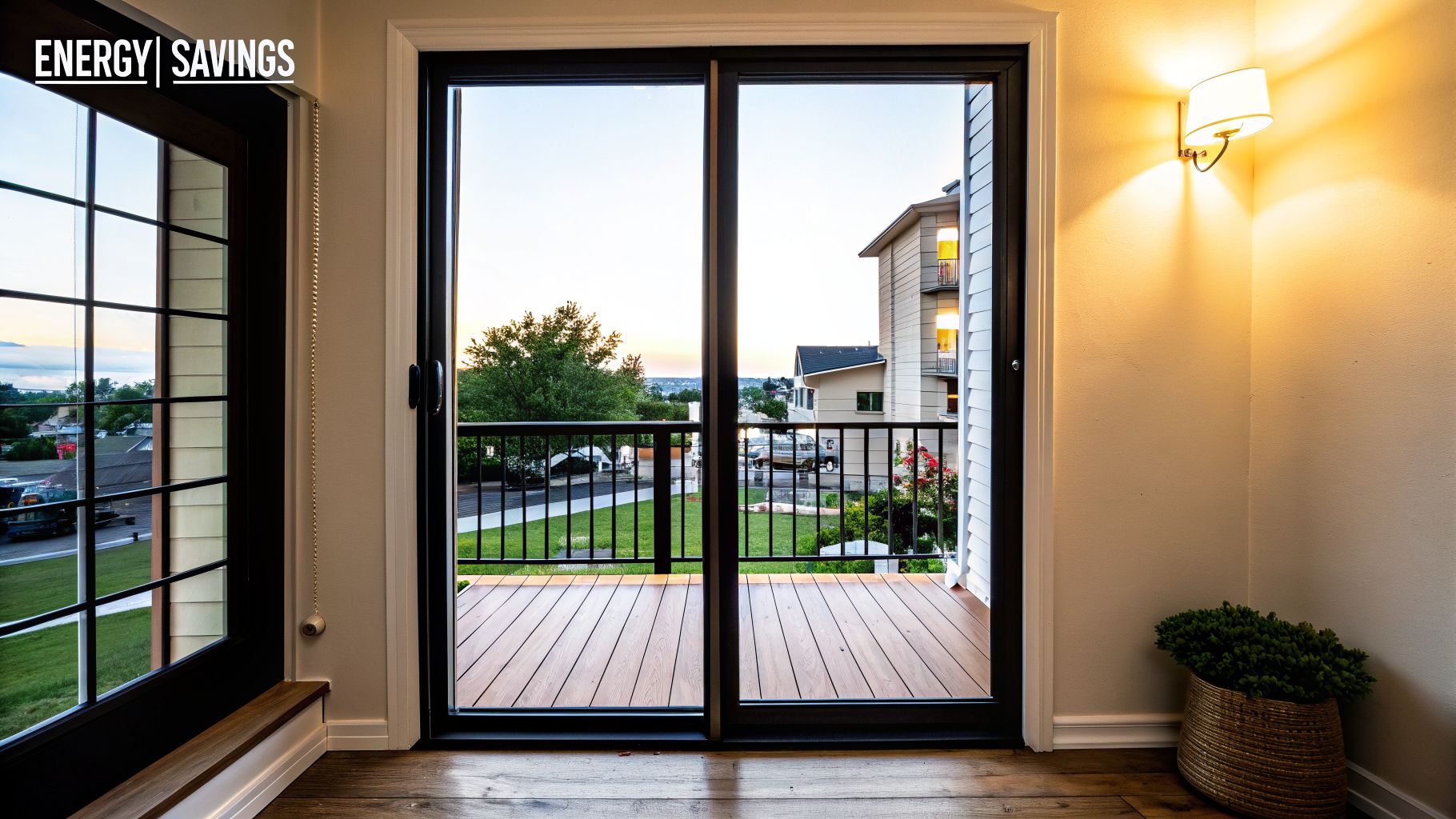
Think about enjoying a cup of tea on your balcony in Leeds on a crisp autumn morning. With old single glazing, you can almost feel the cold seeping through the glass, chilling the room behind it and forcing your thermostat to work overtime. Double glazed panels completely change that story. They act as a tough thermal barrier, keeping the precious warmth right where you want it—inside.
The same principle works wonders during a summer heatwave in Hull. That insulated gap stops the sun’s powerful rays from baking your living space, helping you stay cool and comfortable without having to rely on whirring fans or expensive air conditioning.
To get a real sense of how well double glazing performs, we need to talk about U-values. In simple terms, a U-value measures how easily heat passes through a material. The lower the U-value, the better the insulation. And this is where double glazing leaves single glazing in the dust.
Here's a quick comparison to put the performance difference into perspective:
| Performance Metric | Single Glazed Panel | Double Glazed Panel |
|---|---|---|
| Heat Loss | High | Up to 75% less heat loss |
| Typical U-Value | Around 5.7 W/m²K | As low as 1.4 W/m²K |
| Noise Reduction | Minimal | Significant reduction |
| Energy Bills | Higher | Lower heating and cooling costs |
As you can see, the numbers speak for themselves. The move to double glazed panels has been a game-changer for UK homes, slashing heat loss and saving households hundreds of pounds every year. For architects and builders, using modern panels with special low-emissivity coatings is a no-brainer—they can block up to 84% of solar heat gain, preventing properties from overheating in the summer.
For older properties across Yorkshire, from Harrogate to York, retrofitting double glazed balustrades can cut heat loss through a balcony structure by as much as 68%, according to industry benchmarks, while ensuring the project meets modern Part L regulations for fuel conservation.
A welcome side effect of better insulation is improved control over indoor humidity. If you’ve ever noticed moisture building up on windows or walls, you might find this guide on how to address common issues like sweating or condensation on ceilings useful.
The benefits of double glazed panels don't stop at temperature control. They are also incredibly effective at blocking out unwanted noise—a real blessing for homes in busy urban or suburban spots.
The clever dual-pane construction, with its pocket of inert gas, works to disrupt and absorb sound waves before they reach your ears. This leads to a very noticeable drop in noise pollution from all sorts of sources:
This acoustic shield can turn a noisy balcony or terrace into a genuine sanctuary. It lets you enjoy your outdoor space without the constant soundtrack of the world outside, creating a truly peaceful and restorative environment for you and your family. The difference isn't subtle; it's a significant upgrade to your quality of life.
When you’re planning a balustrade, it’s easy to focus on the frame or the fixings. But the type of glass you choose is absolutely fundamental to the safety, look, and longevity of your project.
While we've touched on the performance of double glazed panels, the actual glass used inside those panels is a critical decision. Not all glass is created equal, and for a safety barrier like a balustrade, only specific types will ever make the cut.
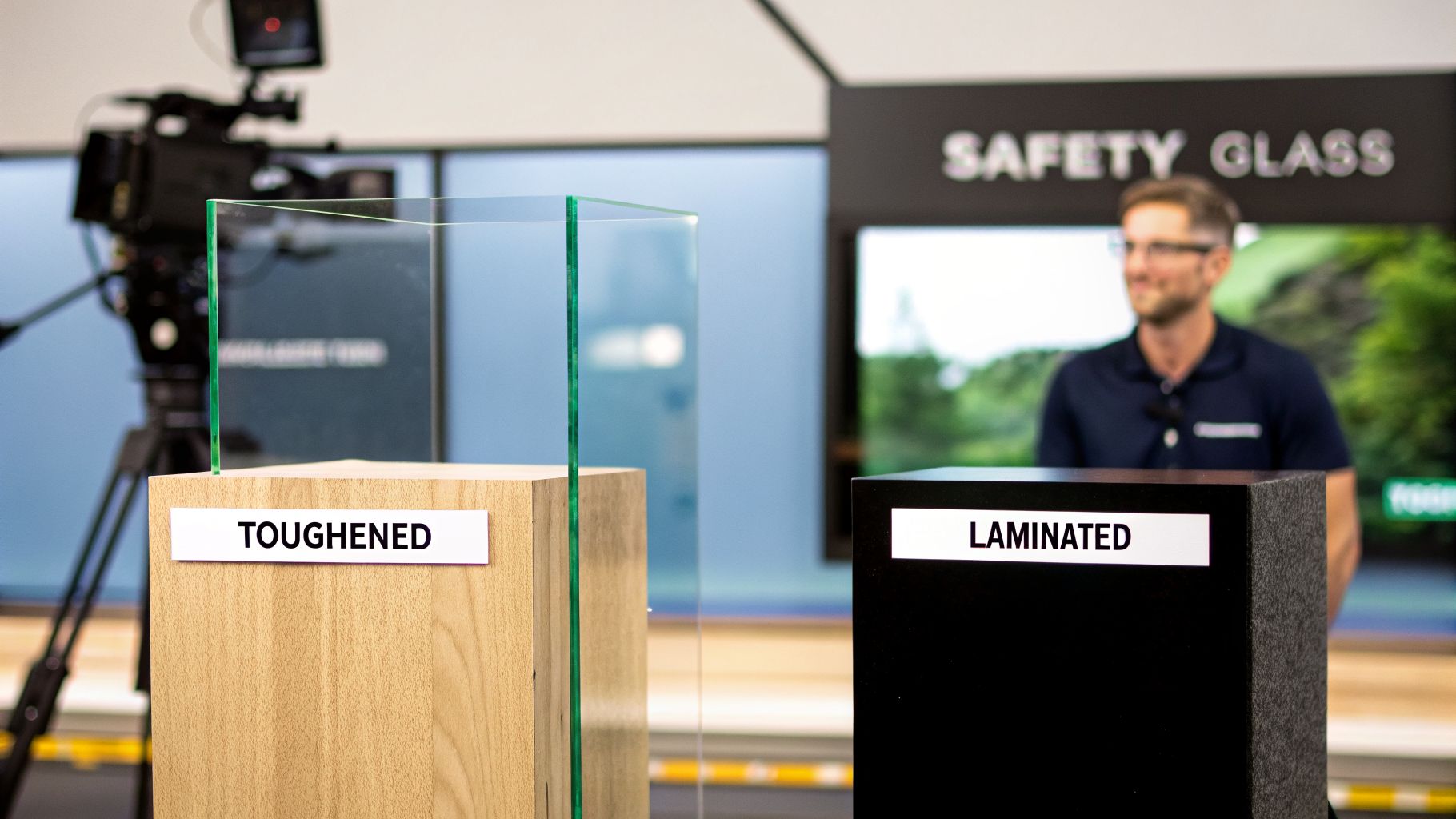
The standard glass you might find in a picture frame is called annealed glass. It’s basic, and on impact, it shatters into long, razor-sharp shards. For any application where people’s safety is a factor—like a balustrade—annealed glass is completely unsuitable and never, ever used. The industry standards are toughened and laminated glass.
Toughened glass, sometimes called tempered glass, is made through a special process of extreme heating and rapid cooling. This treatment transforms it, making it around four to five times stronger than standard annealed glass.
Its real party trick, however, is how it behaves if it does break. Instead of dangerous jagged pieces, it shatters into thousands of tiny, blunt, pebble-like cubes. This dramatically reduces the risk of serious injury. It’s a fantastic choice for many applications, from a garden patio balustrade in Harrogate to shower screens and glass doors.
Laminated glass takes safety to the next level. Think of a car windscreen—this is the same principle. It’s made of two or more layers of glass bonded together with a tough, clear interlayer, usually polyvinyl butyral (PVB).
If laminated glass breaks, the interlayer holds all the fragments safely in place. The panel will crack in a spider-web pattern but will remain a single, solid piece, preventing a dangerous hole from opening up. This is absolutely vital for balustrades protecting a significant drop, like a high-rise balcony in Manchester or a Juliet balcony overlooking a Leeds street.
For any balustrade acting as a fall barrier, laminated glass is the superior choice. Its ability to remain intact even when broken provides an essential layer of post-failure safety, ensuring the barrier continues to offer protection until it can be replaced.
Getting your head around these differences is the key to making a safe and informed decision for your project. To explore these options in more detail, you can read our full guide on laminated and toughened glass. Each has its place, but for balustrades where safety is paramount, choosing between these two industry-standard glasses is a non-negotiable first step.
When you install a glass balustrade to protect people from a fall, safety isn't just a feature—it's the entire point. Here in the UK, putting up a glass barrier isn't a case of guesswork. It’s a process guided by strict UK Building Regulations and technical standards to ensure every single installation is secure, robust, and fit for purpose.
For homeowners, architects, and builders alike, getting to grips with these rules is essential for both legal compliance and simple peace of mind. The key document everyone in the industry works from is BS 6180:2011, which is the code of practice for protective barriers. This standard lays down the non-negotiable requirements for everything from a garden terrace in York to a high-rise balcony in Leeds.
These regulations are designed to turn technical jargon into practical, life-saving rules. They tell us the minimum heights for barriers, the exact types of safety glass we must use, and the physical forces a balustrade has to withstand without even a hint of failure.
A huge part of getting it right is understanding the load-bearing requirements. Simply put, a balustrade must be strong enough to resist the pressure from people leaning against it. The regulations specify different "line loads," measured in kilonewtons per metre (kN/m), which vary depending on what the building is used for. A quiet residential balcony, for instance, has very different force requirements than a bustling public terrace.
Equally important are the specific heights for balustrades designed to prevent falls:
Adhering to these standards is not optional. A compliant installation ensures the safety of everyone using the space and protects property owners from significant legal liability in the event of an accident.
The type of glass used in a balustrade is directly tied to these critical safety standards. Modern regulations demand the use of either toughened or laminated safety glass. When used in double glazed panels, these systems provide an even greater level of structural integrity and peace of mind.
The data shows exactly why these robust systems are so essential. According to the Health and Safety Executive (HSE), properly specified and installed glass balustrades help prevent an estimated 70% of potential balcony accidents in commercial settings. Standards like BS 6180 mandate materials like 6.4mm laminated glass for many applications, a requirement we see in projects right across York and Cumbria.
For a deeper dive into the specific rules that might apply to your project, you might find our dedicated article on building regulations for balustrades helpful.
Ultimately, partnering with an expert supplier like Binks Balustrades ensures your project not only looks fantastic but meets every single stringent safety requirement. It’s about giving you complete confidence in the finished installation.
So, you’ve decided a stunning glass balustrade is the perfect finishing touch for your patio, balcony, or staircase. The next question is always the same: what will it cost? Getting a clear, honest price for your project is often the most daunting step, but it doesn't have to be.
Whether you're in Harrogate, Leeds, York, or across Cheshire, we’ve made it simple to get a realistic budget together. Forget vague estimates or confusing sales calls. The best place to begin is with our online quote calculator. It’s designed to guide you through the key decisions, turning your vision into a detailed, itemised price in just a few minutes.
Here’s the straightforward, four-step process our calculator will walk you through:
This isn't just a rough guess. The calculator gives you a transparent, itemised cost tailored specifically to your design. It removes all the guesswork, providing you with a solid budget to plan around, with our expert advice always just a call or click away.
Once you start digging into the details of double glazed panels, it’s natural for a few practical questions to pop up. We get it. To help you move forward with your project feeling confident, here are our expert answers to the queries we hear most often from our customers across the North of England.
This is often the first question people ask, and the honest answer is: it depends. The final price tag for your glass balustrade is shaped by a few key things. The total length of the balustrade, whether you need toughened or laminated safety glass, and the specific style of the system all play a part.
The best way to get a clear figure, without any guesswork, is to use a dedicated online quote tool. It gives you a transparent price tailored to your exact measurements and design choices, so you know precisely what to budget for.
For any keen DIY enthusiast, the temptation to install it yourself is understandable. However, when it comes to a safety barrier that protects against a fall, we highly recommend leaving it to the professionals. This isn't just about getting a perfect finish; it's about absolute safety.
A professional installation is your guarantee that the entire system is securely fitted and fully compliant with critical UK safety regulations like BS 6180. An expert can spot potential issues you might miss and will have the specialist tools and experience to ensure the job is done right, the first time. We can also connect you with trusted, skilled installers in your area.
One of the best things about a glass balustrade is just how easy it is to look after. Keeping it looking brand new is surprisingly simple and won't eat into your weekends.
A quick wipe-down with a standard glass cleaner or even a simple mix of water and vinegar is all it takes to keep the double glazed panels sparkling. We also suggest giving the fixings and clamps a quick check every so often to make sure they're still tight and secure. That’s it. This simple routine will keep your balustrade looking beautiful and performing safely for years to come.
Ready to take the next step and bring your vision to life? The team at Binks Balustrades is here to provide expert advice and a clear, no-obligation quote for your project. Contact us today to get started.