
What Is the Real Cost of Glass Balustrade in the UK
When you’re looking into the cost of a glass balustrade, a good ballpark figure to start with is somewhere between […]

When you’re looking into the cost of a glass balustrade, a good ballpark figure to start with is somewhere between […]
When you’re looking into the cost of a glass balustrade, a good ballpark figure to start with is somewhere between £160 and £300+ per linear metre, fully supplied and installed. That’s the headline number, but the final quote will really come down to the specific system and finishes you choose for your home.
Trying to pin down the exact price of a glass balustrade can feel a bit like buying a new car. The base model has one price, but once you start adding the premium engine, leather seats, and that fancy sound system, the final figure looks quite different. The same logic applies right here—the “model” you pick is the balustrade system itself, and that’s what sets the foundation for your costs.
Each system comes with its own starting price, driven mostly by its design and how it’s engineered. A frameless system, for instance, needs much thicker, tougher glass to provide all the structural support on its own, which naturally bumps up the material cost. On the other hand, systems that use stainless steel posts can get away with slightly thinner glass, often making them a more wallet-friendly option.
To give you a clearer picture, we’ve put together a simple table outlining the average costs for the most popular glass balustrade systems we install across Yorkshire and the North of England. Think of these as a reliable starting point for your budget.
| Balustrade System Type | Average Cost per Metre (Supply & Install) | Best Suited For |
|---|---|---|
| Spigot System | £160 – £220 | Decking, patios, and garden areas where a minimal look is desired on a budget. |
| Post & Rail System | £200 – £260 | Staircases, balconies, and high-traffic areas requiring visible structural support. |
| Frameless Channel | £280 – £350+ | High-end balconies, terraces, and commercial spaces for a premium, seamless finish. |
These figures are a great guide, but remember that the final cost will always be shaped by the unique details of your project, which we’ll get into shortly.
It’s no secret that these systems are incredibly popular in modern homes across the UK, loved for the sleek, open views they create. Industry analysis generally shows a frameless glass balustrade starts at around £280 per metre, making it a premium choice next to post-and-glass systems, which often begin near the £200 per metre mark.
Ultimately, it’s all about finding that sweet spot between the look you want and the budget you have. For anyone after a really straightforward approach, looking into a complete glass balustrade kit can be a great way to simplify things, as it bundles all the key components together.
In the next sections, we’ll break down exactly what you’re paying for, from the glass itself right through to the final handshake when the installation is complete.
A price per metre gives you a great starting point, but what does that figure truly represent? Thinking about the total cost of a glass balustrade is a bit like looking under the bonnet of a car; it shows you where your money is really going and why some options are more expensive than others.
The final quote for your project, whether it’s in Yorkshire or further afield, is a careful balance of materials, labour, and engineering. Absolutely everything, from the specific type of glass you choose to the style of the stainless steel fittings, plays a crucial part in shaping the price. By unpacking these elements, you can see how your design vision and essential safety needs directly influence your budget.
The most significant variable in the cost of a glass balustrade is, unsurprisingly, the glass itself. It’s certainly not a one-size-fits-all product. The type and thickness are carefully selected based on the system’s design and safety requirements, which has a direct impact on the price tag.
Here are the key options you’ll come across:
Naturally, the thicker and more complex the glass, the higher the material cost. To get a better handle on the differences and why one might be better for your project, you can find more detail on laminated and toughened glass. This decision alone can account for a huge portion of your budget.
Next up are the fittings—all the posts, clamps, and channels that hold everything securely in place. The cost here varies wildly based on the system’s complexity and just how much stainless steel is needed. A frameless system might look beautifully simple, but its structural base channel is a substantial and costly piece of precision engineering.
In contrast, a post-and-rail system uses multiple posts and smaller glass clamps, and each of these individual components contributes to the total price. When you’re evaluating the different parts and labour that make up your balustrade’s price, it can be useful to see how these elements fit into the broader commercial renovation cost per square foot.
This image shows exactly how the hardware for each system directly influences the starting price per metre.
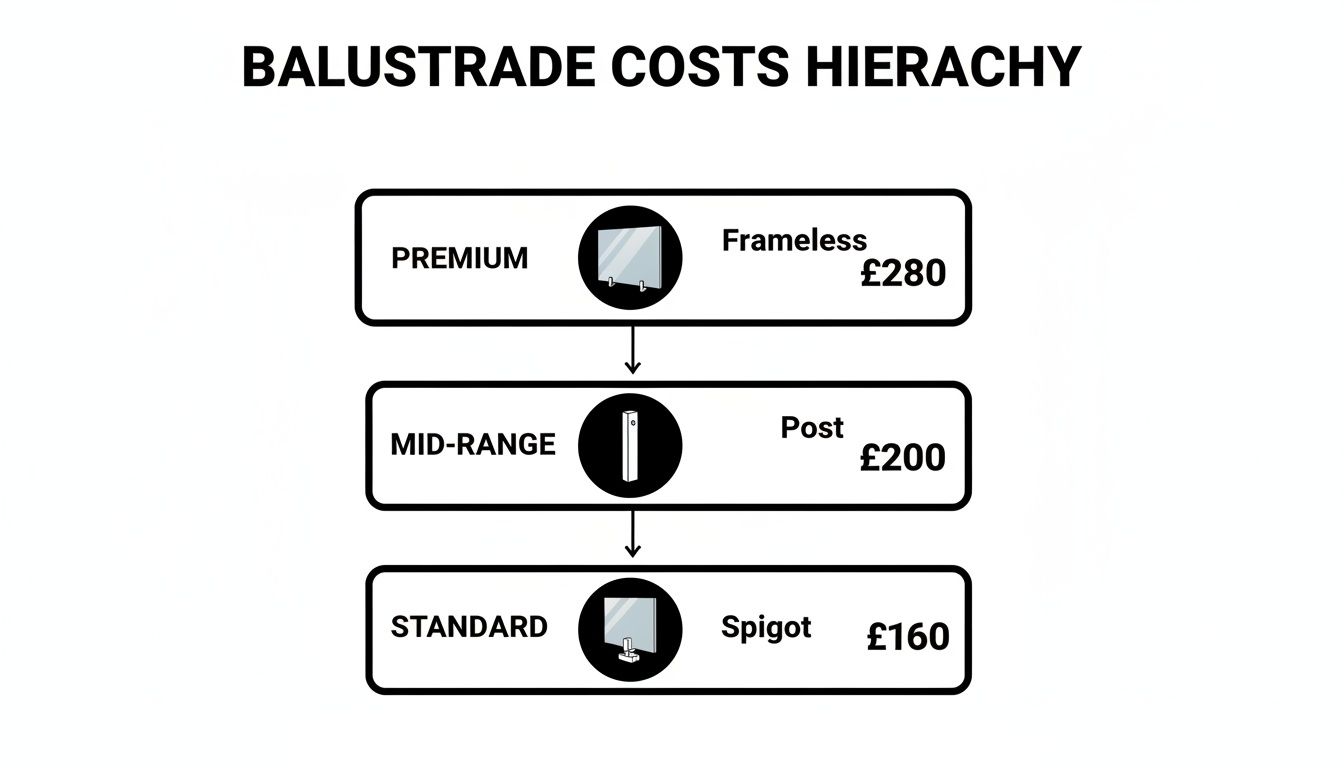
As you can see, the minimalist, hardware-light systems like frameless designs command a premium. This is because they rely on specialised, heavy-duty components and thicker glass to ensure their structural integrity.
A key takeaway here is that the ‘cost of a glass balustrade’ is not a single item but a sum of its parts. The price of a simple clamp versus a metre-long structural channel is vastly different, and these choices add up quickly.
By understanding what you are actually paying for—the specific grade of glass, the type of stainless steel, and the engineering behind the fixings—you can approach any quote with much greater confidence. This knowledge allows you to make informed trade-offs between what you want it to look like and what your budget allows, ensuring you get the perfect result for your home.
The gleaming glass panels and polished steel fittings are just one part of the story. The real magic happens during installation, where skill and precision bring your vision to life. This isn’t just about putting pieces together; it’s about guaranteeing your balustrade is perfectly safe, fully compliant with UK building regulations, and looks absolutely flawless.
Labour is a significant chunk of the final cost, and it’s where prices can vary the most, especially here in Yorkshire and across the North. When you hire a professional fitter, you’re not just paying for their time. You’re investing in their expertise to navigate the unique challenges of your property—the kind of craftsmanship that ensures a stunning finish lasting for decades.
Think about it this way: painting a big, flat, empty wall is a world away from painting a room full of alcoves, detailed cornices, and window frames. The same principle applies directly to fitting a glass balustrade. The complexity of the job is the single biggest factor driving the labour cost.
A simple 10-metre straight run on a ground-floor deck? That’s relatively straightforward. The fitters can work methodically with easy access and predictable measurements.
But what about a winding staircase with multiple turns, landings, and bespoke angles? That’s a completely different ball game. Every single angle needs to be meticulously calculated, and each pane of glass might need to be custom-cut, which adds a huge amount of time on-site.
Here are a few common things that add to the complexity and, therefore, the cost:
Here in the North of England, the day rate for a specialist installation team will be a key component of your quote. Getting a feel for typical industry figures helps set a realistic budget.
While the glass panels themselves might range from £100-£250 per square metre, the labour to install them properly can average between £300 and £1,200 for an entire project. That huge range reflects the time needed; a simple deck might take a team two days, while a complicated staircase could easily stretch to four or five.
This is exactly why a “per metre” installation price can be so misleading. A true professional will assess the entire job—the shape, the access, the prep work—and quote based on the estimated time and skill involved, not just the length.
When you’re planning your budget, it’s smart to know about the extra charges that can sometimes pop up. A good, transparent installer will always flag these upfront, but it pays to know what to ask about.
These might include:
Understanding these variables is crucial. It explains why a project that looks simple on the surface might have a higher labour cost than you’d expect and really drives home the importance of getting a detailed, itemised quote. The individual components, like a high-quality glass balustrade clamp, are just one small piece of a much bigger installation puzzle.
Choosing between a frameless or a framed glass balustrade is one of the biggest decisions you’ll make, not just for the look of your space but also for your budget. It’s the classic design choice: do you want that almost invisible, panoramic view that a frameless system provides, or the structured, defined lines of a traditional framed system?
This choice goes far beyond simple aesthetics. Each style has its own structural requirements, which directly influences the materials needed and, ultimately, the final cost of your glass balustrade. A frameless design relies entirely on the strength of the glass itself, while a framed system shares the load with its posts and rails. This fundamental difference is where the price variation begins.
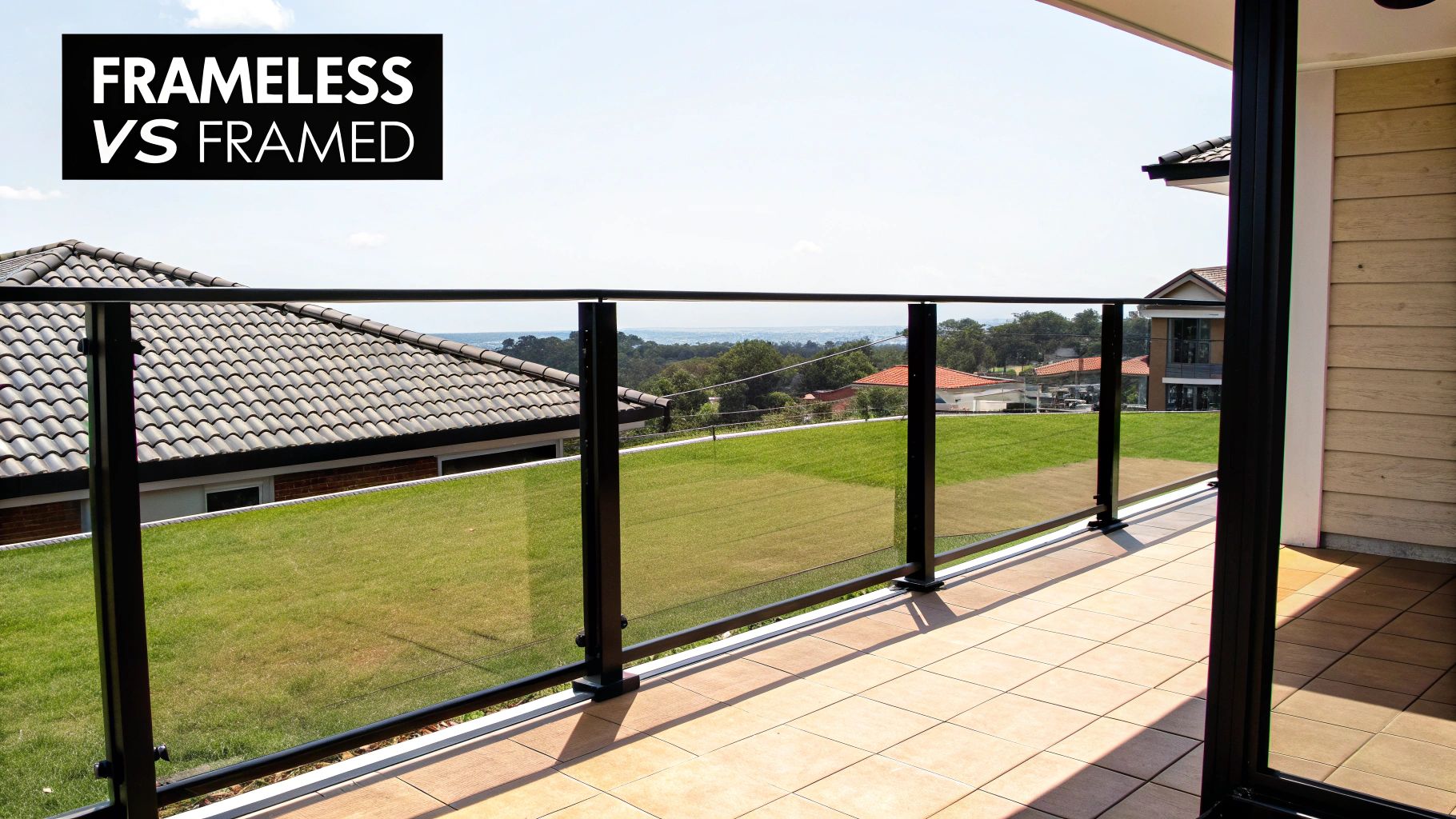
Frameless systems are the top choice for a high-end, contemporary finish. They create a seamless glass wall that maximises light and offers completely unobstructed views, making them perfect for balconies, terraces, and modern staircases where the scenery is a key feature.
However, this clean look comes at a premium. Because there are no vertical posts to provide support, the glass has to do all the heavy lifting. This means using thicker, more robust 17.5mm or 21.5mm toughened laminated glass, which is significantly more expensive than standard options.
On top of that, the hardware, while minimal, is highly engineered. These systems are secured using a heavy-duty structural base shoe or specialised spigots, both of which are precision-made components designed to hold immense weight safely. This combination of premium glass and specialised fixings places frameless systems at the higher end of the price spectrum.
Framed, or post-and-rail, systems offer a more traditional look that provides a clear sense of structure and safety. Stainless steel posts are set at intervals, with the glass panels fitted securely between them. This design is incredibly versatile and works well in almost any setting, from garden decking in Sheffield to an internal landing in a Leeds townhouse.
The main budget advantage of a framed system is that the posts provide the primary structural support. This means you can often use thinner and more affordable 10mm toughened glass, instantly reducing material costs. The hardware, such as glass clamps and post fittings, is also more standard and less costly than the heavy-duty components required for a frameless setup.
Framed systems represent a fantastic balance between modern aesthetics and practical budgeting. You still get the light and openness of glass, but with a more accessible price point and a visible framework that many people find reassuring.
To help you decide which style aligns best with your vision and budget, we’ve put together a straightforward, head-to-head comparison.
| Feature | Frameless Balustrade | Framed/Post Balustrade |
|---|---|---|
| Visual Impact | Utterly seamless and minimalist, offering completely uninterrupted views. | Structured and defined, with visible posts creating a clear boundary. |
| Typical Cost | Higher, starting from around £280 per metre. | More budget-friendly, often starting from £200 per metre. |
| Glass Required | Thicker, more expensive toughened laminated glass (e.g., 17.5mm). | Standard, more affordable toughened glass (e.g., 10mm) is usually sufficient. |
| Ideal Uses | High-end balconies, modern staircases, and any area where the view is paramount. | Decking, patios, stairways, and high-traffic areas needing a robust feel. |
Ultimately, understanding these differences helps you match your dream look with your financial reality. A frameless system offers unparalleled minimalist beauty, while a framed balustrade delivers a stylish and secure solution that is often kinder to your wallet.
Abstract figures like ‘cost per metre’ are a good starting point, but to really get a feel for the investment, it helps to walk through a few real-world scenarios. Let’s ground these numbers in practical examples from across our local patch, showing how the total cost of a glass balustrade comes together for different projects.
By looking at these common installations, you can start to see how factors like length, location, and complexity directly shape the final quote. It bridges the gap between a price list and a genuine understanding of what your own project might cost.
A Juliet balcony is a classic way to add safety and a touch of class to an upper-floor window. For a typical 5-metre installation on a Harrogate property, the homeowner wanted a clean, modern look that didn’t break the bank. This made a post-and-rail system the ideal choice.
Here’s how the costs could break down:
Next up, let’s tackle something a bit more complex: a 10-metre indoor staircase in a modern Leeds townhouse. The main goal here is to let light flood between floors, making a premium frameless system the perfect fit.
This kind of job is far more intricate, all down to the angles and precision needed.
The demand for sleek glass systems is a huge trend in the UK balustrade market. For projects like this, industry data shows a 10-metre frameless staircase can range from £4,000 to £6,000, with some full glass staircases averaging £4,500. This is largely because safety standards mandate much thicker glass for high drops, which can bump up costs by 30-40% over standard options.
Finally, let’s picture a large, 15-metre decking area in a Sheffield garden that needs a safe but unobtrusive barrier. For this kind of outdoor space, a spigot-mounted system offers a brilliant compromise between that frameless look and a more accessible price point.
This system is great for gardens because it lifts the glass off the ground, allowing for much better drainage.
These examples make one thing crystal clear: there’s no single answer to the “cost of glass balustrade” question. The final figure is a unique blend of your chosen system, the project’s complexity, and the specific materials needed to bring your vision to life—safely and beautifully.
While the initial cost of a glass balustrade is obviously a big part of the decision, it’s really an investment in your property’s future. It helps to shift your focus from the one-off price to the long-term benefits to see its true worth. A high-quality glass installation delivers lasting value that you’ll appreciate for decades, long after the installation day.
Unlike many traditional materials, glass offers exceptional durability with very little effort needed from you. This is where you really start to see the savings pile up over the years, both in time and money.
Just think about the constant upkeep a classic wooden balustrade demands. You’re looking at sanding, staining, and sealing every few years to stop it from rotting, warping, or fading. That’s a lot of time, effort, and expense. Metal systems aren’t much better, often needing a fresh coat of paint to keep rust and corrosion at bay.
Glass, on the other hand, is refreshingly low-maintenance. Its non-porous surface is built to handle the often harsh weather we see across Yorkshire and the North of England. A simple wash with soapy water a couple of times a year is genuinely all it takes to keep it looking pristine. This frees up your weekends and can save you hundreds of pounds in maintenance costs over its lifespan.
A glass balustrade is a ‘fit-and-forget’ solution in many ways. Once professionally installed, its durable materials—toughened glass and stainless steel—are built to withstand the elements for decades, protecting your initial investment.
A beautifully installed glass balustrade does more than just keep everyone safe; it gives your home’s look a serious upgrade. By creating an illusion of more space and letting natural light flood in, it gives your property a clean, modern, and high-end finish that really catches the eye of potential buyers.
This isn’t just an upgrade for you to enjoy now. A stylish and permanent feature like a glass balustrade makes a property far more attractive on the market, which can genuinely increase its overall value. When you look into the best return on investment for home improvements, it becomes clear that permanent, high-quality additions like this often perform extremely well.
So, to recap the key cost factors we’ve covered:
While the upfront expense might be higher than some alternatives, the combination of minimal maintenance, enduring style, and added property value makes a glass balustrade a truly worthwhile home improvement. It’s an investment that pays you back with timeless elegance and solid performance for years and years.
To finish up, let’s tackle a few of the common questions we hear from homeowners across Yorkshire and the North when they’re planning a new glass balustrade. Getting these practical details straight from the start will help you budget with confidence and avoid any unwelcome surprises.
Generally, you’re in the clear. For most interior projects or if you’re simply replacing an old balustrade with a new glass one, planning permission isn’t required.
However, the game changes for exterior installations, especially on balconies, raised patios, or anything at the front of your property. If you’re in a designated conservation area, the rules can be even stricter. It’s always best practice to have a quick chat with your local council, whether you’re in York or Leeds, just to be certain before any work begins. That one simple call can save you a world of headaches down the line.
If you’re looking to get the most from your budget, there are a couple of excellent ways to manage the cost of a glass balustrade. One of the smartest moves is to consider a post-and-rail system instead of a fully frameless one. These systems often use slightly thinner glass and more economical hardware, which brings the overall price down without compromising on style.
You can also find some significant savings by:
Not at all. The right thickness isn’t about what looks best, it’s about what is legally required for safety. The system you choose and the official regulations (like BS 6187) are what dictate the glass specification.
The extra cost for thicker glass isn’t about aesthetics; it’s about meeting non-negotiable safety standards. A frameless system, where the glass itself is the structure, legally must use thicker, toughened laminated glass to provide the necessary strength.
On the other hand, a post system gets most of its support from the frame. This means a thinner toughened glass is often perfectly safe, fully compliant, and much friendlier on your wallet. A professional installer will always specify the correct glass to make sure your balustrade is 100% secure and up to code.
Ready to move from estimates to an exact figure for your project? The team at Binks Glass Solutions is here to walk you through the options and give you clear, straightforward pricing. Use our simple online calculator for an instant idea, or get in touch with our local experts today.