
Your Guide to Glass Panel Decking
Glass panel decking is a brilliantly simple idea: swap out traditional wooden or metal spindles for large, elegant panes of […]

Glass panel decking is a brilliantly simple idea: swap out traditional wooden or metal spindles for large, elegant panes of […]
Glass panel decking is a brilliantly simple idea: swap out traditional wooden or metal spindles for large, elegant panes of toughened safety glass. The result? A secure, stylish barrier for your outdoor space that completely preserves your uninterrupted views. It creates a seamless, almost invisible connection to your surroundings.
Imagine your garden, terrace, or balcony with a stunning ‘infinity edge’—a crystal-clear boundary that doesn’t get in the way of the scenery. That’s the magic of glass panel decking. It takes a standard safety railing and elevates it into a modern design statement that plays with both space and light.
Instead of chopping up the landscape with a row of posts or bars, a glass balustrade acts as a transparent shield. This one change makes any outdoor area feel instantly bigger, more open, and truly part of its environment. It’s this unique quality that’s made it a go-to choice for homeowners all across the North of England.
From sleek urban rooftop gardens in Manchester to homes looking out over the rolling Yorkshire Dales, people are choosing glass to make the most of what’s beyond their property line. But the benefits aren’t just about looks; these systems are an incredibly practical choice, especially for our often-overcast northern climate.
One of the biggest wins with glass panel decking is how it maximises natural light. Unlike solid wood or metal railings, which throw long shadows and create a definite visual stop, glass lets the sunshine flood your deck. It can even help brighten up the adjoining rooms in your house.
This is a game-changer on grey days, making outdoor spaces feel more cheerful and inviting. It’s a clever use of light that can make a compact patio feel expansive or a north-facing garden seem much less gloomy.
The key benefits are clear:
A well-designed glass balustrade does more than just keep you safe; it frames your view without obstruction. It is a durable, sophisticated, and safe investment that adds significant visual appeal and tangible value to your property.
By choosing glass panel decking, you’re not just installing a railing. You’re making a conscious design decision that puts light, space, and a connection with the outdoors first. It’s a modern solution that is as stylish as it is functional, setting the stage for a truly remarkable outdoor living space.
Getting the glass right is probably the single most important decision you’ll make for your decking project. It dictates everything from the final look to, most critically, its safety. While it might sound a bit technical, it really boils down to two main types of safety glass: toughened and laminated.
Toughened glass, which you might also hear called tempered glass, is an incredibly popular and robust choice. It’s made by heating standard glass to a high temperature and then cooling it very quickly. This process fundamentally changes its structure, making it about four times stronger than ordinary glass. Its real party trick, though, is how it breaks. If it takes a massive hit, it shatters into thousands of small, blunt, pebble-like pieces, which are far less likely to cause serious injury than sharp shards.
Laminated glass, on the other hand, takes safety to another level entirely. The easiest way to think of it is like a car windscreen. It’s a sandwich made of two sheets of glass with a tough, clear plastic interlayer bonded between them. If the glass cracks under a severe impact, that interlayer does a crucial job: it holds all the broken pieces firmly in place, keeping the barrier intact.
This incredible structural integrity is precisely why laminated glass is the go-to recommendation for any raised decking, balconies, or any area where a fall could be dangerous. Even if a panel gets damaged, it won’t leave a gaping hole, providing vital protection until a replacement can be fitted.
To make the choice clearer, let’s break down the key differences.
| Feature | Toughened Glass | Laminated Glass |
|---|---|---|
| Safety on Breakage | Shatters into small, blunt cubes. | Cracks but stays held in place by an interlayer. |
| Best For | Ground-level decks, internal partitions. | Raised decks, balconies, and high-wind areas. |
| Security | Good | Excellent – remains a barrier even when broken. |
| Cost | More budget-friendly. | A premium investment for maximum safety. |
Ultimately, for any elevated area where the balustrade is the primary safety barrier, laminated glass offers unparalleled peace of mind.
Once you’ve settled on the type of glass, you need to consider its thickness. The most common options for decking are 10mm and 12mm, and the right one for you depends entirely on your specific situation. A windswept coastal home in Yorkshire, for example, will need a thicker, more resilient glass than a sheltered garden deck in a Leeds suburb.
The fixing system you choose plays a huge part, too. A completely frameless system that relies on the strength of the glass itself to provide all the structure will almost always require thicker panels to do its job safely.
Choosing the right thickness isn’t just about ticking a box for building regulations; it’s about ensuring your balustrade feels solid and secure for years to come, knowing it can handle whatever the northern weather throws at it.
Finally, you get to the fun part – choosing the finish. While crystal-clear glass is the classic choice for keeping those garden views completely uninterrupted, a couple of other options can create a specific mood or solve a practical problem.
Each finish offers a different way to make your glass panel decking uniquely yours, turning a vital safety feature into a standout part of your garden’s design.
The glass itself is only one part of the equation. It’s the hardware holding it in place—the fixing system or balustrade—that truly defines the character of your glass panel decking. This is a massive design choice, and getting it right ensures the final result feels cohesive and looks absolutely stunning.
Ultimately, your choice of fixing system boils down to the final look you’re trying to achieve. Are you dreaming of a completely invisible barrier that melts into the view? Or perhaps a more traditional framed appearance, or something strikingly modern? Each method speaks a different visual language, transforming how your deck feels and connects with your home and garden.
This diagram helps visualise the core decisions you’ll need to make, balancing safety, thickness, and the all-important style.
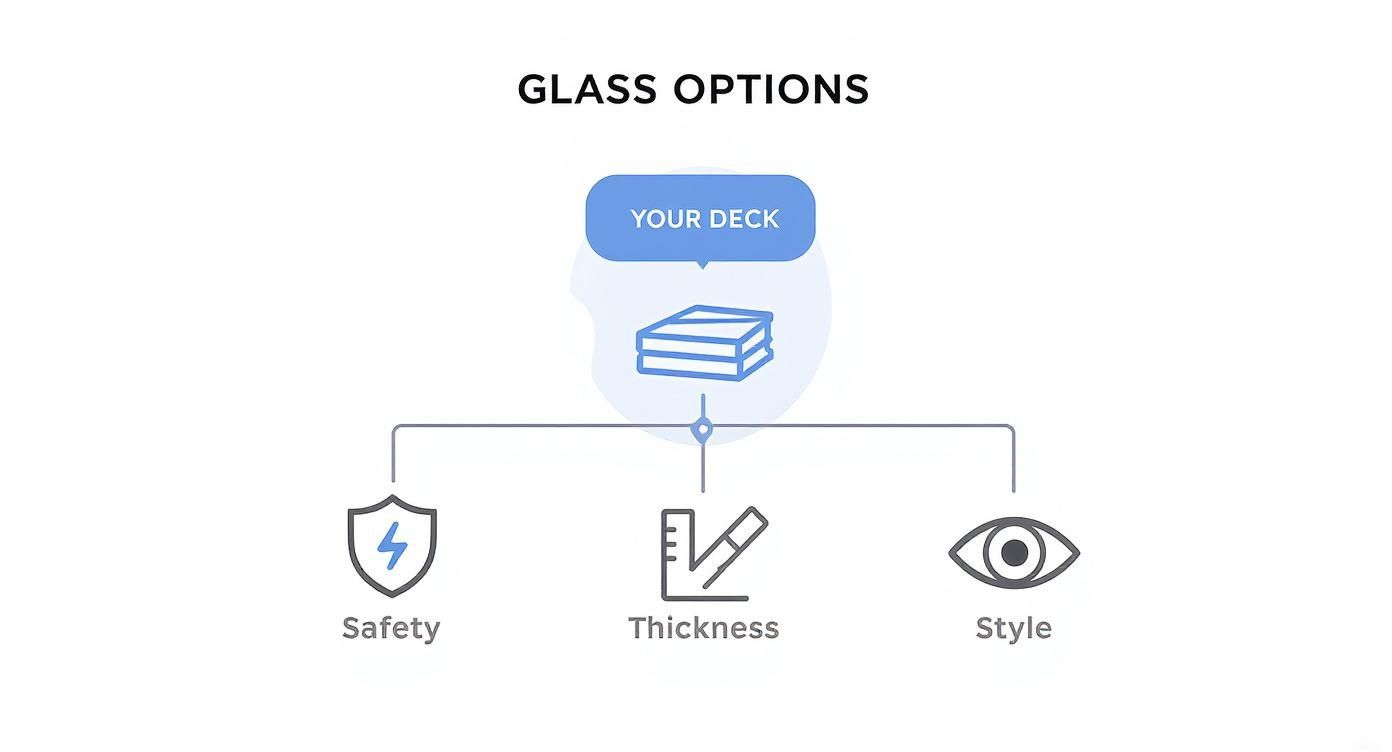
As you can see, the sweet spot is where safety requirements, glass thickness, and your personal aesthetic all meet. It’s this interplay that’s central to any successful glass balustrade project.
For that ultimate minimalist look, nothing beats a frameless channel system. This design secures the glass panels inside a continuous base channel that runs along the edge of the deck. The result is a seamless “sheet of glass” effect with no posts or clamps to get in the way, offering totally uninterrupted views. It’s no wonder this sleek, high-end appearance is so incredibly popular.
The market for these frameless structural glass balustrades has boomed, and it’s projected that the UK will command a 24.6% share of the European market in 2025. This really shows how much homeowners now favour clean, contemporary designs in their renovations and new builds.
A more classic—and often more cost-effective—choice is a posted system. Here, the glass panels are set between sturdy vertical posts, usually made from durable materials like stainless steel or powder-coated aluminium.
This system gives a clear sense of structure and definition to the space. The posts themselves can be finished in various styles, from a brushed steel for a modern feel to a bold matte black for an industrial edge, allowing you to tie them in perfectly with your window frames or garden furniture.
If you’re after a contemporary “floating glass” effect, then standoff clamps are a fantastic option. These are stylish, circular metal fittings that bolt directly onto the side of the deck’s structure, holding the glass away from the edge.
This method creates a visually light and airy barrier, making the glass appear as if it’s suspended in mid-air with only minimal hardware on show. It’s a brilliant way to make a modern architectural statement and works particularly well on raised decks and balconies where that side profile is visible.
Each system offers its own unique blend of visual impact and practical function. Taking some time to explore the different types of frameless glass balustrades can help you figure out which one will best complement your North of England home and create the perfect outdoor retreat.
When you’re dreaming of that beautiful new glass balustrade, safety has to be the number one priority. Let’s be honest, navigating UK building regulations can seem like a bit of a headache, but the rules are there for a very good reason: to keep everyone safe. It’s best to think of them not as restrictions, but as a blueprint for a secure, solid, and long-lasting installation.
The most fundamental rule is all about height. For standard domestic properties, say on ground-floor decking, the top of the handrail must sit at least 900mm from the deck level. This is the baseline for ensuring a safe barrier for everyday use.
Things change, though, the moment your decking is raised. If there’s a drop of 600mm or more from the platform to the ground below, the minimum height requirement jumps up to 1100mm. That extra height is crucial for providing proper protection against falls, a common setup for raised patios or balconies you see right across the North of England.
It’s not just about height. The regulations get very specific about the strength and resilience of your glass panel decking. The whole system – the glass, the posts, the fixings – has to be able to withstand specific forces, known as ‘line load’ and ‘point load’, without failing. This is your guarantee that it won’t give way if someone stumbles or leans heavily against it.
This is exactly why using the right kind of glass isn’t just a suggestion; it’s mandatory. Your installation must use certified safety glass, and you have two main options:
Getting this right is non-negotiable. It’s what ensures your stunning new balustrade is more than just a design feature—it’s a robust, reliable safety barrier that protects your family and friends.
People often underestimate just how strong modern safety glass is. If you’re curious, you can see for yourself how much force these panels can take. It really does provide total peace of mind for homeowners.
Working with experienced, local installers is the key to getting all of this right. A true professional understands not just the national standards but also any specific local quirks that might apply, especially for homes in conservation areas or the exposed, windy locations we often see in Yorkshire and Cumbria. They make sure your project is fully compliant from the ground up, leaving you with an outdoor space that’s both beautiful and, most importantly, completely safe.
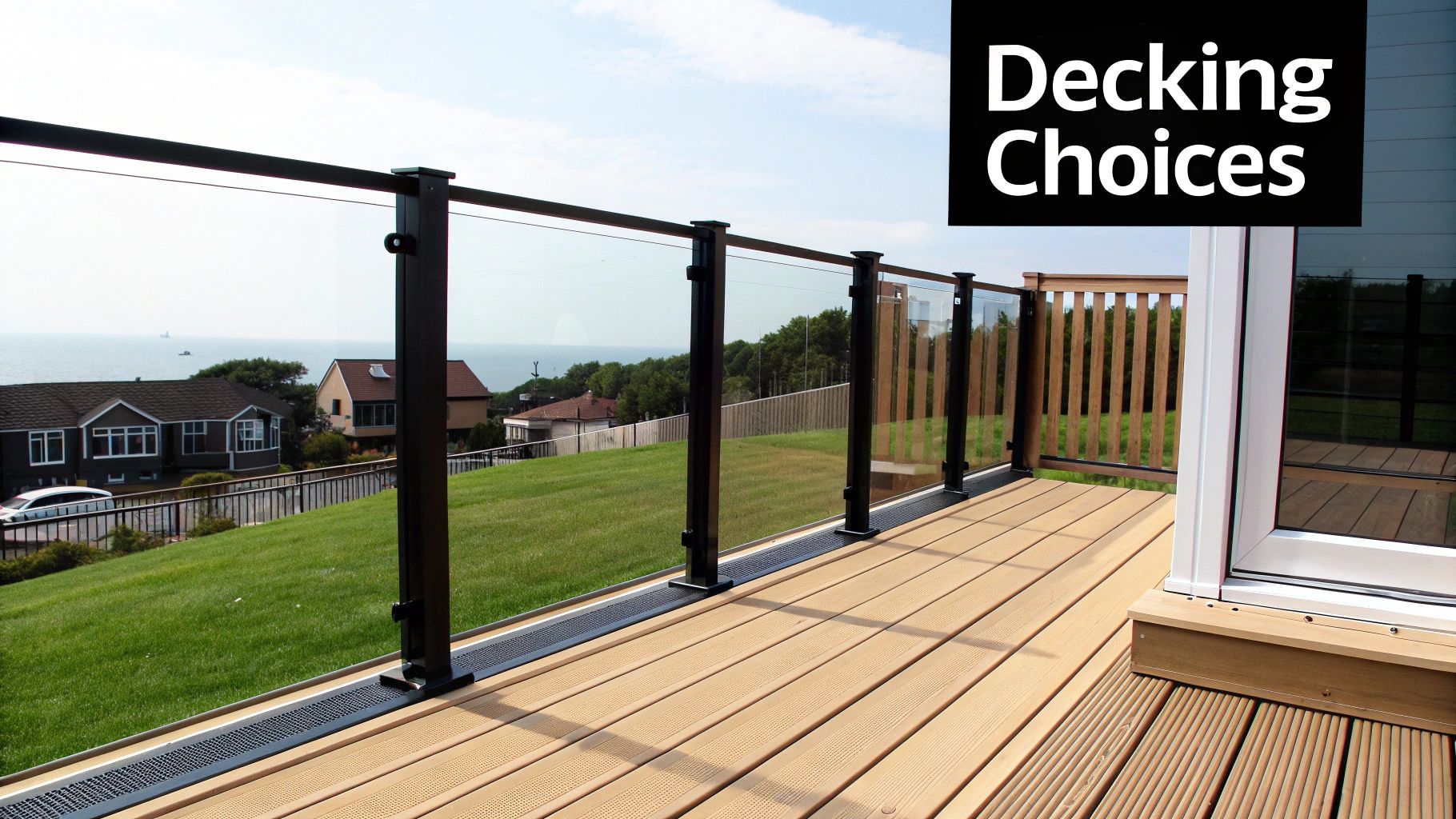
A stunning glass balustrade deserves a worthy foundation. The decking material you choose is essentially the stage for your transparent panels, and getting the pairing right is key to creating a cohesive, high-end outdoor space.
For years, traditional timber was the go-to choice, but when you put it alongside modern glass, you need to think carefully.
Softwood decking is certainly affordable, but it’s a demanding partner. It needs annual staining or sealing to fend off rot, a constant battle in the damp UK climate. Hardwoods are a step up, offering a richer, more durable finish, but they still need regular oiling to stop their colour from fading. This relentless upkeep can feel completely at odds with the low-maintenance appeal of glass.
This is where a more modern material comes into its own, offering a base that is every bit as sleek and resilient as the glass it supports.
Composite decking has rapidly become the perfect partner for glass panel decking, and for very good reason. It’s an engineered product, usually made from a smart blend of recycled wood fibres and plastic polymers. The result? A material that’s incredibly strong, immune to rot, and almost entirely maintenance-free.
The benefits of pairing composite with glass are hard to ignore:
The synergy between composite decking and glass balustrades is undeniable. Both materials are chosen for their modern look, long-term performance, and minimal upkeep, creating a unified outdoor living area that is truly built to last.
The UK’s enthusiasm for this combination is clear. The composite decking and railing market is a rapidly expanding sector, generating an estimated USD 80.7 million in revenue in 2024 alone. Projections show that figure growing significantly, confirming its place as a future-proof investment for any homeowner.
You can dive deeper into the UK composite decking market trends to see just how fast it’s growing. By choosing composite, you’re ensuring your deck’s foundation is as modern and reliable as the glass balustrade that sits on top of it.
Investing in glass panel decking is a fantastic move, but achieving that flawless, high-end finish all comes down to the quality of the installation. While it’s a straightforward process for an experienced team, it’s a job where precision and a solid foundation are everything. Get that right, and you’re set for years of safety and enjoyment.
The first—and most critical—stage is preparing the substructure. Think of it as the foundations of your house; if the base isn’t strong, level, and secure, nothing built on top of it will be either. A professional installer will ensure your deck’s frame is robust enough to easily support the weight of the glass and handle the forces it will face, particularly in wind-swept areas.
Once the base is perfect, the fixing system—whether it’s a sleek base channel, sturdy posts, or minimalist standoff clamps—is meticulously put in place. This stage is all about precision alignment. The goal is to guarantee the glass panels will sit perfectly straight and evenly spaced, creating that seamless, clean look you’re after.
One of the biggest myths about glass is that it’s high-maintenance. Honestly, the reality is the complete opposite. Keeping your glass panels looking brand new is surprisingly simple and takes far less effort than the annual chore of sanding and staining timber spindles.
For day-to-day cleaning, a simple solution of water and white vinegar in a spray bottle is your best friend. A quick spray and a wipe-down with a microfibre cloth will make short work of fingerprints, water spots, and general garden grime, leaving a perfect, streak-free shine.
Here’s a simple annual checklist to keep your installation in top condition:
A well-installed glass panel deck is a durable, low-effort investment. With just a tiny bit of care, its beauty remains undiminished, offering pristine views for decades to come.
With the right installation and a simple care routine, your deck will remain a stunning, safe, and transparent gateway to your garden. If you’re starting to plan your own project, you might find our complete glass balustrade kit options a great place to start.
Even after falling for the stunning looks and practical upsides of glass panel decking, it’s completely normal to have a few final questions buzzing around. We get it. Below, we’ve put together clear, straightforward answers to the most common queries we hear from homeowners across Yorkshire and the North of England, helping you move forward with your plans in complete confidence.
This is usually the first question on everyone’s mind, and the honest answer is: it depends. The final figure is a mix of a few key choices you’ll make along the way. Your choice of glass (laminated is a premium option), the fixing system you go for (frameless systems typically cost more than those with posts), and of course, the total length of the project all play a big part.
As a rough guide, you can expect the materials to cost somewhere between £150 to over £300 per linear metre. For a truly accurate figure that’s built around your specific garden and design, the best bet is always to get a bespoke quote from a specialist supplier.
Absolutely. When installed correctly by professionals using certified materials, it’s exceptionally safe. The toughened and laminated safety glass we use is engineered to handle significant force—far more than an accidental bump from a toy or a boisterous pet.
In fact, many families find glass panel decking safer than traditional railings. The solid panel design completely removes the gaps found between spindles, which can be a worry for parents of small children or pet owners. It offers total peace of mind.
In a lot of cases, you won’t. Decking projects often fall under ‘permitted development,’ which means they don’t need formal planning permission. But—and this is a big but—assuming this is always the case can be a very costly mistake.
You must check with your local council if your deck will:
Getting the green light from your local authority is a critical step that should happen long before any tools come out.
Ready to transform your outdoor space with a crystal-clear view? The team at Binks Glass Solutions is here to provide local expertise and guidance for your project in Yorkshire and across the North of England. Contact us today for a personalised quote.