
A Homeowners Guide to Glass Panels for Decking
Picture this: you step out onto your deck, and nothing stands between you and the perfect, panoramic view of your […]

Picture this: you step out onto your deck, and nothing stands between you and the perfect, panoramic view of your […]
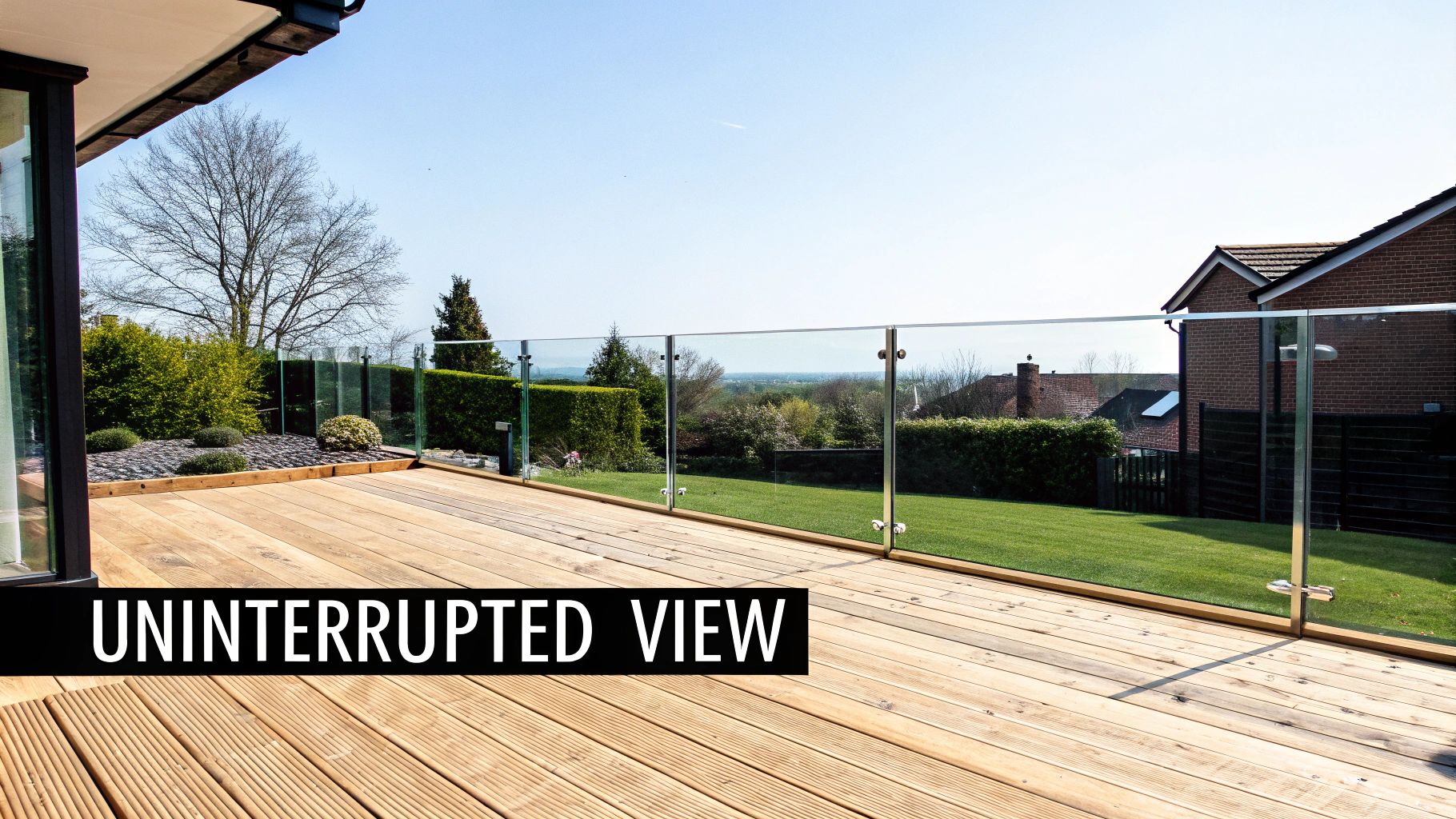
Picture this: you step out onto your deck, and nothing stands between you and the perfect, panoramic view of your garden. That’s the modern, elegant upgrade that glass panels for decking deliver, blending flawless safety with sophisticated style to create a seamless link between your home and the outdoors. It’s a choice that completely transforms your space, making it feel more open, luxurious, and connected to the world outside your door.
A glass balustrade is far more than just a safety barrier; it’s a genuine statement piece that elevates the entire look and feel of your home. For homeowners across Yorkshire, Cheshire, and Cumbria, it’s also a brilliantly practical way to enjoy those sweeping views while sheltering your space from the often unpredictable North of England weather.
Unlike traditional wood or metal railings, which can feel bulky and block precious light, glass panels create an open, airy atmosphere. This simple change enhances not just your view, but your property's overall value and appeal.
This guide is written specifically for homeowners right here in our region. We'll walk you through everything you need to know about integrating glass panels into your decking project, from choosing the right materials to making sure everything is up to code.
The number one reason people choose a glass balustrade is, without a doubt, the view. Whether you overlook a lovingly tended garden, rolling countryside, or a twinkling cityscape, glass ensures your sightline remains completely clear. This is especially powerful in the scenic corners of the North, where you want to make the most of the natural beauty.
On top of that, glass offers surprising durability and is refreshingly low maintenance.
Glass panels act as an effective windbreak, allowing you to enjoy your deck more comfortably on breezy days without sacrificing the view. This creates a more sheltered and usable outdoor living area throughout the year.
Of course, before adding a stunning glass balustrade, it's vital to think about the foundation it stands on. Understanding the different decking material options will help you make a smart choice for the base structure. After all, a strong, well-chosen deck material is key to ensuring your new glass system is supported securely for decades to come.
Here at Binks Glass Solutions, we make upgrading your outdoor space a straightforward, stress-free process. We bring the expertise needed to navigate the choices in materials, the building regulations, and the intricacies of installation. Our goal is simple: to help you bring your vision to life with complete confidence, ensuring the final result is not only beautiful but also safe and built to last.
With tools like our online Balustrade Calculator, you can get a precise, bespoke quote in just a few minutes. By the time you finish this guide, you’ll see why glass panels for decking are more than just a design trend—they are a smart, lasting investment in your home’s functionality and style.
Picking out the glass panels for your decking involves more than just admiring the view; it's a crucial decision that hinges on safety, durability, and the final look you want to achieve. Not all glass is the same, and getting to grips with the key differences is the secret to ensuring your new balustrade is a perfect fit for your home, whether you're in a busy Leeds suburb or enjoying the quiet of the Harrogate countryside.
The two main players you'll come across in the world of safety glass are toughened glass and laminated glass. It helps to think of them like the different types of glass in your car.
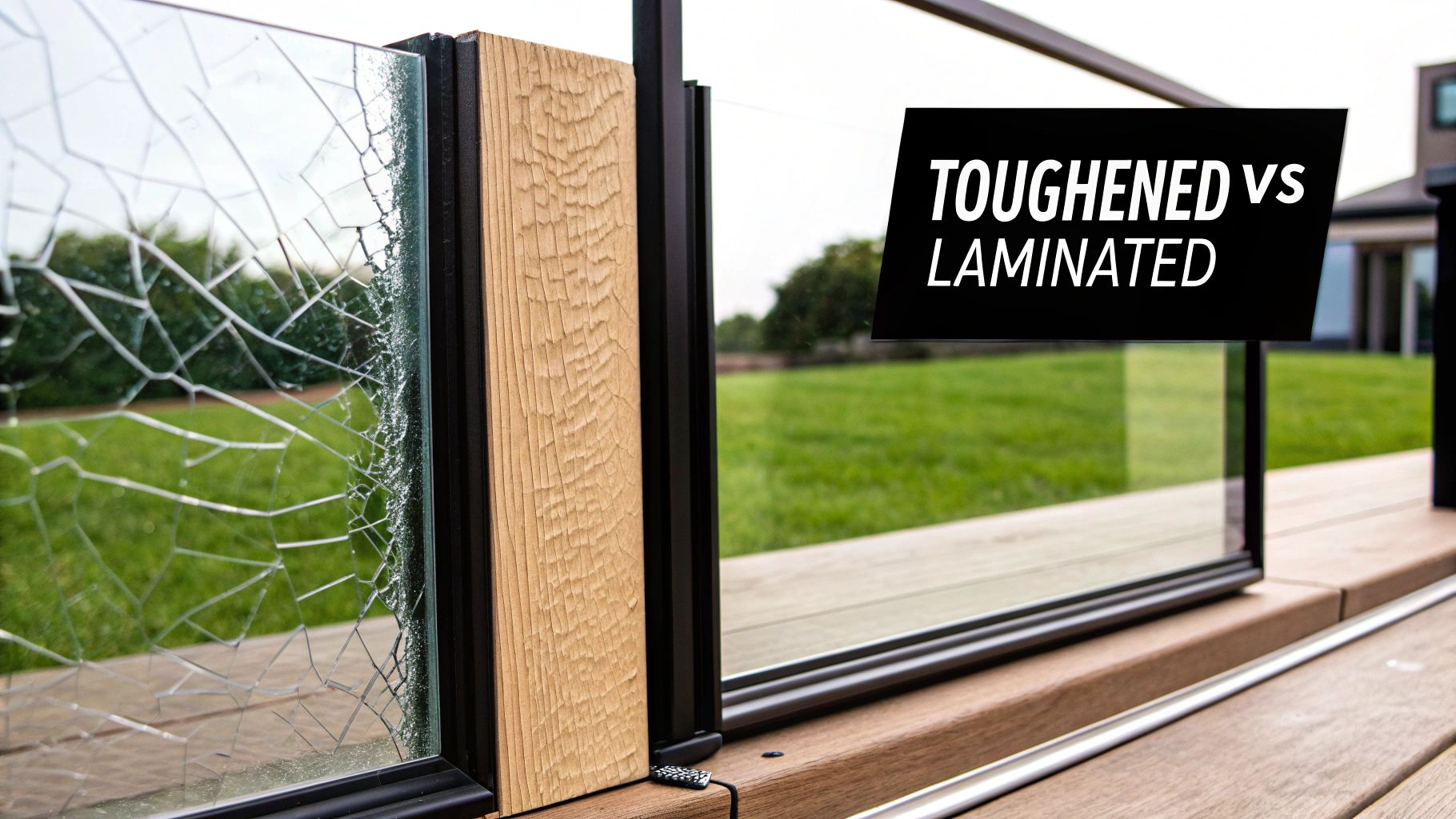
Toughened glass, often called tempered glass, is made through a process of intense heating and then rapid cooling. This treatment makes it incredibly robust—up to four times stronger than standard float glass. Its real party trick, though, is how it behaves if it ever breaks.
Just like your car's side window, if toughened glass shatters, it crumbles into thousands of small, blunt, cube-like pieces. This design dramatically reduces the risk of serious injury from nasty sharp shards, making it a hugely popular choice for family homes and ground-floor decks.
Laminated glass takes safety to a whole new level. It’s built more like a car's windscreen, with a tough, clear plastic interlayer (typically Polyvinyl Butyral, or PVB) bonded between two layers of glass.
If a laminated panel ever breaks, the broken pieces stick firmly to this internal plastic layer instead of falling away. This means the barrier stays in place, continuing to act as a protective wall even when it's been damaged. This incredible feature makes it the non-negotiable choice for high-level balconies or any balustrade where a fall would be particularly dangerous. For a deeper dive, you can explore the properties of laminated and toughened glass in our detailed guide.
Laminated glass also brings a couple of extra perks to the table: superior security and sound insulation. That plastic interlayer not only holds the glass together but also dampens sound vibrations—a welcome bonus for decks facing busy roads or noisy areas.
So, which one is right for you? This table offers a quick comparison to help you decide between the two main safety glass options for your balustrade.
| Feature | Toughened Glass | Laminated Glass |
|---|---|---|
| Breakage Pattern | Shatters into small, blunt cubes. | Fragments adhere to a plastic interlayer, keeping the barrier intact. |
| Primary Benefit | Reduces injury risk from sharp glass. | Maintains a physical barrier even after breaking. |
| Ideal Use Case | Ground-level decks, poolside areas, internal balustrades. | Raised decks, balconies, commercial spaces, high-traffic areas. |
| Strength | Very strong and impact-resistant. | Extremely strong, with added structural integrity from the interlayer. |
Ultimately, deciding between the two often comes down to your specific needs and how you use your outdoor space. A bustling family deck with kids and pets might benefit from the robust, stay-in-place nature of laminated glass, while a quiet, ground-floor patio could be perfectly served by the safety of toughened glass.
Beyond safety, the type of glass you choose will define the final look of your deck. While standard clear glass is fantastic for most projects, there are a couple of other options to consider if you're aiming for a specific aesthetic.
Once you've settled on the perfect glass for your decking, the next big decision is how you're going to hold it all in place. The mounting system is the hardworking skeleton of your balustrade. It provides all the structural support for the glass panels and, just as importantly, plays a massive role in the final look. Think of it as the frame for a masterpiece—it can either blend seamlessly into the background or become a design feature in its own right.
Getting to grips with the main options is key to achieving the look you've been dreaming of. Your choice between a frameless or semi-frameless system will define the entire character of your outdoor space, influencing everything from the clarity of your view to the project's bottom line. Let's break down the most popular choices so you can move forward with complete confidence.
If you're chasing that ultimate minimalist aesthetic, a frameless system is the undisputed winner. This approach creates a stunning, continuous "sheet of glass" effect that guarantees a completely uninterrupted view of your garden. It’s the closest you can get to an invisible safety barrier, a bit like the infinity edge of a swimming pool that seems to merge right into the horizon.
So how is this magical effect achieved? By securing the glass panels right at the bottom, using either a hidden base channel or a series of discreet spigots.
Frameless systems are engineered to be incredibly robust. They rely on thicker glass – typically 12mm or more – to provide all the necessary strength and rigidity without needing a supporting frame. This ensures they can handle significant wind loads and easily meet all safety regulations.
Because absolute precision is needed to get the alignment and base fixings just right, these systems are best left to the professionals. That flawless, high-end finish depends entirely on getting every single panel perfectly level and plumb, a task that requires specialist tools and a wealth of experience.
Semi-frameless systems offer a brilliant middle ground, beautifully blending the open, airy feel of glass with the defined structure of minimalist posts. It's a clean, contemporary look that’s both incredibly stylish and often a bit kinder on the budget than a fully frameless installation. The posts provide the main structural support, which means slightly thinner glass panels can be used without ever compromising on safety.
The real beauty of this system is its versatility. You can choose from a whole range of post styles and finishes—from sleek, round stainless steel to modern, square powder-coated aluminium in popular colours like anthracite grey or black. This makes it easy to match the balustrade to your home's existing details, like window frames or garden furniture.
The glass panels are held securely in place with elegant glass clamps, which are a key part of the system's design. These small details can have a huge impact on the final look and feel, and you can explore different glass balustrade clamp options to find the perfect style for your project.
Picking between these two popular styles usually comes down to three things: aesthetics, budget, and how complex the installation is. Here’s a quick comparison to help you weigh it all up.
| Feature | Frameless System | Semi-Frameless System |
|---|---|---|
| Visual Impact | Creates a completely unobstructed, "infinity" view. | Provides a modern, defined look with clean lines. |
| Key Components | Hidden base channel or spigots. Thicker glass. | Visible posts and clamps. Slightly thinner glass. |
| Cost | Generally a higher initial investment. | More budget-friendly and cost-effective. |
| Installation | Requires professional installation for precision. | Can be suitable for experienced DIY enthusiasts. |
Ultimately, a semi-frameless system with posts is often a more accessible project for a skilled DIYer, as the components are generally easier to handle and align. By contrast, the pinpoint accuracy required for a perfect frameless finish makes professional fitting the highly recommended route. Understanding this difference right from the start gives you a much clearer picture of the total cost and effort involved.
When you choose to install beautiful glass panels on your decking, it’s not just a design decision—it's the installation of a critical safety barrier. Getting your head around the UK Building Regulations is the key to ensuring your stunning new feature is fully compliant, incredibly safe, and gives you complete peace of mind.
These rules aren't just bureaucratic red tape; they're sensible, life-saving standards put in place to protect you, your family, and any guests you have over. For homeowners in Darlington, Hull, and right across the North, getting this right from the very beginning is the secret to a smooth, stress-free project.
The great news is, the core principles are pretty straightforward. They boil down to three main areas: the height of the balustrade, the size of any gaps, and the strength of the glass and fixings.
One of the most important rules to know is the minimum height your balustrade needs to be. This all depends on the drop from your decking surface to the ground below.
This 1100mm requirement is a non-negotiable standard for domestic outdoor areas like decking, balconies, and roof terraces. It provides a secure barrier that’s high enough to stop an average adult from overbalancing.
It's not just about height; your glass balustrade has to be strong enough to withstand real-world forces. UK regulations set out minimum load-bearing requirements, making sure the barrier can resist the pressure of people leaning against it or even from high winds. This is exactly why using professionally certified toughened or laminated safety glass is mandatory.
Another vital safety standard you’ll hear about is the "100mm sphere rule."
The rule simply states that no gap anywhere in the balustrade—whether it's between the panels, under them, or between a panel and a post—should be large enough for a 100mm sphere to pass through. It’s a common-sense rule designed to stop small children from getting their heads stuck or squeezing through.
Solid glass panels make it incredibly easy to meet this requirement because there are no spindles or wide gaps to worry about. This built-in safety is one of the biggest reasons why glass panels for decking are such a popular choice for family homes. For a more detailed breakdown, have a look at our guide on the most important building regulations for balustrades.
The twin demands for better safety and modern, clean aesthetics have really fuelled the growth in the UK's architectural glass market. To give you an idea, the UK glass facade market was worth USD 1,003.9 million back in 2020 and is projected to climb to USD 1,391.4 million by 2028. This trend shows just how strong the demand is for high-quality, compliant barrier systems in both new builds and renovation projects across Yorkshire, Cheshire, and Cumbria. Discover more insights about the UK glass market growth on Grand View Research.
Taking the leap from admiring glass balustrades to planning your own is always an exciting moment. To get from that initial spark of inspiration to a clear, accurate quote, the first step is getting some good measurements. Think of it like ordering a bespoke suit; the final fit is only as good as the measurements you start with. This guide will walk you through exactly how to measure your decking area to ensure a perfect result.
We live by a simple rule here: measure twice, order once. Taking a few extra minutes to double-check your figures can save you a world of hassle and expense later on, ensuring your new glass panels fit flawlessly the first time.
To get started, you just need a reliable tape measure, a pen, and some paper to sketch out a simple bird's-eye view of your deck. It doesn't need to be a work of art—a basic diagram is perfect for keeping your measurements organised.
The infographic below highlights the key safety considerations that will influence your balustrade's final design, from height and gaps to the specific type of glass we use.
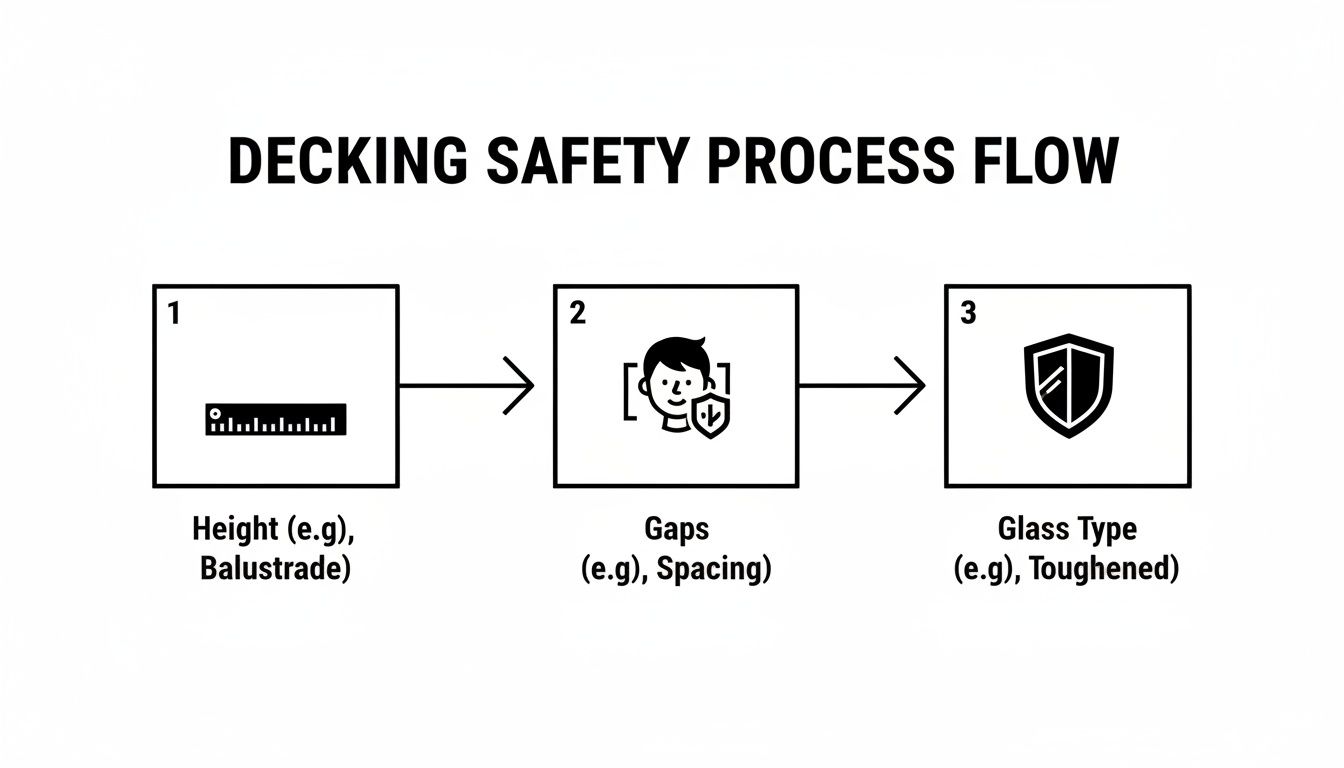
This shows just how critical factors like a minimum height of 1100mm and using the correct safety glass are for a safe, compliant, and successful installation.
Once you have your measurements jotted down, you’re ready for the exciting part: getting a precise, itemised quote. Our online Balustrade Calculator is designed to make this process incredibly simple and totally transparent. It walks you through four easy steps, showing you exactly how your choices affect the final cost.
Our calculator puts you in control. It lets you experiment with different styles and materials so you can find the perfect combination that fits both your vision and your budget. It’s all about giving you the information you need to move forward with confidence.
Here’s how it works:
As soon as you submit your details, the calculator generates a tailored quote instantly. This transparent approach means no nasty surprises, giving you a clear understanding of the costs and putting you one step closer to your stunning new deck.
One of the best things about choosing glass panels for decking is just how little work they need to stay looking fantastic. If you’ve ever spent a weekend sanding and staining a timber deck surround, you’ll appreciate the simplicity of glass. With just a tiny bit of care, your balustrade will keep that showroom sparkle for years.
This means less time spent on chores and more time enjoying that beautiful, clear view you invested in. Keeping the glass crystal-clear is straightforward and doesn’t call for any fancy or expensive cleaning products.
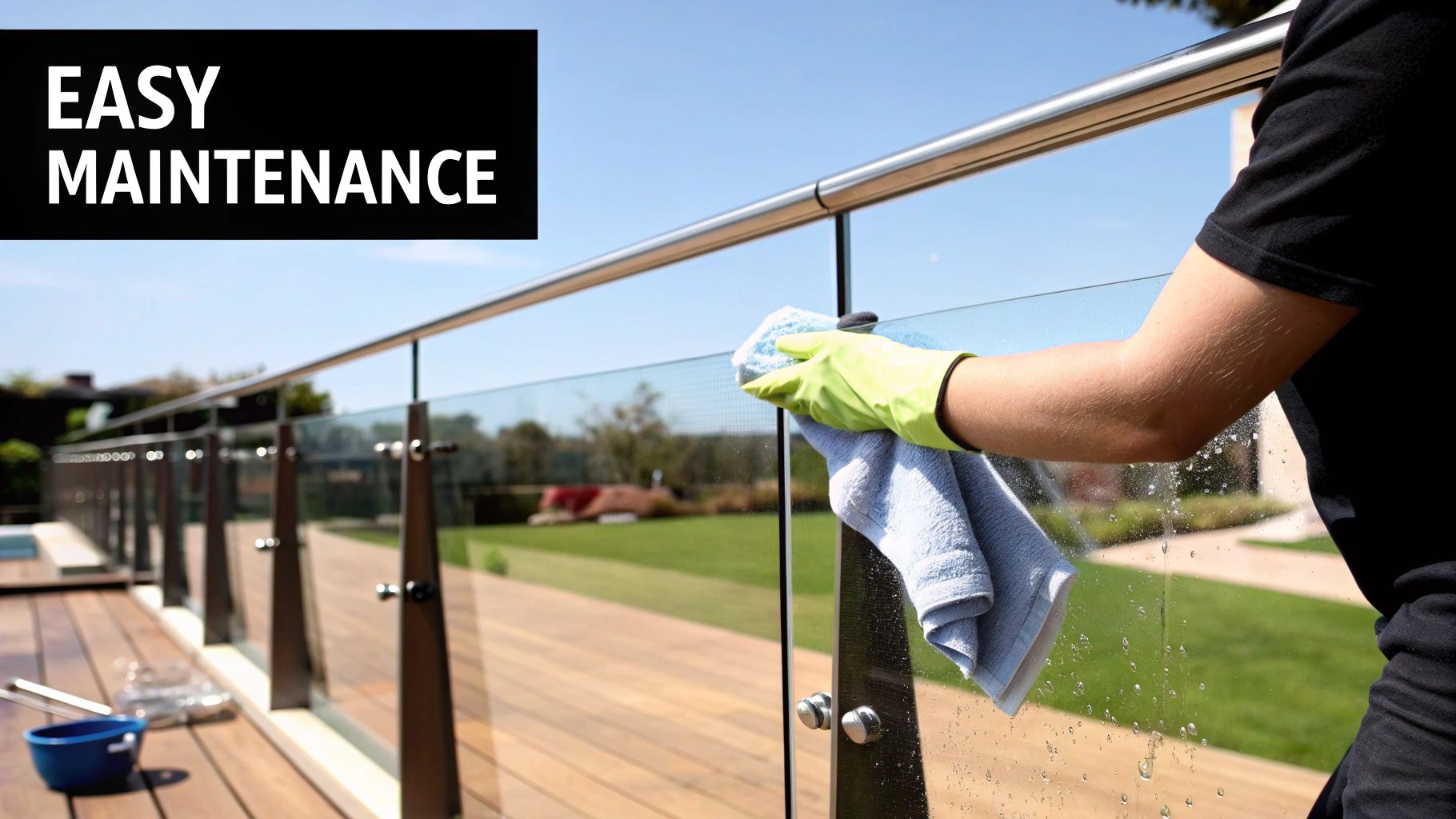
The secret to gleaming, transparent panels isn’t a secret at all—it's just a simple routine. For a perfect, streak-free finish, all you need is a bucket of warm water with a few drops of mild detergent, like your everyday washing-up liquid.
Use a soft, non-abrasive cloth to gently wash the glass, lifting off any dust, smudges, or water spots. Next, give the panels a good rinse with clean water to get rid of any soap residue. To finish, dry the glass with a clean microfibre cloth or a squeegee to stop any streaks from forming as it dries.
Top Tip: Steer clear of abrasive cleaners, scouring pads, or harsh chemicals. These can easily scratch the glass surface or damage the protective coatings on the metalwork, ruining that pristine finish.
The metal fittings are just as crucial as the glass. Our systems use high-grade stainless steel or powder-coated aluminium, both chosen for their incredible durability and resistance to rust and corrosion.
To keep them looking their best—especially with the damp weather we often get across the North of England—just wipe them down with the same soapy water you use for the glass. This simple step removes any grime and helps maintain their protective finish. It’s also wise to give the fixings a quick check once or twice a year, just to make sure everything is still tight and secure.
This demand for durable, high-quality materials is on the rise. In fact, the UK coated glass market hit USD 1,640.4 million in 2022 and is expected to climb to USD 3,088.7 million by 2030, which shows just how much homeowners are embracing modern, long-lasting solutions. You can read more about the growth in the UK coated glass market on Grand View Research. A little effort goes a long way in making sure your glass balustrade remains a solid, long-term investment.
It’s completely natural to have questions before committing to a glass balustrade. When you’re planning an upgrade to your home, you want clarity, and our job is to give you straightforward, honest answers to the things we’re asked most often by homeowners across the North of England.
From worries about family safety to the practicalities of our famously unpredictable weather, we’ve put together the essential information you need. Let’s clear up some of the most frequent questions about glass panels for decking so you can move forward with confidence.
Absolutely. This is usually the first and most important question for families, and the answer is a resounding yes. When installed correctly using toughened or laminated safety glass, these systems are incredibly strong, creating a secure barrier that meets strict UK safety standards.
The real genius of the design is that solid glass panels completely get rid of the gaps you’d find in traditional railings with spindles or bars. This simple fact eliminates any risk of small children or curious pets getting stuck or squeezing through, giving parents and pet owners total peace of mind. At Binks Glass Solutions, family safety is our highest priority in every system we supply.
The final cost of a glass balustrade depends on a few key things. The type of glass you choose, the mounting system you prefer (frameless systems often cost a little more than those with posts), the total length you need, and any custom touches like a top rail will all shape the final price.
As every project is different, the best way to get an exact figure is to use our online Balustrade Calculator. It’s designed to give you a detailed, custom quote for your specific deck in just a couple of minutes, giving you complete clarity on the costs involved.
That’s a great question. We find that many skilled and confident DIYers can successfully install our semi-frameless systems that use posts and clamps. The components are designed to be user-friendly for people with good practical experience.
Frameless channel systems, however, are another story. They demand a much higher level of professional precision. Getting that perfect, seamless alignment where every single panel is dead level requires specialist tools and experience. For a guaranteed flawless finish and absolute safety, we almost always recommend professional installation for these systems. We're more than happy to supply all the materials for your project and offer guidance to make sure it's done right.
Glass balustrades are perfectly suited to handle the often-challenging UK climate. The toughened safety glass we use is exceptionally durable and has been engineered to withstand high winds and driving rain without any issue at all.
What’s more, all our fittings are made from high-grade materials like stainless steel or powder-coated aluminium. We choose these materials specifically for their outstanding resistance to rust and corrosion, ensuring your investment stays beautiful and secure for years to come, from the windswept Yorkshire Dales to the rainy Cumbrian coast.
Ready to transform your deck with a stunning, modern, and safe glass balustrade? The expert team at Binks Glass Solutions is here to help you every step of the way, from initial design to final delivery.