
Your Guide to Glass Panels for Decks in the UK
Imagine a garden deck that feels completely open, bright, and like a natural extension of your home. That’s the feeling […]

Imagine a garden deck that feels completely open, bright, and like a natural extension of your home. That’s the feeling […]
Imagine a garden deck that feels completely open, bright, and like a natural extension of your home. That’s the feeling you get with modern glass panels for decks – a solution that perfectly marries safety and style to utterly transform your outdoor living space.
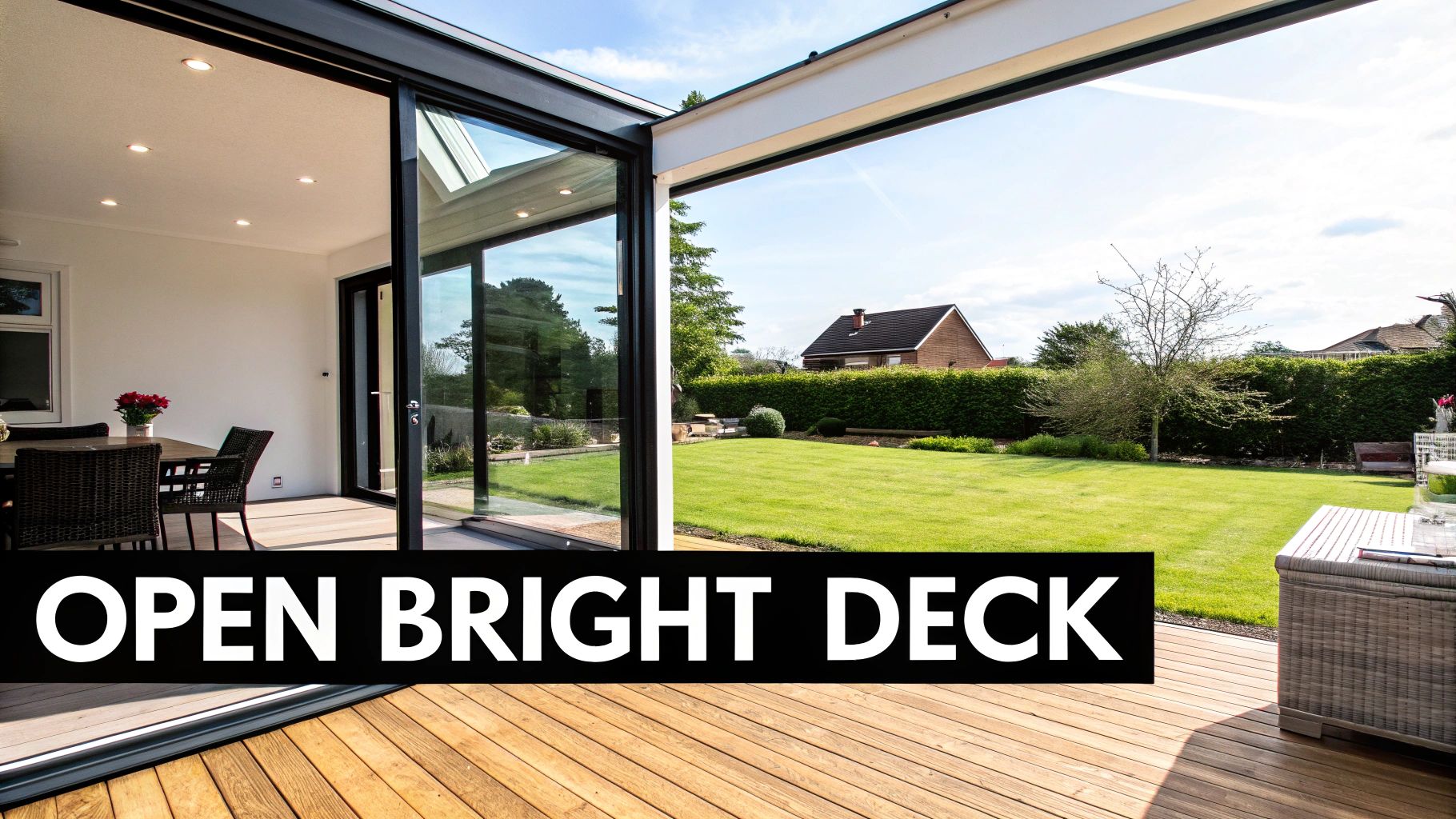
For homeowners all over the North of England, a deck isn't just timber and screws; it’s the heart of the garden. It’s where you relax, where the family gathers, and where you enjoy a bit of sun. But traditional railings, whether wood or metal, can feel restrictive. They put up visual walls, chop up your view, and block that precious light.
Glass panels offer a sophisticated and brilliant alternative, getting rid of those limitations entirely.
Think of a glass balustrade as an invisible guardian for your deck. It provides the crucial safety barrier demanded by UK regulations, but it does so with total transparency. This one simple change has a massive impact, making your entire garden feel bigger, more inviting, and beautifully connected to the world around it.
Upgrading to glass isn’t just about getting a clean, modern look. It’s a practical choice that brings a whole host of benefits, enhancing both your lifestyle and your property's appeal.
Here’s what you gain:
This growing desire for see-through barriers isn't just a fleeting trend. It’s a real shift in the construction market towards modern, light-enhancing materials that open up our living spaces.
We're seeing this shift everywhere in residential projects, from Yorkshire to Cumbria. In fact, the global market for flat glass, which includes the advanced glass used for balustrades, is a testament to this trend, showing significant growth year on year. It’s clear that this clean, contemporary style is here to stay.
This guide is designed to walk you through everything you need to know, helping you explore inspirational balustrade decking ideas and make every decision with confidence.
When you're fitting glass panels to your deck, you're not just making a style choice; you're installing a serious piece of safety equipment. The glass in a balustrade isn't the same stuff you find in your windows. It’s a highly engineered material specifically designed to keep you and your family safe.
Getting to grips with the two main types—toughened and laminated—is the first crucial step. It ensures you make a choice that’s not only beautiful but also fully compliant and utterly secure.
Think of it like choosing a coat for the unpredictable weather we get here in the North of England. You’ve got your sturdy, all-purpose waterproof jacket, and then you have a heavy-duty expedition parka for serious conditions. Both keep you safe, but they’re designed for different levels of risk. Safety glass is much the same.
For most home decking projects, toughened glass is the go-to option, and for good reason. It offers a fantastic balance of strength and value. We make it by taking standard glass, heating it intensely, and then cooling it down rapidly. This process fundamentally changes its internal structure, making it about four to five times stronger than it was before.
This thermal strengthening gives it incredible resilience against knocks, bumps, and temperature swings. But its real party trick, and its key safety feature, is what happens if it ever does break. Instead of shattering into long, dangerous daggers of glass, it crumbles into small, blunt, cube-like pieces that are far less likely to cause a nasty injury. This predictable behaviour makes it a trusted workhorse for most ground-level decks and garden patios.
For the majority of home projects, from a patio in Harrogate to a garden deck in Leeds, toughened glass provides the perfect balance of strength, safety, and value.
While toughened glass is incredibly strong, laminated glass takes security to a whole other level. The best way to picture it is as a glass sandwich. Two panes of glass are permanently bonded together with a tough, transparent polymer interlayer (usually Polyvinyl Butyral, or PVB). It’s this clever construction that gives it superior safety performance.
If a laminated panel takes a heavy impact and breaks, that clever interlayer holds everything together. The glass will crack in a spiderweb pattern, but it remains a solid barrier, preventing anyone or anything from falling through. This ‘fail-safe’ quality is precisely why UK building regulations demand its use in certain situations where the risk is higher.
Laminated glass becomes a necessity when your balustrade is protecting a significant drop. This typically includes:
The demand for advanced safety glass like this has been a major factor in the UK's construction industry. The sector continues to grow, with architectural glass being a key driver, especially in residential projects across the North.
To make the choice clearer, let's break down the key differences between these two fantastic materials.
| Feature | Toughened Glass | Laminated Glass |
|---|---|---|
| How it Breaks | Crumbles into small, blunt cubes. | Cracks but stays in place, held by the interlayer. |
| Strength | 4-5 times stronger than normal glass. | Similar impact resistance, but provides post-breakage integrity. |
| Best For | Ground-level decks, patios, internal screens. | Balconies, raised decks (over 600mm drop), frameless systems. |
| Safety Feature | Breaks into less harmful pieces. | Remains a barrier even when broken. |
| Cost | More cost-effective. | A more premium option due to its complex construction. |
At the end of the day, both are excellent safety products, but they are designed for different jobs.
Choosing between toughened and laminated glass isn't just about personal preference; it's about meeting safety standards and getting total peace of mind. The decision really comes down to the height and location of your deck.
For a deeper dive into the technical specs, you can explore our detailed comparison of laminated and toughened glass. Understanding these differences is the key to ensuring your project is not only stunning but, most importantly, completely safe and built to last.

Once you’ve settled on the right type of safety glass, you get to the exciting part: choosing the style of your balustrade. This is all about aesthetics and deciding how the final system will blend with the character of your home and garden. Each style offers a completely different look and feel, turning your deck from a simple platform into a real design statement.
Think of it like choosing a frame for a beautiful painting. A big, ornate frame makes a bold statement and draws the eye, while a slim, minimalist frame almost disappears, letting the art take centre stage. The glass panels for your deck are the artwork; the system you choose is the frame.
Let's walk through the three most popular options you’ll find in homes across the North of England, from Darlington to Hull.
Framed glass balustrades are the classic, go-to choice for a reason. In this system, every glass panel is held securely within a sturdy frame, usually made from powder-coated aluminium or stainless steel, complete with visible support posts and a top handrail.
This style gives your deck's perimeter a clear sense of structure and definition. The visible frame creates clean lines and a reassuringly robust look, making it a fantastic match for a huge range of properties, from traditional brick homes to more contemporary new-builds.
There are a few key benefits to this approach:
This style is a brilliant all-rounder, providing a safe, stylish, and durable barrier that enhances your outdoor space without breaking the budget.
If you're after a more modern look, the semi-frameless style offers a beautiful middle ground. This design keeps the structural support posts but gets rid of the continuous top and bottom rails that hold the glass in a traditional framed system.
The result is a much cleaner, more open feel. The vertical posts still provide a subtle sense of structure, but without a top handrail, your gaze travels uninterrupted across the top of the glass. This creates a brilliant sense of space and a stronger connection with your garden, making it a hugely popular choice for homeowners who want to maximise their view.
The semi-frameless design is the perfect compromise. It gives you that modern, open feeling while maintaining a defined structure, blending seamlessly into its surroundings without completely disappearing.
This style elegantly balances form and function. It's a noticeable step up in minimalist design from the fully framed option while still being straightforward to install and cost-effective.
If your goal is the ultimate 'wow' factor with a completely clear, uninterrupted view, then a fully frameless system is the only way to go. This is the pinnacle of minimalist design, creating a stunning, almost invisible barrier that feels like a wall of air.
With a frameless system, there are no vertical posts at all. Instead, the tough structural glass panels are secured right at their base, either with specialised clamps or by being set into a structural channel fixed directly to the deck. The result is a seamless sheet of glass that puts your view front and centre. It is the purest expression of what glass panels for decks can achieve.
This premium option is perfect for properties with a stunning outlook, whether that's a rolling Yorkshire dale or a beautifully landscaped garden. By removing all visible supports, you create an architectural feature that is both breathtakingly simple and incredibly sophisticated. While it represents a higher investment, the visual impact is simply unmatched, offering a truly luxurious finish that feels completely at one with the landscape.
Choosing the style of glass for your deck is the exciting part, but underpinning every great installation is something far more important: safety. When you install glass panels for decks, you're not just adding a design feature; you're creating a critical protective barrier. Getting to grips with the UK building regulations that govern these systems isn't just a good idea—it's absolutely essential.
Navigating these rules can feel like trying to decipher a technical manual, but the core principles are refreshingly straightforward. They're designed with one simple goal in mind: to keep everyone safe. Getting this right from day one protects your family and guests, guarantees your project is fully compliant, and prevents any costly, frustrating mistakes down the line.
The key document here in England is Approved Document K: Protection from falling, collision and impact. This sets out the specific, non-negotiable standards for balustrades, including every detail for those made from glass.
One of the most critical rules is all about height. The required height of your balustrade is directly determined by the potential fall distance from the edge of your deck. It’s a simple concept—if there’s a bigger drop, the barrier needs to be higher.
For most residential properties in the UK, the rules are as follows:
These heights aren't just arbitrary figures; they are carefully calculated minimums designed to prevent accidental falls. Sticking to them is the first and most vital step towards a safe, compliant installation.
Beyond just height, the regulations also dictate how much force your glass balustrade must be able to withstand. Just picture it: someone leaning heavily against the glass, or a couple of people accidentally stumbling into it. The entire system has to be strong enough to resist these forces without failing.
This is what’s known as load-bearing capacity, and the requirements change depending on the building's use. For a single-family home, the barrier must be able to resist a specific horizontal force, ensuring it remains rigid and secure even under real-world pressure. This is a key reason why using the correct glass thickness and the right type of fixings is so vital.
A frameless system, for instance, which is only secured at its base, relies entirely on the raw strength of the glass itself to meet these load requirements. This is exactly why thicker, structural glass (often 12mm toughened or laminated) is specified for these sleek designs. In contrast, a framed system distributes the load through posts and a handrail, which can sometimes allow for slightly thinner glass panels. Understanding these engineering principles is a core part of our expertise, and you can dive deeper into the specifics in our detailed guide to balustrade building regulations.
The demand for compliant, high-quality architectural glass is growing right across the construction sector. This growth is heavily driven by a rebound in construction, especially in private housing across regions like our own here in Yorkshire, where compliant glazing is essential.
Working with specialists who live and breathe these standards takes all the guesswork out of your project. It’s the only way to guarantee that every single component, from the glass thickness to the last fixing bolt, is correctly specified to create a system that isn't just beautiful, but completely safe and legal.
Once you've got a good handle on the type of glass, the style you're after, and the all-important safety rules, it’s time to get practical. Measuring your deck for glass panels might sound like a job for the pros, but it's actually a straightforward process you can easily tackle yourself.
Getting these figures right from the start is the key to a perfect fit and an accurate, instant quote. Think of it as creating a simple map of your deck's perimeter. All you really need is a tape measure, a notepad, and a few minutes to get it done. This simple step takes the guesswork out of the planning stage and gives you the exact information needed to order the right components, whether you're in Harrogate, Leeds, or York.
First things first, grab a piece of paper and make a quick sketch of your deck's layout. It doesn’t need to be a work of art—a simple line drawing showing the shape is perfect. Make sure to mark any corners, steps, or places where the balustrade will start and finish, like against the wall of your house.
This little visual guide is brilliant for keeping track of your measurements and making sure you don't miss any sections. It's the foundation for everything that follows.
With your sketch ready, you can start measuring the lengths.
The system you’ve chosen—whether it's framed or semi-frameless—will affect how you think about posts and fixings. For any system with vertical posts, you'll need to consider their placement. A good rule of thumb is to space posts evenly, typically no more than 1.2 metres apart, which keeps the whole system rigid and strong.
When it comes to corners, you’ll need a specific corner post that lets the balustrade turn a neat 90-degree angle. On your sketch, just mark where each corner post will sit. Don't get bogged down trying to calculate the exact glass panel sizes between the posts just yet—your total length measurement is the main piece of information needed at this stage.
The goal here isn’t to become a balustrade designer overnight. It’s simply to gather the key data—the total length of your runs—so you can get a clear and precise cost for the glass panels for your deck.
Before you put your tape measure away, it's always wise to do one last check: the drop height from your deck surface to the ground below. This quick measurement confirms the required balustrade height and the type of glass you'll need to meet UK regulations.
This diagram shows the simple rules that determine your balustrade height based on the drop.
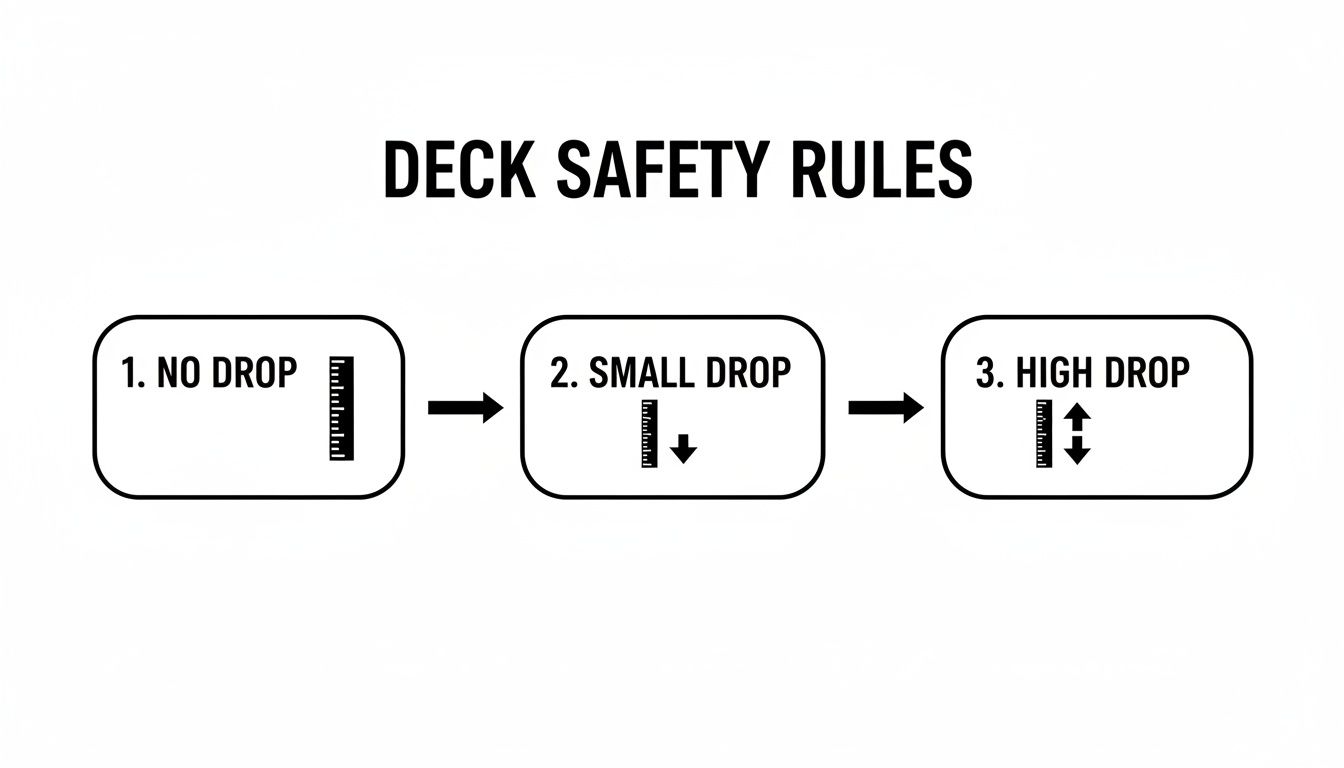
As you can see, any drop over 600mm requires a taller, 1100mm high balustrade to ensure everyone is completely safe.
Once you have your total length and have confirmed your height requirements, you have everything you need. This little bit of prep gives you the confidence to move forward and makes ordering the correct components a simple, hassle-free process.
You’ve taken the measurements, you’ve picked out the perfect style, and now it’s time for the final, most exciting part: bringing it all to life. This journey has two key stages – the initial installation and the surprisingly simple care that will keep your glass panels for decks looking brand new for years.
Getting the installation spot-on is non-negotiable, not just for the look of it, but for safety too. You've really got two paths you can take: rolling up your sleeves for a DIY project, or bringing in the professionals for a guaranteed flawless finish.
For the confident and experienced DIYer, fitting a glass balustrade can be an immensely satisfying job. A successful self-install hinges on precision, having the right kit, and a really solid grasp of structural fixings.
Your toolbox will need a few essentials:
But for most homeowners, the peace of mind that comes with a professional installation is worth its weight in gold. Hiring experts like us guarantees your system is fitted in full compliance with UK building regulations, which is critical for both safety and legal reasons. Professionals have seen it all before; they can handle any unexpected snags and have the specialist gear to ensure a perfect, secure fit that will get the most out of your investment.
Opting for a professional fit isn't just about convenience; it's about guaranteeing a flawless, compliant, and structurally sound installation that will stand the test of time, giving you complete confidence in your new balustrade.
Honestly, one of the best things about glass deck panels is how little looking after they need. Unlike timber that demands yearly sanding, staining, and painting, glass just needs a quick wipe-down to look its best.
You can forget about harsh chemicals or complicated cleaning schedules. Keeping your glass balustrade sparkling is refreshingly simple.
Most of the time, a bit of warm water with a few drops of washing-up liquid is all you'll ever need. Just use a soft microfibre cloth or a squeegee to wipe down the glass, getting rid of any dust, dirt, or water spots. If you want that final, streak-free gleam, a standard household glass cleaner does the job perfectly.
This minimal effort is a huge reason why so many homeowners in Yorkshire and across the North of England are choosing this modern, hassle-free solution. For more difficult marks, you might find some good tips for removing stubborn residues from glass without causing any damage. A few minutes of simple care each month is all it takes to keep that stunning view completely clear and your deck looking immaculate.
When you’re thinking about a project like this, it’s only natural for a few questions to come to mind. Getting the practical details sorted is the best way to move forward with confidence. Here are the clear, straightforward answers to the queries we hear most often from homeowners across the North of England.
This can vary quite a bit, as the final price tag really depends on the style you choose, the type of glass, and the total length needed for your deck.
To give you a rough idea, classic framed systems are generally the most budget-friendly, often starting at around £150 per linear metre. If you’re after that ultra-minimalist look, a high-end, fully frameless system could be upwards of £300 per metre. The best way to get a precise figure is to use an online calculator for an instant quote tailored to your exact measurements.
Absolutely. When they’re specified and installed correctly, modern glass balustrades are exceptionally safe. We use toughened or laminated safety glass, which is specifically engineered to withstand significant force and impact.
One of the biggest safety benefits is that the solid glass panels completely eliminate the gaps you find in traditional railings. This means there’s no risk of a child or small pet climbing through or getting stuck, giving you a secure and reliable barrier for complete peace of mind.
The cornerstone of a safe installation is adhering strictly to UK building regulations for height, glass type, and structural strength. This ensures your balustrade isn't just stylish, but a truly protective feature for your family.
While it’s certainly possible for someone with advanced DIY skills, the right tools, and a solid grasp of structural fixings, it's a job that demands real precision. Every single component must be perfectly level and securely anchored for both safety and that professional finish.
For most homeowners, we strongly recommend a professional installation. It’s the only way to guarantee the system is fitted correctly, is fully compliant with all building regulations, and will stand strong for years to come. Think of it as protecting your investment and making sure the job is done right the first time.
This is one of the best parts – they are incredibly easy to look after. Unlike wood, there's no yearly painting, staining, or sealing to worry about.
For a routine clean, warm, soapy water with a soft cloth or a squeegee is all you need to get rid of everyday dirt. For a perfect, streak-free shine, a standard household glass cleaner works wonders. This low-maintenance appeal is a massive plus for busy homeowners.
Ready to transform your deck with a stunning and secure glass balustrade? The team at Binks Glass Solutions is here to help homeowners across the North of England with expert advice and premium systems. Get in touch with us today to discuss your project.