
What Is the Real Price for Glass Balustrades in 2026
When you start thinking about a glass balustrade, one of the first questions is always about the cost. It’s the […]

When you start thinking about a glass balustrade, one of the first questions is always about the cost. It’s the […]
When you start thinking about a glass balustrade, one of the first questions is always about the cost. It’s the practical starting point for any home improvement project. For a typical residential project here in the UK, you should plan for a budget somewhere in the region of £150 to £500+ per linear metre.
This figure covers a wide range because, like choosing a new car, the final price tag depends on the model and extras you select. A frameless system will have a different cost from a post-and-rail design, and the type of glass and handrail you choose will also play a significant part. This initial range is a solid benchmark, but let’s break it down to see what really drives the price.
To get a clearer picture of what your budget might look like, it helps to see the costs side-by-side. Whether you're planning a modern patio transformation in Leeds or opening up the views from a balcony in Cumbria, the system you choose is the biggest factor.
The table below gives you a snapshot of typical 'supply-only' costs for the most popular systems we install across the North of England. Think of these as a starting point to help you compare your options.
This table provides estimated cost ranges for different glass balustrade systems, helping you understand the initial budget required.
| Balustrade System Type | Glass Type | Estimated Price Per Linear Metre (Supply Only) | Best For |
|---|---|---|---|
| Frameless Channel System | Toughened or Laminated | £250 – £500+ | Uninterrupted views, modern patios, and balconies |
| Post & Rail System | Toughened | £150 – £300 | Decking areas, garden walls, and traditional designs |
| Standoff / Bolted System | Toughened or Laminated | £200 – £400 | Staircases and landings for a 'floating' glass effect |
| Juliet Balconies | Toughened or Laminated | £300 – £600+ (Per unit) | Upper-floor windows and French doors |
These prices are a fantastic guide, but remember they don't include installation or any site-specific complexities that might come into play.
Behind every quote is the cost of the raw materials, and the glass itself is a major component. The UK flat glass market, which is the source for all the high-quality glass we use at Binks Balustrades, was valued at USD 4,786.2 million in 2023. It's projected to grow to USD 7,873.4 million by 2032, expanding at about 5.8% a year.
This growth, driven by demand for new construction and advanced glass technologies, naturally affects the cost of the toughened and laminated panels for your project. You can read more about the trends in the flat glass market on Straits Research if you're interested in the details.
Think of these costs as guide prices—a baseline from which to build your project budget. They represent the 'supply-only' cost and provide a fantastic benchmark, but the final figure will be unique to your home.
Factors like the complexity of your site, the specific glass thickness required to meet safety standards, and the finish of your handrails all have a role to play. A simple, straight run on a level patio will always be more cost-effective than a curved staircase that needs bespoke, shaped glass panels.
To move from a rough estimate to a firm figure, you need a quote tailored to your exact space. That’s where our on-site Balustrade Calculator comes in. It’s the perfect tool for taking the guesswork out of budgeting, giving you an accurate price for your vision instantly, with no obligation.
When it comes to pricing up your balustrade, the glass panels themselves are one of the biggest factors in the final cost. The specific type of glass, its thickness, and any special treatments all have a direct impact on your quote. Getting to grips with these differences is key to striking the right balance between looks, safety, and your budget.
Think of it like choosing tyres for your car. You’ve got standard, dependable options that do a fantastic job, and then you have high-performance, premium versions with advanced safety features that come with a higher price tag. Both are great choices, but they’re engineered for different situations and budgets.
This flowchart gives you a bird's-eye view of how all the different elements, from your initial material choices to the final quote, fit together.
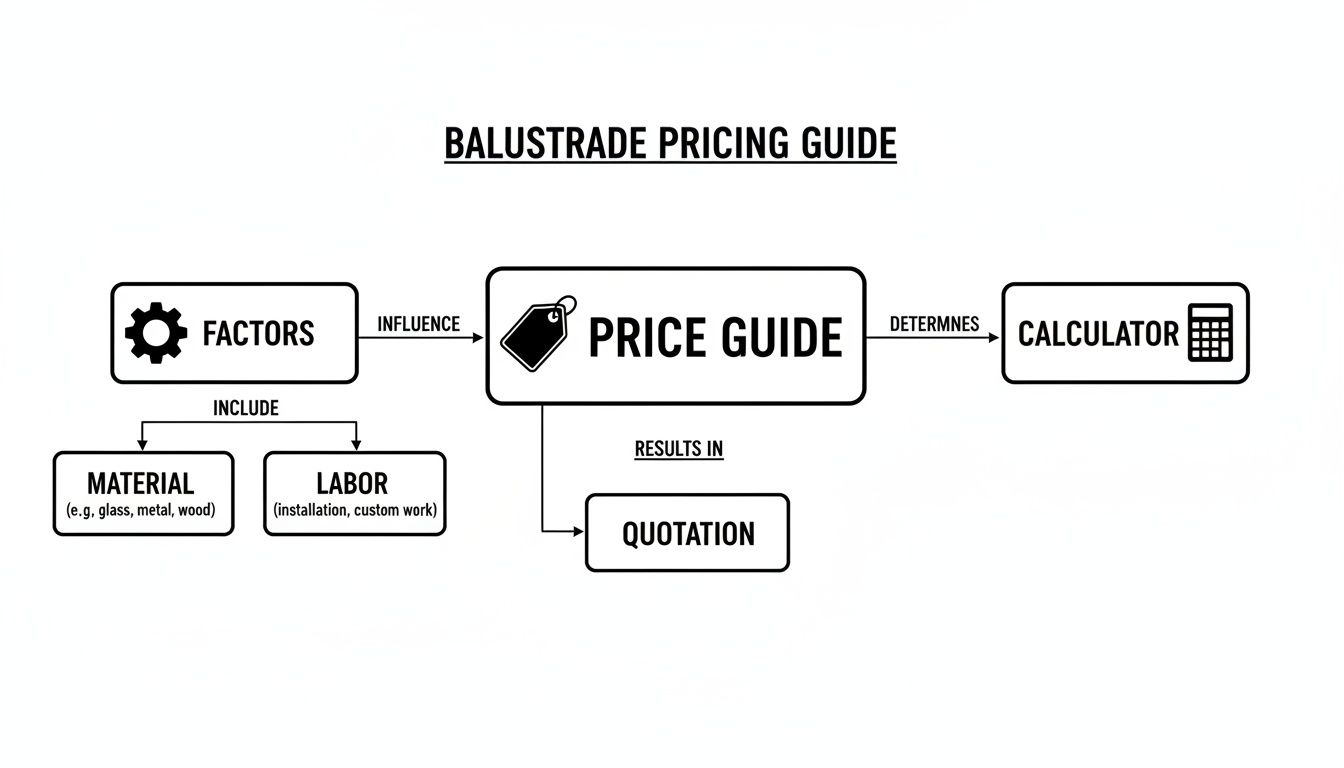
As you can see, understanding what drives the cost of your project is the first step before you can get a really accurate estimate.
Toughened glass is our go-to, reliable choice for a huge range of balustrade projects. It’s made by heating standard glass to over 600°C and then cooling it very quickly. This process locks in stress, making the glass around four to five times stronger than ordinary glass.
Its strength means it can take some serious knocks. And if it ever does break, it crumbles into thousands of small, blunt-edged pieces instead of dangerous, jagged shards. This makes it a very safe and popular option, especially for systems that have posts or a continuous handrail providing extra structural support.
For many projects, particularly ground-level patios or decking in areas like York and Harrogate, toughened glass hits that sweet spot of safety, clarity, and great value. It’s the more cost-effective of the two main types.
Laminated glass is the next step up in safety and performance, and its price reflects that. To go back to our analogy, if toughened glass is a standard car tyre, laminated glass is the high-performance, run-flat version. It’s built with an extra layer of protection from the ground up.
It’s made from two panels of toughened glass bonded together with a clear, tough plastic interlayer, usually Polyvinyl Butyral (PVB). This sandwich-like construction is what gives it such superior safety credentials.
If one or even both layers of a laminated glass panel break, the fragments stick firmly to the PVB interlayer. The panel itself stays in place, stopping a dangerous gap from opening up and acting as a crucial barrier to prevent a fall.
This "fail-safe" quality is exactly why building regulations often require laminated glass for any balustrade protecting a drop of 600mm or more—what's officially known as a 'critical location'. This covers most balconies, raised terraces, and internal mezzanine floors. Because of the more complex manufacturing and extra materials, laminated glass can be 30-50% more expensive than a similar-sized panel of toughened glass.
It’s not just the type of glass that counts; its thickness is another key variable that affects the price. Glass for balustrades typically ranges from 10mm to 21.5mm, and quite simply, thicker glass costs more.
The thickness required isn't just a random choice—it's determined by structural engineering calculations and strict safety standards. Different types of balustrade systems place different loads on the glass.
Choosing the right thickness ensures your balustrade isn’t just a beautiful feature, but a fully compliant and safe one. For a deeper look into these materials, you can learn more about laminated and toughened glass in our detailed guide. Ultimately, picking the right glass is about finding the perfect meeting point between regulations, your aesthetic vision, and your project's budget.
While the glass panels are a huge part of your quote, it’s the hardware and finishing touches that really shape the final look and cost of your balustrade. These components—the fixing systems, handrails, and even the sheen on the steel—are what bring the entire design together.
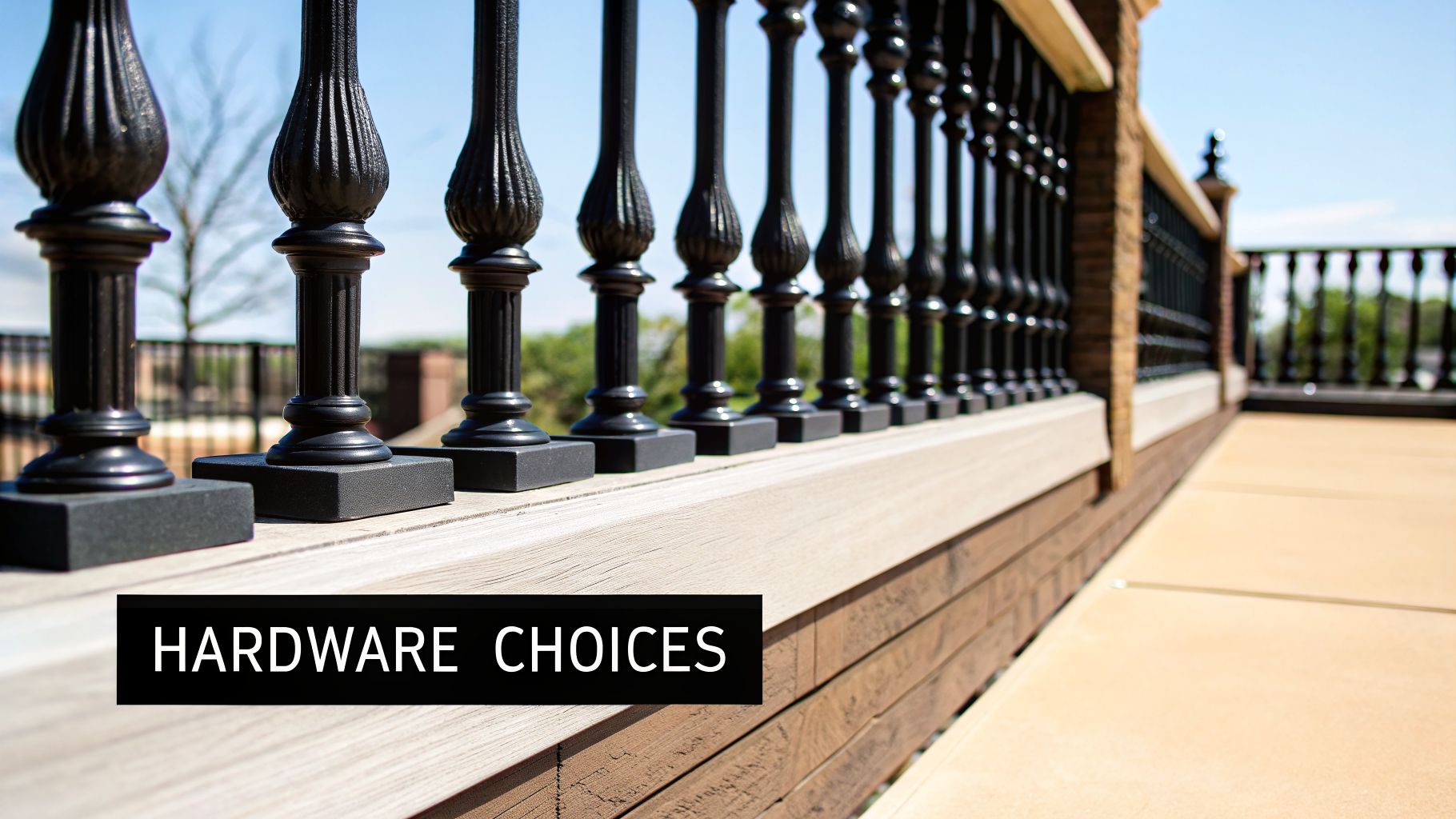
Getting to grips with how these different systems work and why their prices vary will give you confidence in your choices. It also helps make sense of the quotes you see from our Balustrade Calculator, giving you a crystal-clear picture of where every pound is going.
The biggest hardware cost comes from the primary fixing system—it’s the backbone of your balustrade, securing the glass to your patio, balcony, or staircase. There are three main approaches, and each has its own price point and visual style.
A post and rail system is a real crowd-pleaser and often the most cost-effective choice. It uses sturdy stainless steel posts with glass panels secured between them. It’s a strong, versatile design that we see used all the time for garden patios and decking areas across the North of England. Because the posts do a lot of the structural work, this system often lets you use more affordable 10mm toughened glass, which helps keep the budget in check. You can get a closer look at the key components by reading our guide on the glass balustrade clamp and how it functions.
Moving up the price scale, you’ll find spigot mount systems. These rely on small, incredibly tough clamps bolted directly to the ground, which then grip the bottom of the glass. The result is a stunning, semi-frameless look where the glass seems to float just above the surface. Those spigots are precision-engineered pieces of hardware, which makes them a more expensive option than the clamps in a post system.
At the very top end is the frameless channel system. This is the one to go for if you want that ultimate, uninterrupted wall of glass with no posts or visible fixings in sight. The magic lies in a heavy-duty aluminium base channel that runs the full length of the balustrade, holding the glass firmly in place. This engineered channel requires the most material and precision, making it our premium fixing option.
Another decision that will steer your final quote is whether to add a top rail or handrail. While you can sometimes install a frameless system without one (by using thicker laminated glass), a rail is a common choice for both design and safety.
A slim, discreet top rail (sometimes called a cap rail) fits neatly over the top edge of the glass. It adds a crisp, finished line to the design and offers extra protection. A full handrail, on the other hand, is designed to be gripped and is usually held away from the glass with special brackets.
The material you choose here has a direct impact on the price:
A top rail doesn't just offer a sleek finish; it can also add significant structural rigidity to the whole system. This can sometimes allow you to use a slightly thinner, more affordable glass specification while still meeting safety standards—a clever way to balance cost and design.
Finally, even the surface finish on the stainless steel components plays a role in the cost. The two main options you'll come across are brushed and polished.
A brushed finish has a soft, satin-like texture that’s fantastic at hiding fingerprints and small scuffs. It’s an incredibly practical and popular finish for projects both inside and out.
A polished finish gives you that mirror-like, highly reflective surface. Getting that perfect gleam requires extra manufacturing steps, which makes it a slightly more expensive option. It creates a very high-end, striking look, especially for coastal properties where it beautifully reflects the sea and sky. Your decision here comes down purely to the look you’re going for and your budget.
While the glass and hardware are the core components of your project, it’s the installation that brings it all to life. This is the human touch, the skilled labour that turns a collection of parts into a stunning, secure balustrade. Understanding what goes into this cost is key to seeing the full picture of your investment.
Your first decision is between a 'supply-only' service and a full 'supply-and-install' package. The supply-only route can work well for experienced DIY veterans who have the right tools and a deep understanding of the job. It removes the labour cost, but it also places all the responsibility for a safe, accurate, and compliant installation squarely on your shoulders.
For most people, though, the peace of mind that comes with a professional installation is invaluable. It’s the guarantee that the job is done right, looks flawless, and is built to last.
Labour isn't a one-size-fits-all cost; it's shaped by the unique character of your property. The complexity of the job is easily the biggest factor.
Just think of the difference. Fitting a simple, straight balustrade on a level patio is one thing. Installing a bespoke system on a curved, period staircase in an old Harrogate home is another challenge entirely. The latter requires meticulous planning and specialist skills, which naturally takes more time and expertise.
Here are the key elements that affect the installation price:
Choosing a professional installation is about so much more than convenience. It's a direct investment in the safety and legality of your home. Glass balustrades, especially those protecting a drop, must be installed to meet strict UK Building Regulations, including BS 6180:2011. An experienced fitter knows these rules inside out, ensuring your balustrade isn't just beautiful, but completely safe.
That flawless, professional finish is also incredibly difficult to get right without years of practice. Perfect alignment, secure fixings, and an immaculate look are the hallmarks of a skilled team. This expertise is what prevents common DIY headaches like wobbly panels, uneven gaps, or even damage to your property. To see how these factors come together in a final price, you can review our complete guide on glass balustrade costs.
Beyond the immediate work on your property, wider market forces can also play a part. Fluctuations in the UK's construction sector and global supply chains have a direct impact on the cost of the raw materials we use for your project.
For example, the base price for float glass, which is essential for our balustrades, can change from one quarter to the next. In late 2025, prices softened to 854 USD/MT because of a slowdown in construction. But just a few months earlier, they had peaked at 872 USD/MT due to supply issues and rising energy costs. You can find further data from the IMARC Group on these trends. This is why a quote from a local supplier like Binks Balustrades, who is on the ground in the North of England, will always give you the most accurate and current pricing.
Hopefully, you now have a much clearer picture of what goes into pricing a glass balustrade. But ballpark figures are one thing; knowing the exact cost for your project is another. That’s precisely why we created our on-site Balustrade Calculator.
We wanted to make the budgeting process as transparent and simple as possible. Think of the calculator as your personal design studio and pricing expert, all rolled into one. In four straightforward steps, you can experiment with different styles and finishes, seeing exactly how each choice affects the price in real-time. It’s completely free to use, with no obligation.
First things first: let's choose the overall look for your balustrade. This is where you’ll pick the main fixing system which, as we've covered, plays a huge part in the final cost. The primary options are:
Choosing a style here lays the groundwork for your design and gives the calculator the first piece of the pricing puzzle.
Next, you'll need to select the right type of glass for your project. As we've discussed, this decision is critical for both safety and cost. Your choice will be between toughened and laminated glass.
Just remember, if your balustrade is protecting a fall of 600mm or more, Building Regulations will require laminated glass. This is non-negotiable for safety. Making the correct selection here ensures your quote is not only accurate but also fully compliant from the outset.
The third step is a simple but important design detail: would you like a top rail? You can opt for a slim, discreet cap rail for a clean, finished edge, or choose a full handrail for something more substantial to hold.
Of course, you can also go without a rail entirely for that ultimate minimalist aesthetic. Just bear in mind this will usually require thicker, and therefore more expensive, laminated glass to provide the necessary structural rigidity. This choice fine-tunes both the look and the cost of your system.
Finally, you just need to tell us the size of your project. This is the last piece of information we need. Simply enter the total length of your balustrade in linear metres.
Here’s a quick look at what you’ll see as you start building your quote.
As you can see, the whole process is designed to be visual and intuitive. Once you've entered your details, you’ll receive an instant, itemised quote for your bespoke glass balustrade, giving you the clarity and confidence to take the next step.
Getting that high-end, contemporary look with a glass balustrade doesn't have to break the bank. With a few savvy choices and a bit of forward planning, you can get a firm grip on the price for glass and hardware, ending up with a stunning feature that fits your budget perfectly.
It all comes down to making informed decisions. You need to know where you can be flexible to save a bit of cash, and where it really pays to invest for long-term value and peace of mind. Helping homeowners across the North of England find that perfect balance of beautiful, safe, and affordable is at the heart of what we do.
One of the most straightforward ways to keep your budget in check is to select a system that is inherently more cost-effective. A post and rail system, for instance, is a brilliant option that gives you a clean, modern aesthetic but at a lower price point compared to a fully frameless channel system.
Another key strategy is to design your balustrade around standard glass panel sizes wherever you can. Bespoke panels, cut to unusual shapes or specific dimensions for a one-off project, always require specialised processing that bumps up the cost. Sticking with standard sizes can lead to some surprisingly significant savings.
It might sound counterintuitive, but sometimes spending a little more upfront can save you a small fortune in the long run. This is especially true when it comes to the hardware, which has to stand up to the elements day in and day out.
Investing in higher-quality materials isn't just an expense; it's a way to future-proof your balustrade. It prevents the need for costly repairs or replacements down the line, delivering superior value over the life of your installation.
A perfect example is picking the right grade of stainless steel. If your property is in a coastal area or an exposed location battered by the weather, upgrading to marine-grade 316 stainless steel is a no-brainer. It has far superior resistance to corrosion and rust compared to the standard 304 grade, making sure your balustrade keeps its pristine look for years. For a wider view on project budgeting, exploring regional home improvement blogs can offer great advice on similar financial planning principles.
The final price for glass can also be nudged by wider economic factors that affect the entire UK supply chain. The recycling market, believe it or not, plays a part in the cost of raw materials.
Back in 2018, the market for Packaging Recovery Notes (PRNs) for glass saw some wild price swings. Glass Remelt PRNs, which are relevant to making balustrades, averaged £19.41 per tonne but jumped from as low as £11.00 to a peak of £46.00. You can discover more insights about historic PRN price data on t2e.co.uk. This kind of volatility can squeeze supplier margins and, eventually, affect the cost of the finished product. Just being aware of these outside forces helps put the quotes you receive into a clearer context.
We get asked about pricing all the time. It’s a crucial part of any home improvement project, and we believe in being completely transparent. When you’re planning your budget, you want clear, straightforward answers.
Here, we’ve gathered the most common questions we hear from clients across the North of England to give you the clarity you need.
Yes, it is. You can typically expect laminated glass to be around 30-50% more expensive than a toughened glass panel of the same thickness. The price difference comes down to a more involved manufacturing process.
Think of it like a safety sandwich. We take two panels of toughened glass and bond them together with a super-strong plastic interlayer (PVB). This construction is what provides its superior safety. If the panel ever breaks, the broken pieces stay stuck to that interlayer instead of shattering and falling. For any balustrade that’s protecting a drop—like a balcony, raised patio, or staircase—building regulations will often insist on laminated glass. It's an investment in safety and compliance that simply can't be compromised.
It’s a great question. A frameless balustrade, which uses a solid base channel, generally has a higher price per metre than a system built with stainless steel posts. The difference boils down to the engineering and the sheer volume of high-spec materials required.
That sleek aluminium base channel is a seriously robust, precision-engineered piece of kit. It has to be, as it's designed to take the entire load of the glass without any other support. This demanding job also means the system requires much thicker and heavier glass, usually 17.5mm or 21.5mm laminated glass, to guarantee absolute rigidity and safety.
In contrast, a post system is cleverly designed to spread the structural load across several posts. This smart distribution means you can use slightly thinner and more affordable glass, like 10mm toughened panels, making it a more budget-friendly choice that still delivers a fantastic, stylish look.
While buying the materials on a 'supply-only' basis for a DIY fit will certainly reduce your initial outlay on labour, it’s a decision that needs careful consideration. A glass balustrade isn’t like putting together flat-pack furniture; you're dealing with very heavy panels that demand precise alignment and rock-solid fixings to be safe.
A small error in installation could lead to system failure, damage to your property, or a balustrade that doesn't comply with building codes. For a simple, ground-level garden balustrade, an experienced DIYer might find it a manageable project. However, for anything more complex—like a staircase, a system at height, or a tricky layout—we always recommend a professional installation. It’s the only way to guarantee your safety and that perfect, flawless finish.
While the cost of our core materials stays the same no matter where you are, the final installed price can see slight variations based on logistics. A project in a remote Cumbrian village might involve more travel time and delivery costs for our fitting team compared to one in a central city like Leeds or York.
Ultimately, it’s the site's complexity and the logistics of getting our team and materials there—rather than the postcode itself—that can influence any small regional differences in the final quote.
Ready to turn your vision into a reality? For expert advice and a precise quote tailored to your home in Harrogate or the surrounding areas, get in touch with the team at Binks Balustrades.