
A Guide to Deck Screws Stainless Steel
Choosing the right deck screws stainless steel is probably the single most critical decision you’ll make for the longevity of […]

Choosing the right deck screws stainless steel is probably the single most critical decision you’ll make for the longevity of […]
Choosing the right deck screws stainless steel is probably the single most critical decision you’ll make for the longevity of your deck, especially given the famously damp UK climate. Think of them as the vital stitching holding the whole structure together; get it right, and your deck will stand strong for years. Get it wrong, and you’re looking at a recipe for premature failure.
Picking the right stainless steel deck screw isn’t just a trivial choice you make at the hardware shop. It’s a genuine investment in the safety, appearance, and lifespan of your outdoor space. A poorly chosen fastener can lead to ugly rust stains bleeding into your beautiful timber, weakened boards that become a hazard, and costly repairs down the line. This is especially true for projects across the North of England, whether it’s a coastal home in Whitby getting blasted by sea spray or an inland garden in Sheffield facing down the rain. The weather demands robust solutions.
This guide will give you a direct, actionable overview of what you really need to consider:
There’s a growing appreciation for building things to last, and the demand for high-quality fasteners reflects that. In fact, the UK market for structural wood screws, which includes these stainless steel deck screws, was valued at a hefty USD 400.7 million in 2023. It’s projected to climb to USD 518.5 million by 2030, all driven by the need for strong, corrosion-resistant fixings. You can find out more about the structural wood screws market and see the trend for yourself.
To simplify the most important choice you’ll make, this little decision tree breaks it down based on your project’s location.
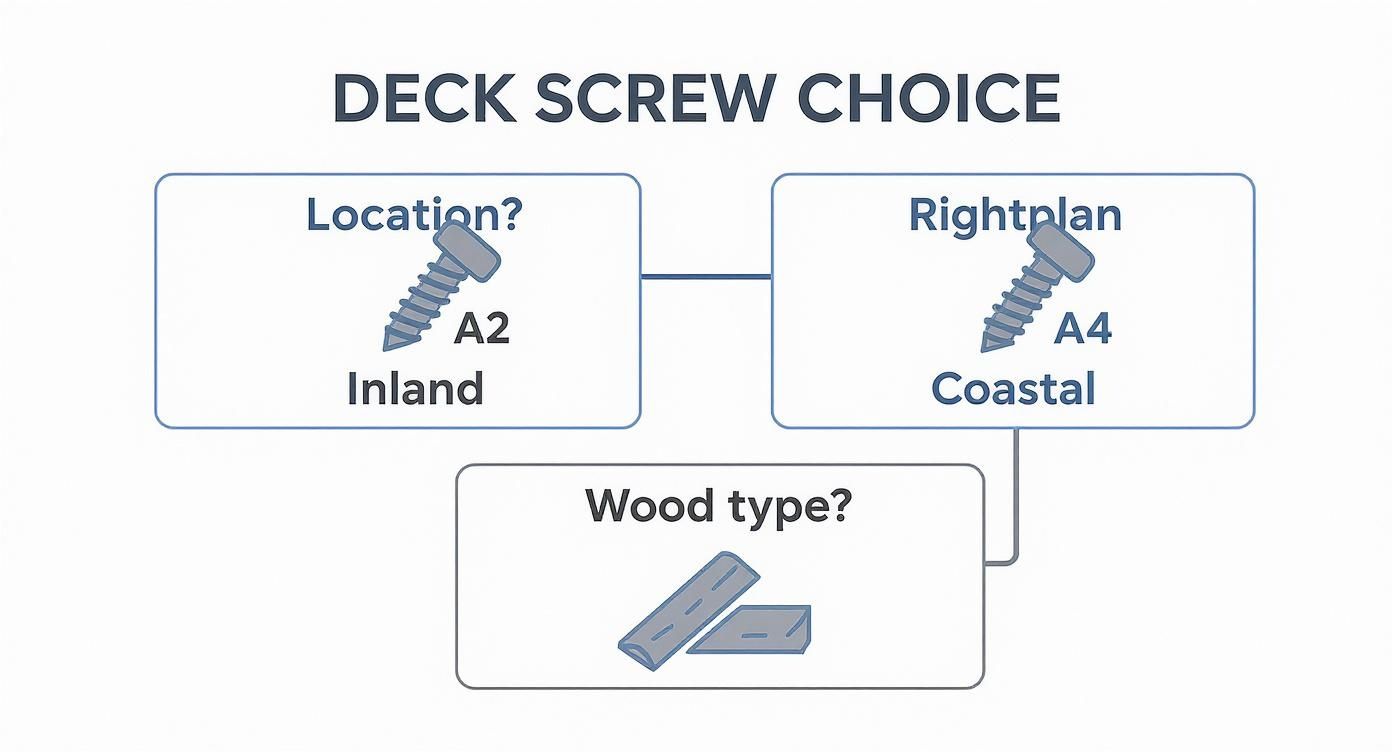
The key takeaway is crystal clear: location is everything. If you’re anywhere near the coast, A4 grade is essential to fight back against the corrosive power of salt in the air. By navigating these choices properly from the start, you can sidestep common mistakes and ensure your project begins on the solidest possible foundation.
To make things even easier, here’s a quick reference table.
This table summarises the key decisions, helping you quickly pinpoint the right screw for your specific project.
| Project Location | Recommended Grade | Typical Wood Type | Key Consideration |
|---|---|---|---|
| Inland (e.g., Sheffield, Leeds) | A2 (Grade 304) | Softwoods (Pine, Larch), non-acidic Hardwoods | General-purpose corrosion resistance is sufficient. |
| Coastal (e.g., Whitby, Scarborough) | A4 (Grade 316) | All wood types, especially Oak and Cedar | Essential to combat saltwater corrosion. |
| High-Tannin Woods (e.g., Oak) | A4 (Grade 316) | Oak, Cedar, some exotic hardwoods | The extra molybdenum in A4 resists chemical staining from wood tannins. |
| Sheltered Urban Garden | A2 (Grade 304) | Most standard decking timbers | A solid, reliable choice for low-corrosion environments. |
Ultimately, taking a moment to match the screw to the environment is the difference between a deck that looks great for a season and one that stands strong for a decade or more.
When it comes to stainless steel, it’s a mistake to think it’s all the same. Choosing the right grade is a bit like picking the right coat for the weather – a decision that will directly impact how well your deck handles the elements, year after year. For deck screws stainless steel, you’ll generally come across two main options: A2 and A4.
Think of A2 stainless steel (also known as Type 304) as your reliable, sturdy raincoat. It offers fantastic protection against corrosion in most everyday outdoor settings. This makes it a perfectly sound and budget-friendly choice for decking projects in inland areas of the North of England, like Leeds, Manchester, or the Yorkshire Dales, where your main enemies are rain and general dampness.
But let’s be honest, a standard raincoat isn’t going to cut it in a sea storm. This is exactly where A4 stainless steel steps in.
A4 stainless steel (or Type 316) is the marine-grade equivalent of a full waterproof, storm-proof jacket. What gives it this superpower? A small but mighty element called molybdenum.
The addition of just 2-3% molybdenum creates a far tougher defence against chlorides – the corrosive salts found in sea air and de-icing salts. This small chemical tweak means A4 screws are significantly more resistant to pitting and crevice corrosion, the specific kind of damage that saltwater relentlessly causes.
For any project in a coastal location like Scarborough, Whitby, or anywhere within a few miles of the sea, A4 is the non-negotiable choice. Opting for A2 in these environments is a false economy that will almost certainly lead to unsightly rust stains, weakened fixings, and potential structural failure.
The UK’s persistently damp climate and extensive coastline have driven a steady demand for these high-performance fasteners. In fact, the market for self-drilling screws, which includes many stainless steel deck screw types, is seeing consistent growth due to rising construction activity. This trend really highlights how crucial corrosion resistance has become. You can read more about the demand for corrosion-resistant fasteners to see the full picture.
To put it simply, your postcode dictates your screw choice. Using the wrong grade is one of the most common—and costly—mistakes you can make when building a deck.
Here’s a quick breakdown to make the decision easy:
While choosing the right grade of stainless steel is the foundation, the actual design of the screw—its head, thread, and tip—has a massive impact on your deck’s final look and structural integrity.
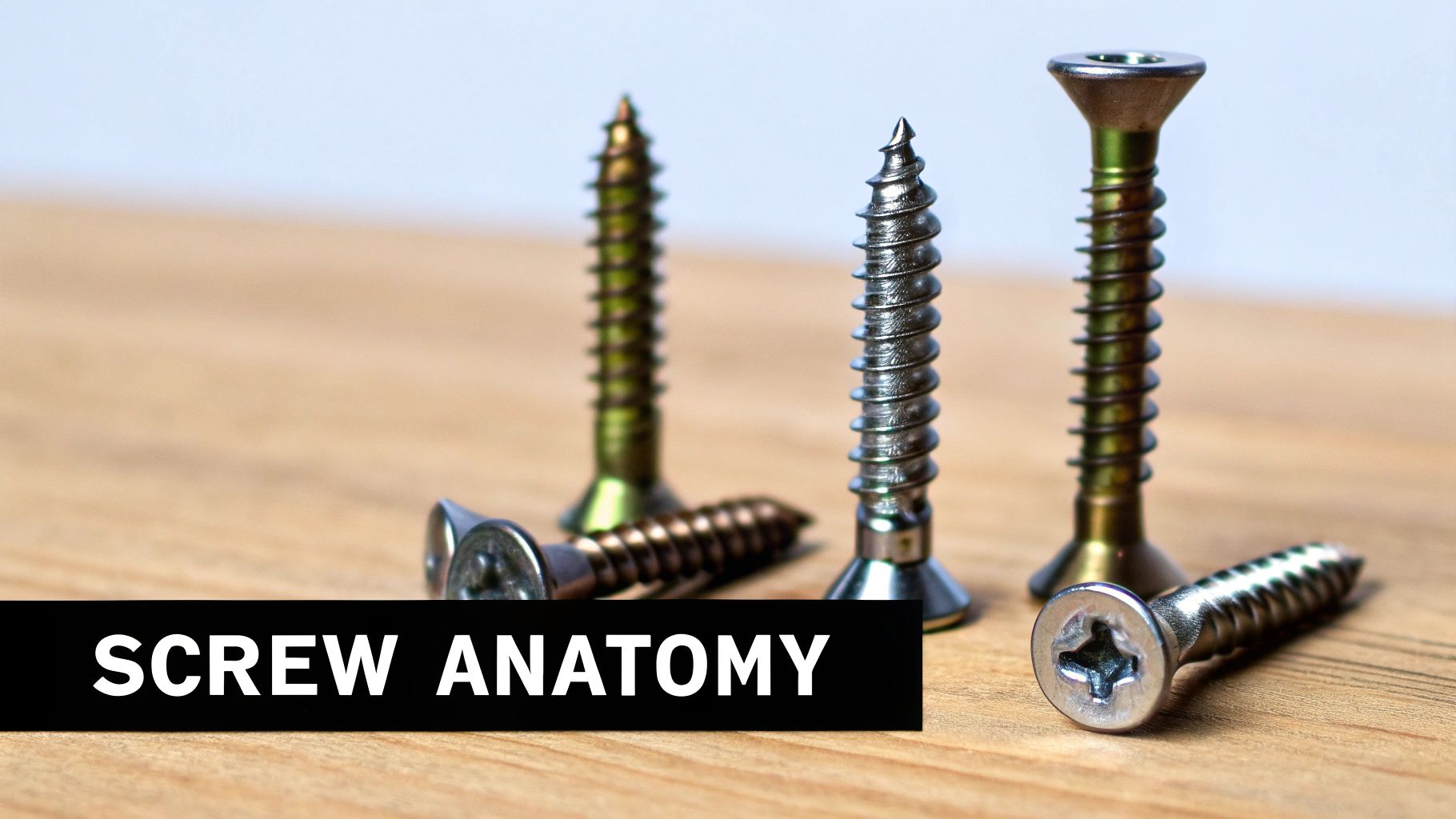
These tiny details are often the difference between a frustrating installation with a passable finish, and a smooth, professional job that’s built to last. It’s like using a blunt chisel; the wrong screw design will cause all sorts of problems, from splitting your expensive timber to stripping screw heads halfway through. Understanding the anatomy of a deck screw lets you match it perfectly to your project.
The screw head is the only part you’ll see once the job is done, so its design is key to getting that clean, flush aesthetic. A countersunk head is the go-to standard for decking. These heads are specifically shaped to sit perfectly level with, or just below, the surface of the board, creating a smooth, trip-hazard-free finish.
Just as important is the drive type – the recess in the head that your drill bit grips onto. Older Phillips or Pozi drive screws are notorious for “cam-out,” which is when the bit slips out under pressure, stripping the screw head and chewing up your drill bit in the process. Modern deck screws stainless steel almost always feature a Torx drive (often called a star drive) for a very good reason.
A Torx drive creates a much more secure connection between the drill bit and the screw. This superior grip lets you apply consistent torque without slipping, making installation faster, easier, and protecting both the screw and your timber from damage.
The threads are the sharp ridges that pull the screw into the wood, and they are definitely not a one-size-fits-all component. The type of timber you’re using dictates the thread design you need.
The tip of the screw also plays a vital role in a clean installation. Many high-quality deck screws come with a self-drilling or Type 17 point. This features a small cutting flute at the very tip which clears away wood fibres as it drills.
This tiny feature is an absolute lifesaver. It dramatically reduces the force needed to drive the screw and significantly lowers the risk of splitting the board, especially near the ends. Even with a self-drilling tip, however, we always recommend pre-drilling hardwoods to guarantee the best possible finish.
Getting these details right is crucial when combining durable fixings with a modern aesthetic, like those seen in our guide to glass panel decking ideas. Selecting the correct screw design is vital for both the hidden strength and visible quality of your project.
Even the toughest A4 deck screws stainless steel can fail if they’re paired with the wrong materials. We often focus on obvious threats like rain or sea spray, but there are hidden dangers that can silently compromise your deck’s integrity, right under your feet. Getting a handle on these reactions is the key to protecting your investment for the long haul.
One of the most common—and misunderstood—issues is galvanic corrosion. Think of it as creating tiny, destructive batteries all over your deck. When two different metals, say a stainless steel screw and a galvanised steel washer, touch in the presence of an electrolyte like rainwater, a sneaky electrochemical reaction kicks off. This process chews through the less noble metal (the galvanised washer) at a startling rate, weakening the connection until it fails completely.
This really highlights why you need to think about the entire system. With Europe using around 17 million metric tons of nails and screws in 2023, the market is flooded with components of every type imaginable. For projects here in the UK’s damp climate, making sure every single piece is compatible isn’t just good practice—it’s absolutely essential. You can find more insights on the European fasteners market on marketgrowthreports.com.
The rule is simple and non-negotiable: always use stainless steel components with stainless steel screws. This applies to every last piece of hardware, from the big structural brackets down to the smallest washers.
Using a non-stainless bracket with a stainless screw isn’t saving money; it’s creating a guaranteed point of failure. The corrosion will eat away at the weaker metal, leaving behind ugly rust stains and, far more dangerously, a compromised structural connection.
This is especially critical for projects anywhere that gets a lot of rain, like Newcastle or the Yorkshire Dales. All that moisture acts as the perfect catalyst for galvanic corrosion, turning a minor oversight into a major structural headache over time.
It’s not just other metals you need to watch out for. The chemicals in modern pressure-treated timber, often copper-based to stop rot and insects, can be highly corrosive to the wrong kind of metal.
Proper material selection is just the start. The long-term care of your deck and balustrades is just as important. Regular cleaning with the right products is a must. For a deeper dive into keeping your fixtures looking pristine, check out our video on why you need stainless steel care oil on your balustrade system. Following this advice ensures your entire installation, from screws to railings, stays in top condition for years to come.
You’ve carefully selected the right deck screws stainless steel for the job; now it’s time to turn your planning into reality. The final installation is what separates a professional, long-lasting deck from one plagued by split boards and stripped screw heads. Getting this stage right is crucial, ensuring your deck is not only beautiful but structurally sound for years to come.
The single most important step for a clean finish, especially when you’re working with hardwoods like Oak or Iroko, is to pre-drill pilot holes. Skipping this is a recipe for disaster. Driving a screw straight into dense timber forces the wood fibres apart, almost guaranteeing an unsightly split right near the end of a board.
A pilot hole gives the screw a clear path to follow, taking a huge amount of stress off the wood. It’s a small, extra step that pays massive dividends in the final quality of your project.
Once your pilot hole is drilled, the next challenge is driving the screw home correctly. This is all about controlling the torque—the rotational force—of your drill. Too little torque and the screw won’t sit flush. Too much, and you risk stripping the Torx head or, even worse, sinking the screw too deep and crushing the wood fibres beneath it.
Most modern drills have an adjustable clutch or torque setting. The best approach is to start low and gradually increase the setting until the screw head sits perfectly flush with the decking surface.
The goal is a firm, secure fixing where the screw head is perfectly level with the wood, creating a smooth and trip-free surface. Overtightening can be just as damaging as a loose screw, as it weakens the board and creates a small pocket where water will inevitably pool.
For a consistently perfect finish, especially on larger decks, a pre-drilling and countersinking tool like the Smart-Bit can be invaluable. It drills the pilot hole and countersinks to the perfect depth in one smooth action, making sure every single screw sits uniformly.
Even with the best intentions, a few common slip-ups can compromise your finish. We see them all the time. Here’s a quick troubleshooting guide to keep your installation looking sharp and professional.
| Mistake | Consequence | How to Avoid |
|---|---|---|
| Using a Worn Drill Bit | The bit slips and spins inside the head (“cam-out”), stripping the screw’s Torx recess. This makes it impossible to drive or remove. | Always use the fresh, correct-sized bit that comes with your screws. The moment it shows signs of wear, swap it for a new one. |
| Drilling at an Angle | The screw head sits proud on one side, which looks unprofessional and creates a nasty snag point. | Keep your drill perfectly perpendicular to the deck board. Use your body to apply steady, straight pressure right behind the drill. |
| Inconsistent Depth | Screws sit at all different depths, creating a messy, uneven finish that traps dirt and water. | Use your drill’s torque setting religiously or invest in a specialised countersink tool to get a consistent depth every single time. |
A little bit of care at this stage makes all the difference between a deck that looks okay and one that looks truly exceptional.
Your work isn’t quite finished the day the last screw goes in. To keep your deck looking its best and prevent issues like surface staining, a simple maintenance routine is key. Make sure to periodically sweep away leaves and other debris that can trap moisture against the screw heads and boards.
A gentle wash with a soft-bristled brush and a pH-neutral cleaner once or twice a year will remove built-up grime and salt deposits—this is particularly important for coastal properties, like those along the North Yorkshire coast. This simple ‘health check’ ensures your stainless steel fasteners continue to perform flawlessly, preserving the beauty and safety of your deck for many seasons to come.
When you move on from simply laying deck boards to building safety-critical structures like balustrades and handrails, the game changes. The screws you need are in a different league entirely. It’s no longer just about stopping rust; it’s about guaranteeing structural integrity when it’s truly put to the test.
Suddenly, things like shear strength and load-bearing capacity become every bit as important as corrosion resistance.
Think about the force a handrail post has to handle if someone stumbles and leans heavily against it. The handful of screws securing that post are the only things stopping a serious accident. They absolutely must resist being snapped clean off or ripped out of the timber.
This is exactly why you can’t just guess. You need to look at the screw’s technical data sheet. These aren’t just bits of paper; they contain the crucial engineering values that prove a fastener is up to the job and meets UK building regulations for safety barriers. Using standard decking screws for a structural role isn’t cutting a corner; it’s a dangerous gamble. You must choose fasteners that have been specifically tested and rated for these demanding connections.
For any balustrade, screws have to fight against two main forces. Tensile strength is all about resisting being pulled straight out – think of a tug-of-war. Shear strength, on the other hand, is its ability to resist forces trying to slice it sideways, perpendicular to its length. For a safe and secure balustrade, both are absolutely critical.
When specifying screws for a balustrade or any structural support, you are not just buying a piece of metal; you are specifying a safety component. Always verify that the chosen fastener’s load ratings are appropriate for the application.
For homeowners and designers here in the North of England looking to create a modern and secure barrier, seeing how elegant stainless steel and glass balustrades come together shows just how the right components create a system that’s safe, durable, and stylish.
Making sure every single screw is correctly specified is the very foundation of that safety. This knowledge gives you the confidence to select the right fasteners for any project, from a simple garden handrail to a multi-storey commercial balcony.
Here are some quick, no-nonsense answers to the questions we get asked most often about using stainless steel deck screws for projects across the North of England.
Yes, it’s almost always the professional approach. Some screws are sold as ‘self-drilling’, but pre-drilling is the only surefire way to avoid splitting expensive timber.
This is especially true with hardwoods, or when you’re driving a screw close to the end of a board. It’s a small extra step that guarantees a clean, professional finish and prevents costly mistakes.
Using A2 grade screws anywhere near the sea, like in Whitby or Scarborough, is a recipe for disaster. It’s a costly error. The salt in the air will attack the steel, causing rust stains and, more importantly, structural failure over time.
For any project in a coastal or marine environment, you must use A4 grade stainless steel. It’s specifically alloyed to resist salt corrosion and keep your structure safe.
The price difference comes down to fundamental quality. With stainless steel, the corrosion resistance is an integral part of the metal itself, right through to the core. It’s not just a thin coating.
That protective layer on cheaper, coated screws can be easily scratched or damaged during installation. Once that happens, the standard steel underneath is exposed, and rust is inevitable.
The higher upfront cost of stainless steel reflects its much longer lifespan and superior durability. It is not just a screw; it’s a long-term investment in the safety and appearance of your outdoor project, preventing costly repairs down the line.
Stainless steel screws cost more because their corrosion resistance is part of the metal itself, not just a thin coating. The protective layer on coated screws can easily be scratched during installation, exposing the standard steel underneath to rust.
For expert advice on specifying the correct stainless steel fixings for your balustrade project in Yorkshire and the North of England, get in touch with Binks Glass Solutions. Our team can provide clear guidance and a tailored quote for your needs. Contact us today.