
A Homeowner’s Guide to Satin Obscure Glass
If you’re looking for privacy without plunging a room into darkness, satin obscure glass is one of the most elegant […]

If you’re looking for privacy without plunging a room into darkness, satin obscure glass is one of the most elegant […]
If you’re looking for privacy without plunging a room into darkness, satin obscure glass is one of the most elegant solutions out there. It’s a type of privacy glass that lets plenty of light flood through, but it cleverly blurs the details of anything behind it, giving you that much-needed seclusion. With its smooth, soft finish, it’s a firm favourite for modern homes and offices where you want to strike the perfect balance between light and discretion.
Think of the soft, diffused light you get on a misty morning – that’s the beautiful effect satin obscure glass brings into your home. Its unique translucent finish comes from a specialised treatment that scatters light evenly, creating a gentle glow while completely masking detailed shapes and figures. It’s the ideal blend of style and substance.
Unlike clear glass, which offers zero privacy, satin glass creates a sophisticated visual barrier without making a space feel boxed in or dim. This makes it a fantastic choice for areas where you want to create a bit of separation or screen an unwanted view, like on a balcony, for a bathroom screen, or as an office partition.
The magic of satin obscure glass really comes down to how it’s made. One side of a standard glass panel is treated with hydrofluoric acid. This process, known as acid-etching, minutely roughens the surface, stripping away the shine and leaving behind a perfectly uniform, smooth, matte texture.
This acid-etching process is what gives satin glass its premium feel. Unlike sandblasted glass, which can feel quite rough, the surface of satin glass is silky smooth and non-porous. This is a huge practical advantage, as it resists fingerprints far better and is a breeze to keep clean.
While it feels right at home in contemporary design, the idea of satin glass isn’t new. It actually has deep roots in British architecture, first appearing in England back in the 1880s as a decorative product. At a time of huge social change, it met a growing demand for glazing that offered more privacy in both homes and public buildings. You can read a bit more about its evolution as a decorative material on the Wikipedia page for Satin glass.
This long history just goes to show that the need for materials that can juggle light, privacy, and style is truly timeless. Today, satin obscure glass continues to be a top choice for homeowners and designers across the North of England looking to craft spaces that are as functional as they are beautiful.
Choosing the right privacy glass for your balustrade or screen can feel like you’re wading through a sea of jargon. You’ll hear terms like acid-etched, sandblasted, and patterned, but what really matters is how the glass performs in your space. When you need that perfect blend of seclusion and natural light, it’s about looking past the technical names and focusing on the end result.
Let’s cut through the confusion. We’ll compare the most common types of privacy glass, looking at how much privacy they offer, how they affect light, what they feel like, and how easy they are to live with. The goal is to give you the confidence to pick the perfect material for your project, whether it’s in Yorkshire, Lancashire, or anywhere across the North of England.
This simple flowchart is a great starting point.
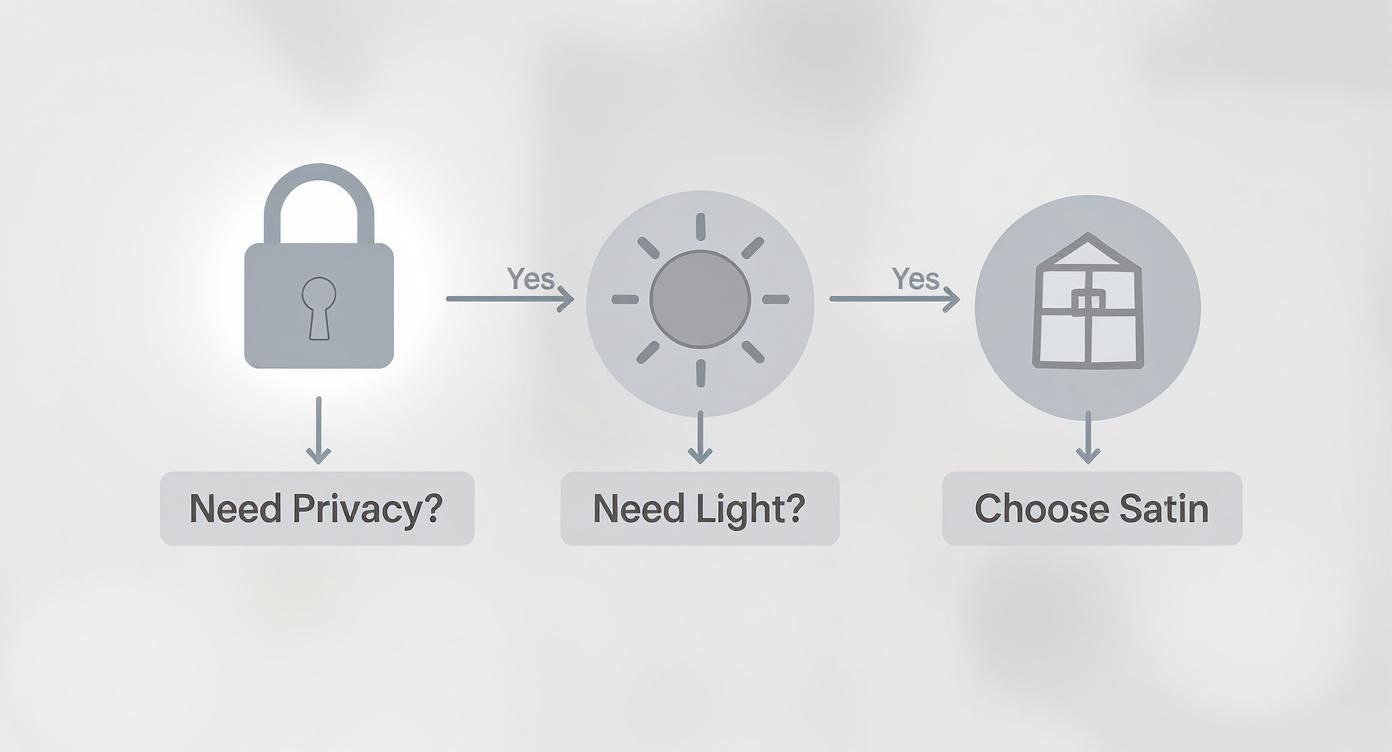
As you can see, if you’re answering “yes” to needing both privacy and light, satin glass is immediately the front-runner.
At a quick glance, satin and sandblasted glass can look very similar. They both offer that classic frosted appearance. The real difference, however, is in how they’re made and how they feel. Satin glass is acid-etched, a process that uses acid to gently dissolve a microscopic layer of the glass. This creates a finish that is incredibly smooth and almost velvety to the touch.
Sandblasted glass, on the other hand, is made by firing tiny abrasive particles at the glass at high speed. It’s a more aggressive process that physically chips away at the surface, leaving a rougher, more porous texture. While it provides good privacy, that rough surface is a magnet for fingerprints and grime, making it much harder to keep clean than the sleek, non-porous finish of satin glass.
For projects in busy areas like kitchens, bathrooms, or high-traffic hallways, satin obscure glass is nearly always the better choice. Its smooth surface simply shrugs off smudges and wipes clean in an instant, keeping its pristine look with very little effort.
Beyond a uniform frosted look, there’s a whole world of patterned, textured, and printed glass. These are often made by rolling a pattern into the glass while it’s still molten or by digitally printing a design directly onto the surface. The privacy they offer varies and is often graded on a scale from 1 (almost clear) to 5 (completely obscure).
While these can create unique visual effects, satin obscure glass consistently provides a Level 5 privacy rating. It guarantees maximum obscurity without any patterns that might clash with your decor down the line, making it a timeless and incredibly versatile choice. For a less permanent solution, it’s also worth considering films. If you’re looking for a versatile and easily modifiable privacy solution, exploring the best window film for privacy can offer valuable insights into different types, including frosted and opaque options that mimic the look of obscure glass.
To make your decision even easier, let’s lay it all out. This table breaks down how satin glass really stacks up against the main alternatives, helping you see at a glance which material is right for your needs.
| Glass Type | Privacy Level | Light Transmission | Surface Texture | Maintenance |
|---|---|---|---|---|
| Satin Obscure Glass | High (Level 5) | Excellent, soft diffusion | Velvety and smooth | Very easy to clean |
| Sandblasted Glass | High (Level 5) | Good, scattered light | Slightly rough, porous | Can show fingerprints |
| Patterned Glass | Variable (Levels 1-5) | Varies by pattern | Textured | Depends on texture depth |
| Printed Glass | Variable (Can be opaque) | Varies by design | Smooth | Easy to clean |
When you weigh it all up, satin obscure glass hits that perfect sweet spot. It delivers the highest level of privacy you can achieve while still flooding your space with beautiful, softly diffused light. Add in its durable, low-maintenance surface, and you have a practical and sophisticated choice for any modern home or business.
When you choose the beautiful, elegant finish of satin obscure glass for a balustrade, it’s doing more than just looking good—it’s stepping into its primary role as a critical safety barrier. Getting the specification right isn’t a matter of taste; it’s about making sure your installation is strong, secure, and fully compliant with UK Building Regulations. This is what protects everyone, from family on a home balcony to customers on a commercial terrace.
Understanding these safety standards is key. It allows you to have confident conversations with suppliers and installers, ensuring your project isn’t just visually stunning but built to last. These rules are in place to prevent accidents, and for any reputable installation, following them is non-negotiable.
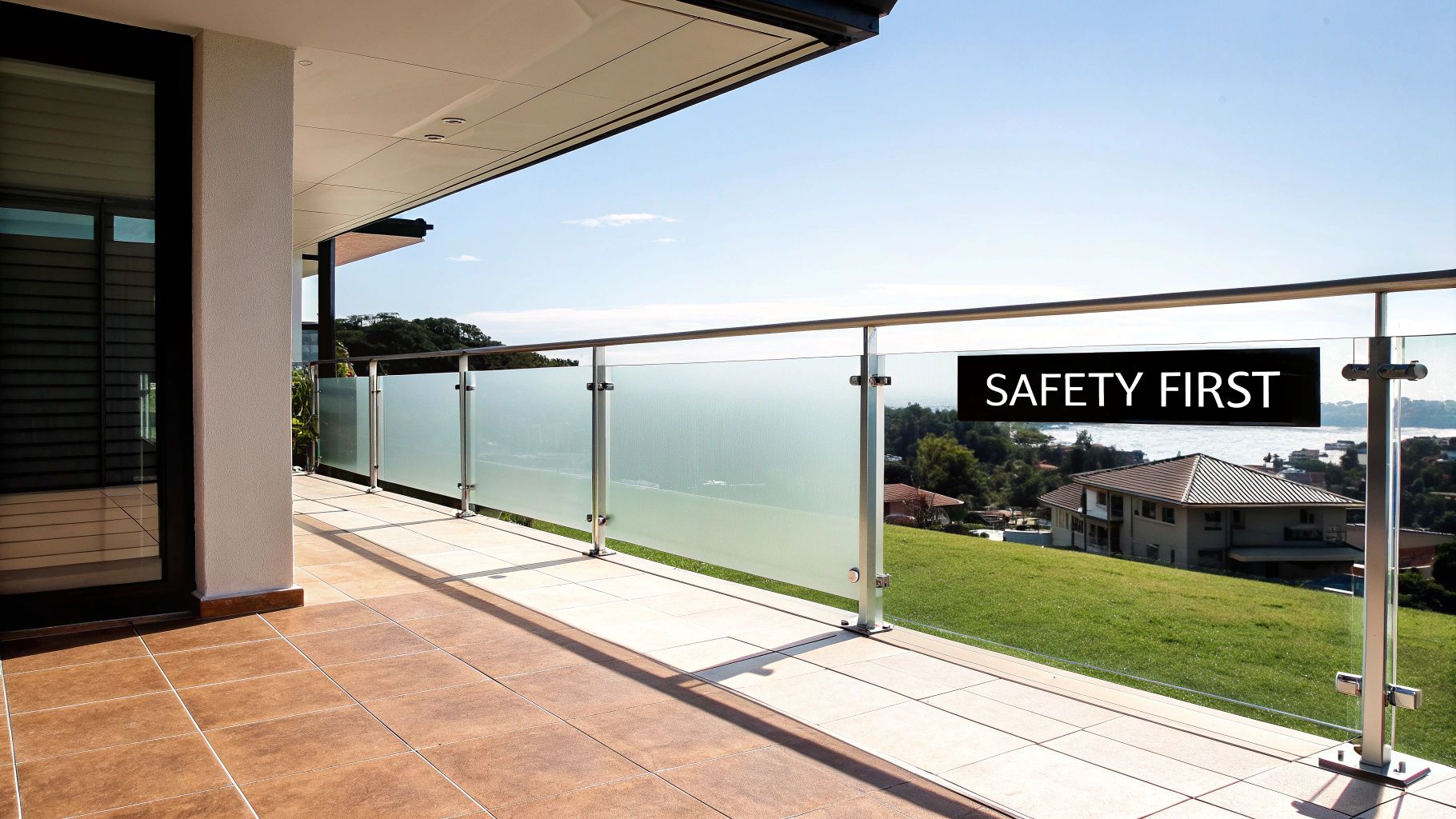
Let’s get one thing straight from the start: standard annealed glass, the kind you’d find in an old single-glazed window, has absolutely no place in a balustrade. It’s brittle and shatters into large, razor-sharp shards on impact, posing a severe risk of injury. For any application where glass acts as a protective barrier, UK regulations demand the use of safety glass.
There are two main types of safety glass perfect for balustrades, each with its own set of properties. The choice between them boils down to the balustrade’s location and the specific level of safety required by the regulations.
The two heroes of balustrade safety are toughened glass and laminated glass. While both are worlds stronger than standard glass, they behave very differently when put under extreme stress.
Toughened Glass: This is a single sheet of glass that has been through an intense process of heating and rapid cooling. This clever thermal treatment creates high compression on the outer surfaces and tension in the core, making it four to five times stronger than standard glass of the same thickness. If it does break, it crumbles safely into small, pebble-like pieces that are far less likely to cause harm.
Laminated Glass: Think of this as a safety sandwich. It’s made of two or more sheets of glass bonded together with a tough plastic interlayer, usually Polyvinyl Butyral (PVB). If one of the glass layers breaks, the fragments stick firmly to this interlayer, holding the panel in place. This “post-breakage integrity” is a vital safety feature, especially for balustrades at height.
For many balustrades, particularly those protecting a significant drop or in busy public areas, toughened laminated glass is the ultimate choice. It combines the brute strength of toughened glass with the fail-safe integrity of laminated glass, offering the highest level of security. If a panel breaks, it remains intact, preventing a dangerous opening from ever forming.
You can dive deeper into the specific benefits by exploring our detailed guide on laminated and toughened glass. Understanding these materials is the first step toward a safe and compliant project.
Choosing the right type of safety glass is only half the story. The thickness of the glass and the quality of its finish are just as critical for strength and long-term durability.
The required thickness for your satin obscure glass balustrade will depend on a few key factors:
Common thicknesses for domestic balustrades range from 10mm to 15mm, while commercial projects might demand glass up to 21.5mm thick, or sometimes even more.
The edgework is just as important. All exposed edges of the glass panels must be professionally finished to remove any sharp or vulnerable points left over from the cutting process. Polished edges are the standard for any high-quality balustrade. This process smooths and slightly bevels the edge, which not only looks fantastic and is safer to touch, but also massively increases the panel’s overall strength by removing the microscopic flaws where a crack could begin. A professionally polished edge is a true hallmark of a well-made, durable, and safe glass balustrade.
The real magic of satin obscure glass is just how incredibly versatile it is. It’s much more than a practical material; it’s a design tool that can completely reshape how a space feels, solving everyday problems with a genuinely elegant touch. Across the North of England, from modern flats in Leeds to refurbished terraces in York, we’re seeing this glass used in wonderfully creative ways to improve homes and businesses alike.
Let’s dive into some real-world examples that show just how transformative it can be. These prove that whether you’re after serenity, privacy, or a sharp, professional look, satin glass is a remarkably smart investment.
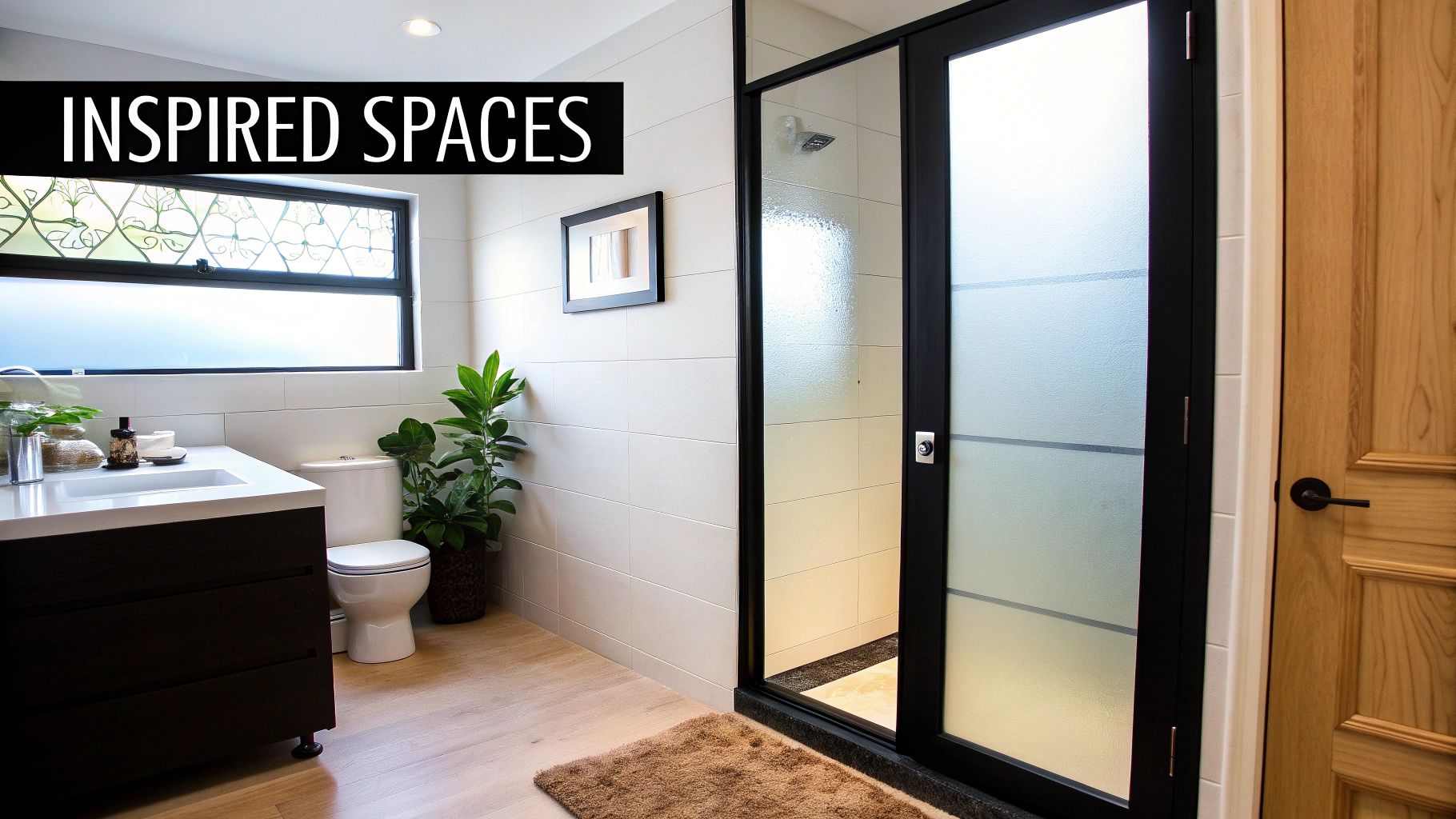
In a home setting, satin glass is a game-changer. It excels at carving out pockets of privacy without ever sacrificing that open, airy atmosphere we all want. It’s no surprise it has become a go-to material for homeowners looking to add a touch of class.
This isn’t a new idea, of course. Privacy glass became hugely popular during the Victorian era when evolving ideas about modesty met the new convenience of indoor plumbing. Frosted and satin finishes became the standard way to keep prying eyes out while still letting light into these essential new spaces.
Today, we’re using it in even more creative ways:
The unique blend of style and durability in satin obscure glass makes it just as valuable outside the home. When we specify it as toughened or laminated safety glass, it’s more than tough enough to handle the unpredictable British weather and the demands of a busy commercial space.
For outdoor projects, its ability to screen an area is a massive win. Think of a stunning glass balustrade on a terrace that blocks the view from nosy neighbours without blocking out the sun. It’s particularly effective for glass panel decking, where you want to create a secluded spot to kick back and relax.
In commercial properties, satin glass strikes the perfect balance between an open-plan feel and the need for private, functional zones. It’s a simple way to elevate the professionalism and design of a workspace.
Here are a few popular uses we see in businesses:
From a tranquil bathroom retreat in a Harrogate home to a chic office in Manchester, the uses for satin obscure glass are really only limited by your imagination. Time and again, it proves its worth as a material that delivers both high-end looks and practical, everyday solutions.
One of the best things about satin obscure glass is how surprisingly easy it is to live with. While some types of frosted glass are notorious fingerprint magnets, the smooth, acid-etched surface of satin glass is far more forgiving. Still, a little bit of care will keep it looking flawless for years to come.
The secret to a perfect, streak-free finish is all about using the right tools for the job. You’ll want to steer clear of abrasive cleaners, scouring pads, or anything with a rough texture. These can easily leave permanent scratches on that beautiful etched surface. More often than not, the simplest solution is the most effective.
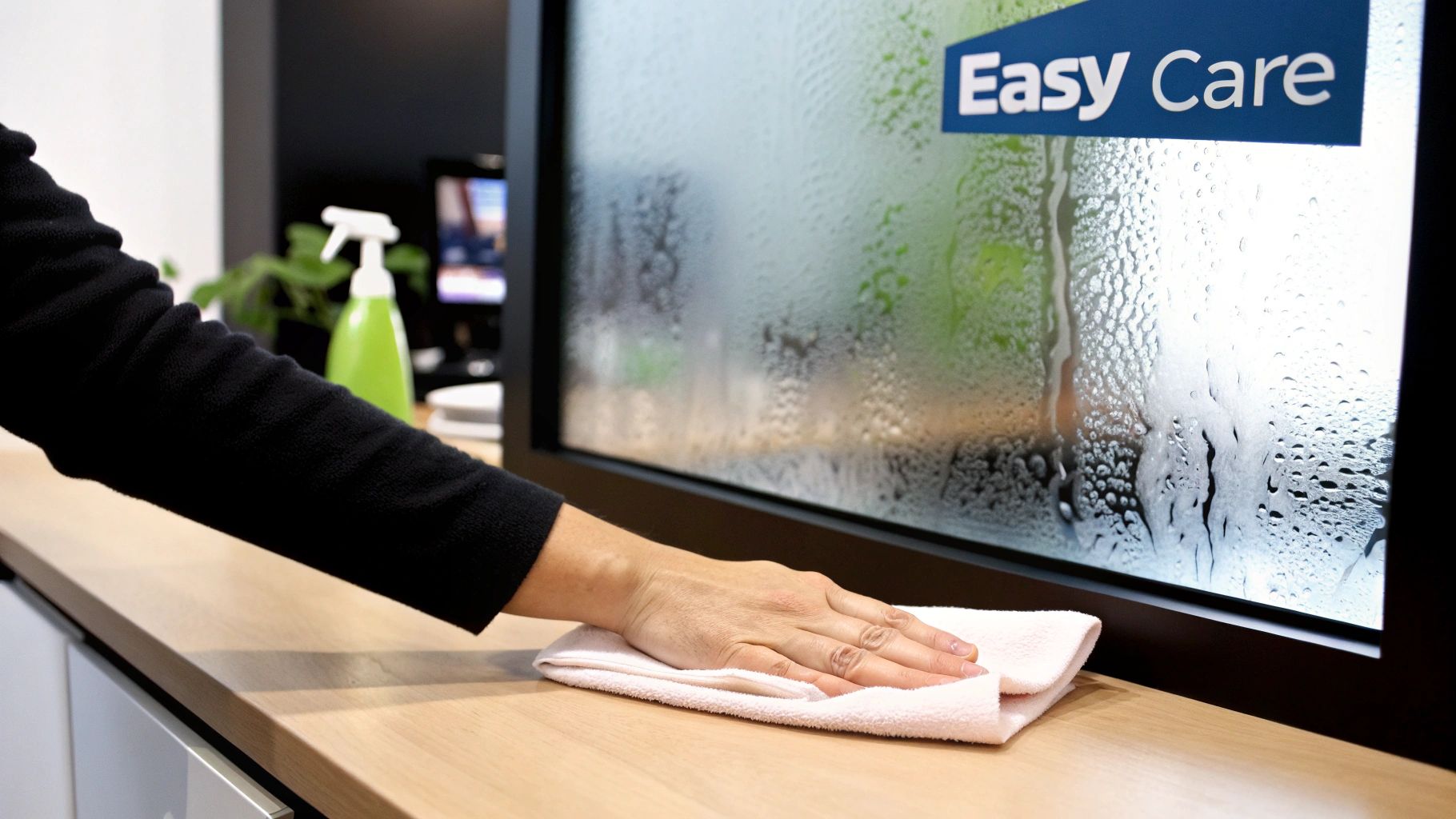
For day-to-day cleaning, a soft, lint-free microfibre cloth is your best friend. Lightly dampen one cloth with water and a tiny amount of mild, pH-neutral soap (or even a simple vinegar-and-water mix). Gently wipe down the glass to lift away any dust or smudges.
The crucial next step is to immediately follow up with a second, dry microfibre cloth to buff the surface. This two-step process is the key to preventing water spots and getting that perfect, uniform finish on your satin obscure glass.
If you’re dealing with more stubborn marks, a dedicated cleaner can work wonders. To get the best clarity and shine, a specialised product like an effective glass and mirror cleaner is formulated to clean without leaving behind any residue. A top tip is to always spray the cleaner onto your cloth, not directly onto the glass—this prevents drips and gives you more even coverage.
One of the most common mistakes people make is cleaning glass in bright, direct sunlight. The heat causes the cleaning solution to evaporate far too quickly, leaving stubborn streaks before you’ve even had a chance to dry the surface. Try to clean your glass on an overcast day for much better results.
To keep your satin glass looking its absolute best, a few simple habits make all the difference. Regular, gentle cleaning stops grime from building up, which is always harder to shift later on.
Bringing the elegance of satin obscure glass to your home is a straightforward process when you know the steps. Turning your vision into a reality, from an initial idea to a finished installation, involves clear measurement, correct specification, and a bit of expert support. This guide is designed to walk you through ordering your custom glass with confidence, making sure you get the perfect fit for your project.
As a specialist supplier for homes across the North of England, we understand the unique character of properties from Yorkshire to Cumbria. Our entire process is built around providing that local expertise, ensuring your new satin glass feature not only looks fantastic but meets every necessary safety standard.
The first and most critical step is to get accurate measurements. Precision here is everything for a flawless fit, so it pays to take your time and double-check. You’ll need the exact height and width for each individual panel of glass you require.
For balustrades, measure the total length of the area you want to enclose. If your project has multiple sections or turns a corner, make sure to measure each straight run separately. A good rule of thumb is to measure twice and order once – it can save a lot of headaches down the line.
Once you have your measurements, you can get an immediate idea of the cost. Our online Balustrade Calculator is a brilliant tool designed to give you a quick, transparent price estimate for your project. It completely simplifies the planning process by breaking it down into four simple choices.
Here’s how it works:
The calculator will instantly generate a tailored quote. It gives you a clear understanding of the budget required for your satin obscure glass balustrade and empowers you to explore different options without any obligation.
Beyond the basic dimensions, a few other specifications will ensure your glass is absolutely perfect for its job. You’ll need to think about the type of fixings you plan to use, as this can determine whether pre-drilled holes or specific cutouts are needed in the glass panels.
For example, if you’re planning a frameless system using specific clamps to hold the glass in place, their position is key. For more insight into these components, our guide on choosing the right glass balustrade clamp provides some really valuable information on how different fixings work.
Our local team is always on hand to help you navigate these final choices. We provide personalised advice to ensure every detail, from the glass thickness to the polished edges and corner finishes, is correctly specified for your project right here in the North of England.
Got a few questions? You’re not alone. Here are some of the common queries we get about satin obscure glass, with straightforward answers to help you decide.
Yes, it generally is. The extra acid-etching process that gives satin glass its beautiful, frosted finish adds to the production cost compared to standard clear glass.
However, most people see this as a worthwhile investment. You’re not just buying glass; you’re buying superior privacy and a genuinely high-end aesthetic that completely transforms a space. The final cost will always depend on the specifics, like the thickness and whether you opt for toughened or laminated glass.
Satin glass does an incredible job of protecting your privacy. While you can’t see any distinct details through it, you might notice a very faint, blurred silhouette if someone is standing right up against the glass with a bright light directly behind them.
For pretty much every real-world situation, it guarantees complete visual privacy.
Think about a ground-floor bathroom in a busy residential area—this is where satin glass really shines. Its Level 5 obscurity rating means it effectively blocks any clear view, day or night, giving you total peace of mind.
This is a great practical question. For shower screens, we always install the smooth, un-etched side of the glass to face inside the shower.
The reason is simple: cleaning. This smooth, non-porous surface is much easier to wipe down and helps repel water and soap scum far more effectively than the textured side. It’s a small detail that makes a big difference to keeping your shower looking pristine with minimal effort.
Absolutely. When we specify it as toughened or toughened laminated safety glass, satin obscure glass is more than tough enough for an outdoor balustrade, even in the unpredictable UK climate.
The etched surface is a permanent part of the glass—it won’t be affected by rain, frost, or sun. This makes it a brilliant and stylish choice for enhancing outdoor living spaces, whether it’s a balcony in Leeds or a garden patio in York. Its ability to stand up to the elements while providing privacy makes it a fantastic long-term investment for any home.
Ready to bring the modern elegance of satin obscure glass to your project? The team at Binks Glass Solutions is here to help with expert advice and friendly, local knowledge.
Contact us today to chat about your ideas and get a personalised quote.