Cost of staircase: UK Guide for 2026
Figuring out the cost of a new staircase can feel like a guessing game, but for a standard installation here […]

Figuring out the cost of a new staircase can feel like a guessing game, but for a standard installation here […]
Figuring out the cost of a new staircase can feel like a guessing game, but for a standard installation here in the UK, you’re typically looking at a range between £1,500 and £4,000. This gives you a solid starting point for a basic structure and professional fitting.
When you start planning a new staircase, it's best to see the total cost as a mix of three main things: the materials you pick, how complex the design is, and the going rate for labour in your part of the country. These are the big three that really drive the final price of your project.
For those of us in the North of England, from the heart of Yorkshire to the Cumbrian coast, getting a grip on these factors is the key to a sensible budget. It's simple, really: a straight flight of stairs made from affordable softwood will always be kinder on your wallet than a fancy curved or L-shaped staircase built from a premium hardwood like oak.
Let's break down what you can expect to pay. For a brand new, standard staircase, the average cost in the UK falls somewhere between £1,500 and £4,000. That figure includes both the staircase itself and getting it fitted by a professional.
Labour alone can make up a big chunk of that, often between £1,000 and £2,500. A good joiner, especially in areas like Leeds or Harrogate, might charge £200-£300 a day.
Now, if you're dreaming of a real showstopper—something truly unique—the sky's the limit. Bespoke options can push the price up dramatically. High-end, custom-designed staircases can easily average £27,500 or more, especially if they involve complex designs and premium materials. For a deeper dive into these figures, you can often find great insights on popular home improvement blogs.
To give you a clearer picture, here’s a quick overview of what you might expect for different types of staircase projects.
| Staircase Type | Low-End Cost Estimate | Average Cost Estimate | High-End/Bespoke Cost Estimate |
|---|---|---|---|
| Straight Softwood Stairs | £1,500 | £2,000 | £3,000 |
| L-Shaped Hardwood Stairs | £2,500 | £4,000 | £6,000+ |
| U-Shaped or Winder Stairs | £3,000 | £5,500 | £8,000+ |
| Curved or Spiral Stairs | £4,000 | £7,000 | £15,000+ |
| Fully Bespoke (Glass & Steel) | £8,000 | £15,000 | £27,500+ |
This table shows that while a simple replacement is quite manageable, a bespoke architectural feature is a much bigger investment.
The bar chart below does a great job of showing the typical cost ranges for standard projects, labour, and those top-tier bespoke installations.

As you can see, the jump from a standard replacement to a completely custom staircase is huge—the cost can be more than ten times higher.
A new staircase isn't just a way to get from one floor to another; it's a central feature of your home's architecture. The final cost reflects its importance, balancing safety, style, and the long-term value it brings to your property.
Having these initial figures in mind helps you set a realistic budget from the get-go. It allows you to decide where your priorities are—whether that's a straightforward, functional replacement or a truly transformative design feature.

Beyond the top-line estimates, it's vital to get to grips with where your money actually goes when commissioning a new staircase. The total cost is really split between two main buckets: the materials you choose and the labour needed to bring your vision to life. Think of it as the ‘what’ and the ‘how’ of your project budget.
Each of these elements plays a huge part in the final bill. For instance, investing in premium materials might mean a higher upfront cost, but it often pays you back in spades through durability and sheer good looks. In the same way, a really complex design will naturally demand more skilled labour, which directly bumps up the installation price.
The material you pick is arguably the single biggest lever on the overall cost of your staircase. It doesn’t just dictate the price tag; it defines the look, the feel, and how well the structure will stand up to daily life. Your choice is a balancing act between your budget, your home's character, and how much footfall the stairs will see.
For homeowners keeping a close eye on the budget, softwood like pine is a go-to for a reason. It’s easy to work with and offers a classic, versatile look. The trade-off? It’s more prone to dents and scratches over time compared to its tougher cousins. Even so, a basic pine staircase is often one of the most affordable options out there.
At the other end of the spectrum, hardwoods like oak are famous for their strength and beautiful grain. Oak brings exceptional durability to the table, making it a fantastic choice for busy family homes. While the material itself costs more, its resilience and timeless appeal mean it’s often a much better long-term investment.
Choosing your staircase material is like choosing the engine for a car. A standard engine gets you from A to B reliably, but a high-performance one offers a completely different experience in terms of power, feel, and longevity—and the price reflects that.
Engineered woods and other modern composites also offer a great middle ground. These materials can give you the appearance of premium timber at a more accessible price, along with excellent stability.
The other half of the cost equation is labour, and this is shaped heavily by how complex your chosen design is. The daily rate for a skilled joiner in Northern England can sit anywhere between £200 and £300, and the more intricate the job, the more days they’ll need on-site.
A simple, straight-flight staircase is the most straightforward to install. It usually takes the least amount of time, which means it costs less in labour. But as soon as you introduce more complex shapes, the installation challenges—and the hours—start to stack up.
Think about how these common designs affect labour costs:
At the end of the day, every turn, curve, or bespoke feature adds to the joiner's workload. It’s why a custom, curved oak staircase in a Harrogate home will command a much higher price than a standard pine replacement in a terraced house in Leeds. Understanding this relationship empowers you to make smart choices, balancing your design dreams with your budget. For more insights on regional variations and what installers look for, exploring local joinery blogs from across the North of England can be very helpful.
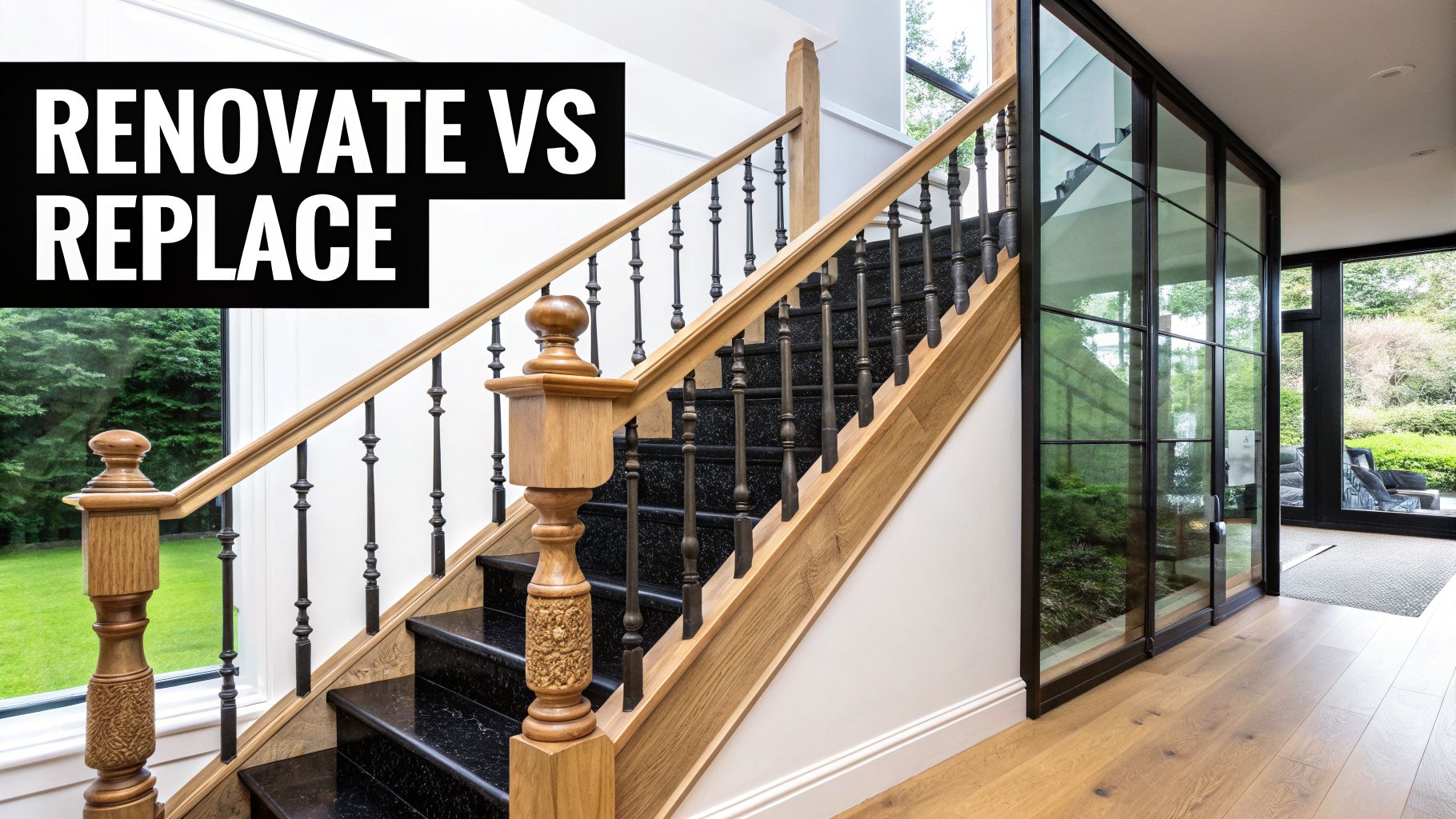
For many homeowners, the staircase is at a crossroads. It’s structurally sound, a solid part of your home, but its style feels… well, a bit stuck in the past. This leads to the big question: do you go for a full replacement, or is a clever renovation the smarter move?
The answer often comes down to a simple cost-benefit reality. A complete replacement is a major project, both in terms of budget and the disruption it causes. On the other hand, a strategic renovation can deliver a jaw-dropping new look for a fraction of the cost, making it an incredibly appealing choice.
The financial gap between these two options is huge. A full-scale renovation – we’re talking about swapping out old-fashioned spindles, fitting a sleek new handrail, and maybe even recladding the treads and risers – can completely change the feel of a space. This kind of project typically falls somewhere in the £1,000 to £5,000 range.
Now, contrast that with a full replacement, which means tearing out the old structure and starting from scratch. As we've covered, even a standard new staircase can hit £4,000, with bespoke designs soaring far, far higher. Renovation lets you give the heart of your home a facelift without the expense and headache of major structural work. If you're weighing up your options, our guide on repairing a staircase offers a detailed breakdown of what’s possible.
Think of it like this: replacing your staircase is like knocking down a wall to create an open-plan living area—a major structural change. Renovating it is more like refitting your kitchen with new cabinet doors, worktops, and modern fixtures—it achieves a completely new look while keeping the core structure intact.
This approach keeps the sound "bones" of your staircase while giving a modern update to the elements that truly define its character.
One of the most effective renovation moves you can make is to upgrade a dated balustrade. Swapping out traditional wooden or metal spindles for sleek, modern glass panels is a total game-changer. This single update can drag your home into the 21st century, making hallways and landings feel instantly brighter and more spacious.
This is where the real value of renovation shines. While a full replacement costs thousands, adding a modern glass balustrade can transform your staircase for around £800-£1,100 per linear metre. Labour for a retrofit like this typically runs at £200+ per day, and the job often takes just two to three days. You could be looking at a total cost well under £3,500 – a massive saving compared to the £15,000+ a new bespoke build could set you back.
This approach packs a serious punch with several key benefits:
Ultimately, choosing to renovate is often the savviest, most value-driven decision. It allows you to achieve a premium, modern look that completely enhances your home’s atmosphere and appeal, all while keeping your project costs firmly in check.
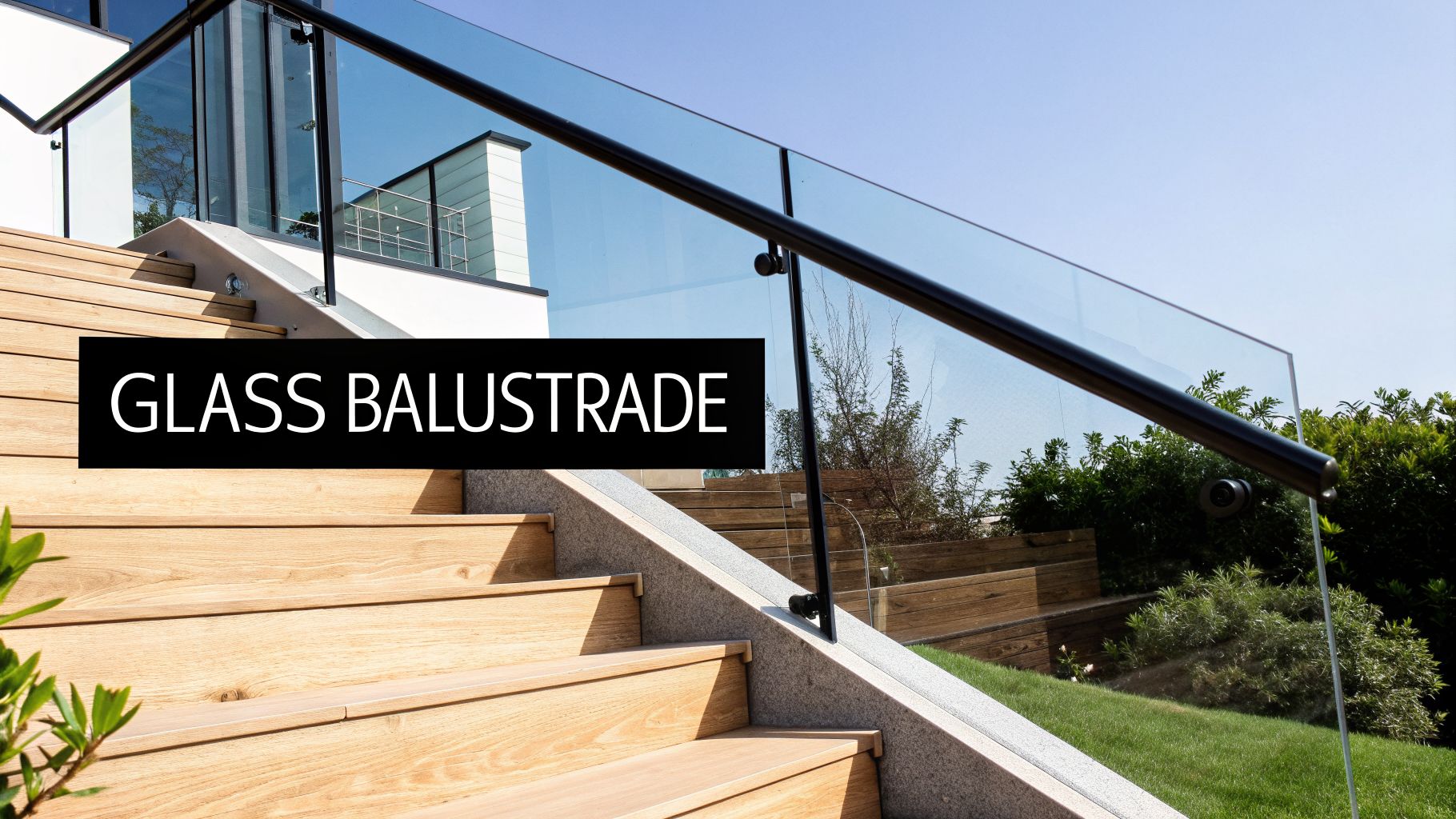
Beyond the spreadsheets and quotes, a great staircase renovation needs to deliver a genuine 'wow' factor. This is where a modern glass balustrade really comes into its own, transforming a purely functional staircase into a stunning architectural centrepiece. For homeowners across the North of England, from Hull to Harrogate, glass has shot to the top of the list for its unique power to elevate a space.
A glass balustrade is so much more than just a safety barrier. It’s a design tool that works wonders in hallways and landings—often the darkest, most enclosed parts of a home. When you swap out chunky wooden spindles for clean, transparent panels, you invite natural light to flood through. It instantly creates an open, airy atmosphere that makes the entire area feel bigger and more welcoming.
Once you’ve settled on glass, your next decision is between a framed or frameless system. This choice has a direct impact on the overall cost. A framed system, which uses posts and clamps to hold the glass panels in place, is typically the more budget-friendly route.
These systems are generally quicker and easier to install, which helps keep labour costs in check. The trade-off is that the posts and fixings create a more defined, structured look. For a deeper dive into these systems, you can find out more about glass balustrade costs in our dedicated guide.
In contrast, a frameless system gives you that seamless, almost invisible finish. The glass panels are secured directly into a base channel, creating an uninterrupted wall of glass that feels incredibly modern and high-end. It's the ultimate choice for a pure, minimalist aesthetic, but it does come at a higher price due to the more complex installation and the need for thicker, stronger glass.
Think of it this way: a framed system is like a beautifully framed picture, where the frame itself is part of the overall design. A frameless system is like a canvas that seems to float on the wall, where the art itself is the sole focus.
Your decision hinges on your budget and the final look you want. Framed systems offer a robust and stylish look for less, while frameless delivers that premium, ‘floating glass’ effect that makes a serious statement.
The type of glass and the style of fixings you choose also play a big part in the final bill. There are two main types of safety glass used for balustrades, and it's important to know the difference:
Beyond the glass itself, the fixings and handrail add to the final cost. Stainless steel is a hugely popular choice for posts, clamps, and handrails because of its sleek look and fantastic durability. Brushed steel offers a modern, matte finish, while polished steel provides a bright, reflective shine.
For those wanting to blend modern glass with traditional warmth, an oak handrail is a fantastic option. This combination creates a beautiful contrast of materials, though a premium hardwood will naturally add more to the cost than a standard steel rail. Ultimately, these choices are what allow you to fine-tune both the look and the cost of your staircase to match your home perfectly.
A successful staircase project is one with no nasty financial surprises at the end. The price on your quote covers the staircase itself, but a full installation often stirs up other work. Factoring these potential "hidden" costs into your budget from day one is the key to a stress-free project.
Think of it like planning a scenic drive through the Yorkshire Dales; you budget for petrol, but you also need to account for parking, a potential pub lunch, and entry to that historic site you want to see. Your staircase project is no different. The final figure will be influenced by several jobs that happen around the main installation.
When you rip out an old staircase and fit a new one, the surrounding area will almost certainly need some attention. This is often where homeowners get caught out, as these "making good" jobs are not typically included in a joiner's quote for the staircase alone.
You should prepare to budget for several related tasks:
A great staircase deserves a great setting. Planning for the finishing touches, like plastering and decorating, ensures the entire space looks polished and complete, rather than leaving the job half-finished.
Consider this: one homeowner's blog post about their stair runner project revealed how the install was just one piece of the puzzle. The extra costs for binding the rugs, creating a custom fit, and sourcing a specialist installer quickly added up, proving that small details can have a big financial impact. Reading blogs from homeowners in Northern areas can provide specific insights into local project costs.
Beyond the cosmetic finishes, there's one area where you can never cut corners: Building Regulations. Sticking to UK safety standards isn't just a good idea; it's a legal requirement. Getting it wrong can lead to disastrously expensive rework.
These rules exist to keep you and your family safe. For balustrades, two regulations are absolutely critical:
If a building control officer inspects your new staircase and finds it non-compliant, you will be required to fix it at your own expense. This could mean ordering new glass panels, changing the fixings, or even completely reinstalling the entire balustrade. The stress and financial sting of having to do the work twice makes getting it right the first time essential. Partnering with a specialist who lives and breathes these regulations removes this risk entirely.
Securing a precise, reliable quote for your staircase project is that final, crucial step in bringing your vision to life. This is where all your research into costs and styles finally pays off. But getting a figure you can actually bank on depends entirely on the quality of information you provide to your installer. The aim here is to move past vague "ballpark" estimates and lock in a firm price tailored to your home, whether you're in Yorkshire, Leeds, or Harrogate.
The best way to start? Always get multiple quotes from reputable, local specialists. A company based here in the North of England will have a far better grasp of regional labour rates, supplier networks, and common property styles than a national chain. This local knowledge nearly always results in more accurate pricing and genuinely practical advice.
To get a quote that reflects the real cost, you need to do a little homework first. Approaching a specialist with clear ideas and some basic measurements will help them give you a figure you can rely on. Think of it as creating a simple brief for your project.
Before you pick up the phone or send an email, try to pull these details together:
To make sure you get the most accurate quote and avoid any nasty surprises down the line, it’s vital to define exactly what you need. A great way to do this is by writing a clear scope of work that lays out exactly what you expect from the supplier.
Providing clear, detailed information isn't just about getting a price; it's about starting a partnership. When a specialist understands your goals, they can offer better solutions, spot potential issues early, and give you a quote that won't spiral later on.
Once you’ve got your information together, it’s time to reach out. Partnering with a regional expert who offers dedicated local support can make all the difference. They're accessible people who can give you clear guidance and transparent pricing specific to our area.
For instance, when getting a quote for a glass balustrade, a step-by-step process works best. Many specialists, including us here at Binks Balustrades, offer online calculators that walk you through providing the right details for a tailored estimate. This usually involves selecting your balustrade style, glass type, and handrail choice, then popping in your measurements. The result is a fast, accurate starting point for your budget. To get a feel for different designs, have a look through our gallery of glass and wood staircases for some inspiration.
This direct, no-nonsense approach demystifies the cost of a staircase, connecting you with experts ready to bring high-quality design and safety to your Northern England home.
Even with the best-laid plans, a few common questions always seem to surface when you’re budgeting for a new staircase. We get it. It’s a big decision, and you want to be sure you’ve covered all the angles. Here are some quick, straightforward answers to the queries we hear most often.
This really boils down to the complexity of your chosen design. A straightforward, simple flight of stairs can often be fitted by an experienced joiner in just 1-2 days. It's a surprisingly swift transformation.
However, if you're opting for a more intricate design, like a winder or a spiral staircase, or if the job requires some structural changes to your home, you should plan for a longer timeline. These more involved projects could take 3-5 days to complete. On the other hand, a simple renovation—like swapping out old wooden spindles for a sleek, modern glass balustrade—is often much faster, typically taking only 1-3 days with minimal disruption to your home.
For most internal staircase replacements in the UK, the answer is no, you do not need planning permission. The most important thing to focus on is ensuring your new staircase fully complies with current Building Regulations.
These regulations are not just guidelines; they are non-negotiable safety standards. They cover everything from the steepness of the stairs and the minimum headroom (2 metres) to the handrail height (at least 900mm) and the crucial rule that no gap anywhere in the balustrade can be larger than 100mm.
If your project is a major overhaul that involves significant structural work, it’s always a smart move to have a quick chat with your local building control officer before you start.
The idea of saving on labour costs with a DIY installation is definitely tempting, but fitting a staircase is a highly skilled and precise job. It demands specialist tools, a deep understanding of geometry, and—most importantly—thorough knowledge of Building Regulations.
An incorrectly fitted staircase isn't just an eyesore; it's a serious safety hazard. It would almost certainly fail a building inspection, forcing you into costly and stressful rework. We always recommend hiring a qualified carpenter or joiner to handle the core installation. You can, however, still save some money by taking on the surrounding tasks yourself, like carefully removing the old staircase or handling all the final painting and decorating.
For getting the most accurate and competitive quotes, it helps to work with suppliers who use modern cost estimating software for manufacturers. This technology ensures pricing is transparent and detailed right from the get-go.
Ready to get a clear, no-obligation quote for your glass balustrade project? At Binks Balustrades, our team of local experts is here to help homeowners across Yorkshire and the North of England.
Use our simple online calculator or contact us today for friendly advice and a quote tailored to your home.