Cost to Install Staircase: 2026 Guide to Prices by Style
When you're thinking about installing a new staircase, the first question is usually "how much will it cost?". The answer […]

When you're thinking about installing a new staircase, the first question is usually "how much will it cost?". The answer […]
When you're thinking about installing a new staircase, the first question is usually "how much will it cost?". The answer can vary quite a bit. For a straightforward, functional staircase, you might be looking at a figure somewhere between £1,500 and £4,000. But if you’ve got your eye on a stunning modern centrepiece with premium materials like glass or oak, the investment can easily climb to anywhere from £5,000 to £25,000, and sometimes even higher.
A new staircase does more than just get you from one floor to the next; it can completely redefine the character of your home. It can be a quiet, functional transition or a jaw-dropping architectural feature. But before you get to the finished article, it’s vital to get a handle on the costs involved. The final price tag isn't just one number—it's a combination of several key parts, each playing a role in the total.
Think of it like buying a car. A basic, reliable model gets you from A to B without any fuss and for a sensible price. A high-performance luxury car, on the other hand, is all about premium materials, cutting-edge design, and a price tag to match. Staircases are exactly the same. A simple, straight flight made from MDF is a practical, budget-friendly choice. In contrast, a bespoke staircase crafted from solid oak with a glass balustrade is a statement of style and craftsmanship.
To give you a clearer picture from the outset, here’s a quick overview of what you can expect to pay for different types of staircases, fully supplied and installed.
This table offers a snapshot of all-inclusive price ranges for common staircase types, helping you quickly compare options for your project.
| Staircase Type | Average Cost (Supply & Install) | Best For |
|---|---|---|
| Straight Staircase | £1,500 – £4,000 | Budget-conscious projects, simple layouts, easy installation. |
| Winder Staircase | £2,500 – £6,000 | Homes where a straight flight won't fit, creating a turn without a landing. |
| Spiral Staircase | £3,000 – £9,000+ | Tight spaces, loft conversions, adding a contemporary design feature. |
| Bespoke/Custom | £5,000 – £25,000+ | Creating a unique architectural centrepiece with premium materials. |
These figures are a great starting point, but remember that the final quote will always depend on the specifics of your home and your design choices.
Several core components will shape the final quote you receive. Getting to grips with these is the first step towards building a realistic budget, especially for homeowners in and around our local areas of Harrogate, Leeds, and York.
Design Complexity: It’s simple, really. A straight staircase is the most cost-effective because it’s the easiest to make and fit. The moment you introduce turns, curves, or spirals, you're adding complexity. Winder, spiral, or curved staircases need more materials, more design work, and more skilled labour, all of which pushes the price up.
Material Choice: This is the big one. The materials you choose for the treads, risers, and the balustrade will have the single biggest impact on your budget. MDF and pine are great wallet-friendly options. Step up to hardwoods like oak, or modern materials like glass and steel, and you move into a higher price bracket.
Labour and Installation: The skill needed to fit the staircase directly impacts the labour cost. A standard timber staircase is relatively straightforward for a good joiner. But an intricate glass balustrade system? That requires a specialist with precision tools and years of experience, and the labour costs will reflect that expertise.
When you put all these elements together, you can see why the price range is so wide. Industry data shows that a standard new staircase costs, on average, around £2,750, including supply and professional fitting. However, if you swap out timber spindles for a sleek glass balustrade, the labour alone could add another £1,000 to £2,500 to your bill. If you want to dig deeper into the numbers, you can learn more about average staircase costs in the UK. Having this initial understanding will help you make smarter decisions as we explore your options in more detail.
Getting a quote for a new staircase can sometimes feel like you're being handed a cryptic puzzle. The final number isn't just pulled out of thin air; it’s a carefully calculated sum of many different parts, and understanding those parts is the key to creating a realistic budget.
Think of it like commissioning a piece of handmade furniture. The basic design sets a starting price, but the real cost is shaped by your choice of wood, the complexity of the design, and the quality of the final polish. A staircase quote works in exactly the same way. Every single decision, from the timber for the treads to the style of the handrail, nudges the final price up or down.
This diagram shows how the total cost is built on three main pillars: the materials, the design, and the labour involved.
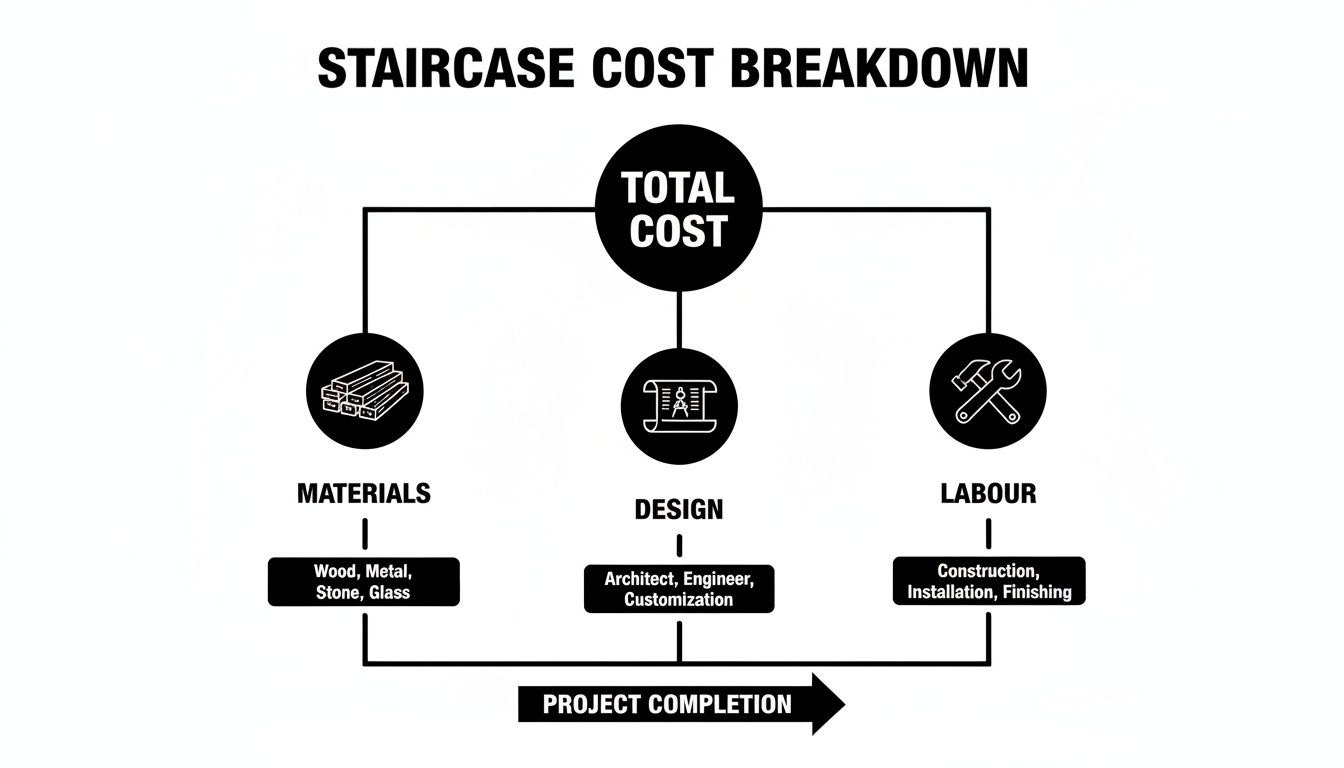
As you can see, these three elements support the entire project's budget. Of these, the materials are often the biggest variable and the area where you have the most direct control. Let's pull back the curtain on each element so you can see exactly where your money goes.
The materials you select are the heart and soul of your staircase, defining both its character and a huge chunk of its cost. This is the single largest variable you'll deal with, offering a wide spectrum of price, durability, and style.
Don't forget the balustrade system itself—it plays a massive role in the final cost. Simple wooden spindles are the traditional, low-cost option. But if you opt for something like a frameless glass balustrade, you're investing in a transformative feature that requires specialist fittings and expertise, making it a more significant line item on your quote.
A truly comprehensive quote goes far beyond the staircase itself. There are several "hidden" costs that are absolutely essential for a safe, compliant, and professionally finished job. It’s easy to overlook these, but that can lead to some nasty surprises down the line.
A common pitfall for homeowners is forgetting to budget for all the prep and finishing work. These jobs aren't part of the staircase structure, but they're absolutely vital for completing the project properly.
For more ambitious designs, or if your project involves moving walls or altering floor joists, you may well need to hire structural engineers. This is a non-negotiable cost for safety and building control approval. A structural survey and the resulting calculations can cost anywhere from £500 to £1,500, but it’s money well spent to ensure your new staircase is properly supported.
Other costs that are easy to forget include:
By understanding every line on your quote—from the oak treads right down to the plaster repair—you can build a budget that reflects the true cost and avoid any unwelcome financial shocks. This transparency is key to planning a successful staircase project in your Northern England home.
Beyond the raw materials, the single biggest factor driving the cost to install a staircase is its design. The shape and complexity you choose will dictate the amount of timber needed, the time it takes to fabricate, and the level of skilled joinery required. It’s simple, really: a functional, straightforward design will always be kinder on the wallet than a grand, architectural centrepiece.
Think of it like this. A straight staircase is your reliable family car—practical, efficient, and gets the job done at an accessible price. A custom curved or floating staircase, on the other hand, is the luxury sports car of the staircase world. It’s a serious investment in high-impact design and precision engineering. The first step is always aligning your dream look with your financial reality to find a style that fits your home and your budget.
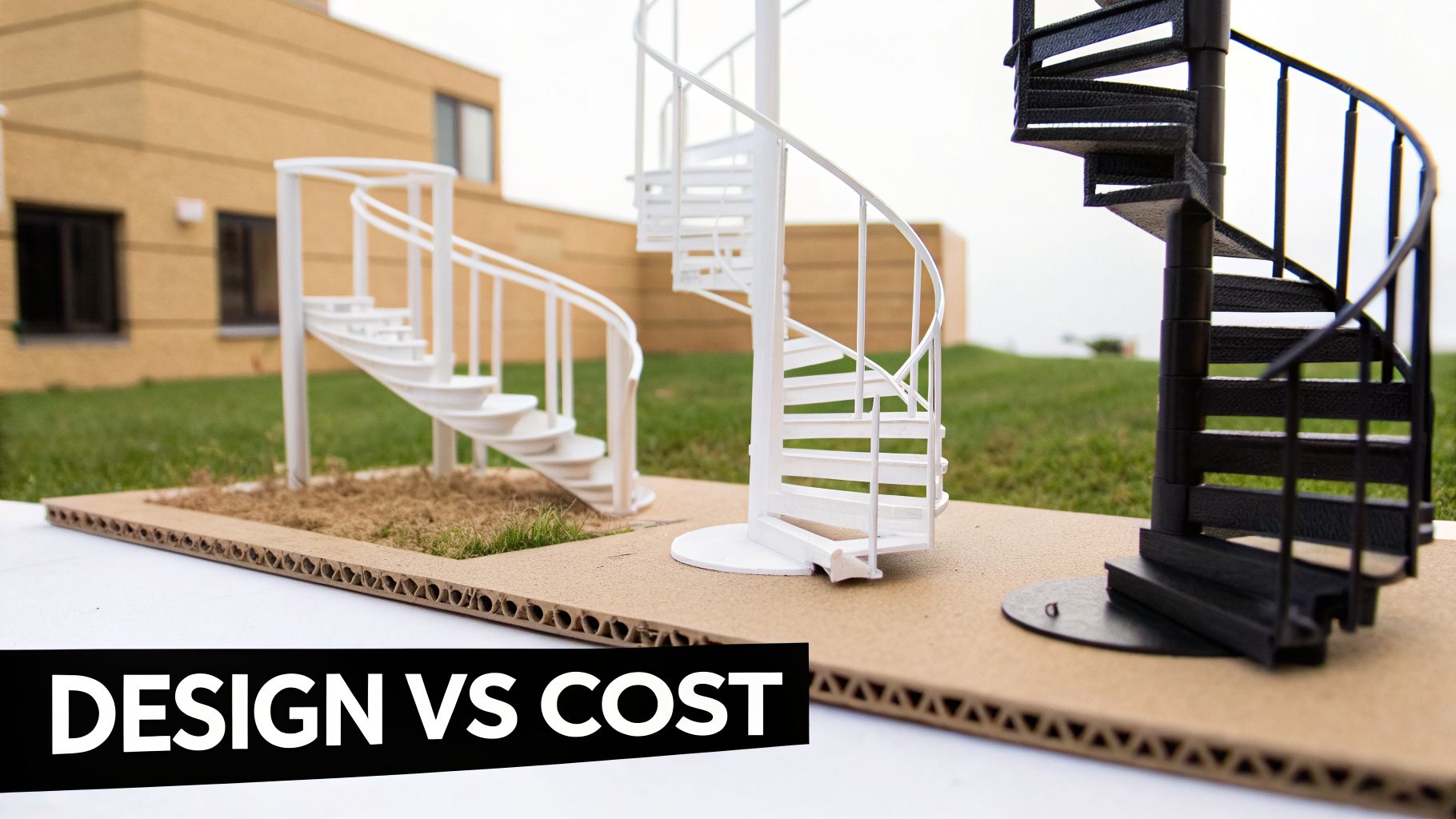
Let's walk through the most popular designs we see in homes across Yorkshire and the North of England, from budget-friendly staples to more ambitious layouts.
To help you compare your options at a glance, we've put together a quick breakdown of the common staircase styles. This table outlines the typical cost, space requirements, and general complexity, giving you a clearer picture of what might work for you.
| Staircase Design | Typical Cost Range | Pros | Cons |
|---|---|---|---|
| Straight | £1,500 – £3,500 | Most affordable, simple to install, fastest installation time. | Requires a long, uninterrupted space; can feel imposing. |
| L-Shaped / U-Shaped | £2,500 – £5,000 | Fits well into corners, landing offers a visual break. | More complex and costly than straight; landing takes up floor space. |
| Winder | £3,000 – £6,000 | Space-efficient for corners, continuous flow. | Irregular steps can be tricky; more complex joinery increases cost. |
| Spiral | £3,500 – £8,000+ | Extremely compact footprint, modern aesthetic. | Can be difficult to navigate, especially with large items; specialist installation needed. |
| Floating / Bespoke | £10,000 – £25,000+ | Stunning visual impact, highly customisable, minimalist look. | Very expensive, requires significant structural work and engineering. |
Ultimately, the right design for you balances your home's layout, your aesthetic preferences, and what you're prepared to invest in the project.
The straight staircase is the most common design for one very good reason: it’s the simplest to design, build, and install, making it the most cost-effective option out there. Its no-fuss construction avoids complex landings or turns, which keeps both material and labour costs right down.
This design is a perfect fit for homes with an open layout where a single flight can easily connect two floors. Because it's so uncomplicated, a skilled joiner can often have it installed in a day or two.
When a straight flight just won't work with your floor plan, L-shaped (quarter-turn) and U-shaped (half-landing) designs are fantastic alternatives. These staircases use a landing to change direction, which naturally adds a bit of complexity and cost.
That extra landing needs more structural support and materials, bumping up the price compared to a straight flight. But on the plus side, these landings create a nice visual break and can become a small feature in your hallway.
For homes in places like York or Harrogate where every square foot counts, spiral and winder staircases are clever solutions. Their tiny footprint makes them a go-to for loft conversions or accessing mezzanine levels, but this space-saving efficiency comes at a price.
A winder staircase uses wedge-shaped treads to navigate a corner without needing a full landing. While it saves floor space, crafting these non-uniform steps is a lot more labour-intensive than making standard rectangular ones.
A spiral staircase, which twists around a central pole, is even more complex. The manufacturing of its bespoke parts and the precision needed for a safe, sturdy installation place it firmly in a higher price bracket.
A common misconception is that smaller staircases are always cheaper. While spiral and winder designs use less floor space, their manufacturing complexity and specialised installation often make them more expensive than a simple straight flight.
If you're looking to create a true architectural feature, nothing beats the design freedom of floating and bespoke staircases. A floating staircase creates a striking, minimalist look by cantilevering treads directly from a wall, hiding all the support. This illusion of lightness requires serious structural work—often a reinforced wall and specialist engineering—making it one of the most expensive options.
A truly bespoke design means you call the shots on every single element, from a gentle curve to the specific mix of materials. For instance, pairing solid oak with custom glass panels is a hugely popular choice for modern homes. To see how these elements can work together, you can explore our guide on glass and wood staircases. While the creative possibilities are endless, so is the potential cost, which reflects the custom design, premium materials, and master craftsmanship involved.
The materials you choose are the building blocks of your new staircase, but it’s the skilled hands of a joiner or specialist installer that truly bring your vision to life. Labour is a hefty slice of the budget, and knowing what you’re paying for is absolutely key to planning a successful project here in the North.
The cost isn’t just about having someone on-site for a few days. You’re paying for expertise, precision, and most importantly, safety. Fitting a staircase is a highly skilled job. It demands meticulous measurements and a deep understanding of structural integrity. One wrong cut or a poorly fitted joint doesn't just look shoddy—it can compromise the safety of the entire structure.
The complexity of the staircase design is, without a doubt, the single biggest factor affecting labour costs. A simple, straight pine staircase is a relatively straightforward job for an experienced carpenter. On the other hand, a bespoke glass balustrade system requires a specialist with a completely different skillset and toolset.
Here’s a breakdown of what pushes up the installation time and, as a result, the cost:
For homeowners in places like Harrogate, Leeds, or York, having a realistic idea of labour costs is crucial. Generally speaking, labour for UK staircase installations can land anywhere between £1,000 to £2,500. That often makes up a significant 30-40% of the total project expense.
Skilled carpenters and joiners in the North typically charge a day rate of £200 to £300. For a basic straight staircase installation, this might be a two-day job, costing around £500 in labour. But for more complex glass or spiral designs, the intricate work can easily double that labour bill to £2,000 or more, simply because of the precision required.
To put this into perspective, here are some typical timelines:
It’s a common mistake to underestimate the time needed for a high-quality finish. Rushing an installation can lead to squeaky steps, misaligned handrails, and a finished product that just looks unprofessional. Always allow for the time your installer quotes.
When your project involves modern materials like glass, you're not just hiring a carpenter; you're hiring a specialist. Glass balustrades demand millimetre-perfect measurements and expert handling. The installer has to ensure every panel is perfectly aligned, securely clamped, and complies with all UK Building Regulations for safety. Our article on how to install stair railings dives into the specific skills needed for these modern systems.
Choosing the cheapest quote might seem tempting, but it can be a false economy. An inexperienced installer could easily damage expensive materials or, worse, create a staircase that isn't safe. Investing in skilled, reputable labour is an investment in the quality, safety, and longevity of your new staircase. It’s the only way to ensure your project is not only visually stunning but also built to last.
A staircase today is so much more than just a way to get between floors; it’s a defining architectural feature in its own right. Swapping out traditional spindles for a sleek glass balustrade system can completely reshape your home's interior, creating an instant feeling of light, space, and contemporary style. It’s a design choice that elevates a purely functional element into a stunning centrepiece.
Glass simply banishes the visual clutter. It allows natural light to flood through your living space, making hallways and landings feel significantly larger and brighter. For homeowners we work with in Cheshire, Harrogate, and across the North, it's one of the most popular ways to modernise a property and add real, tangible value.
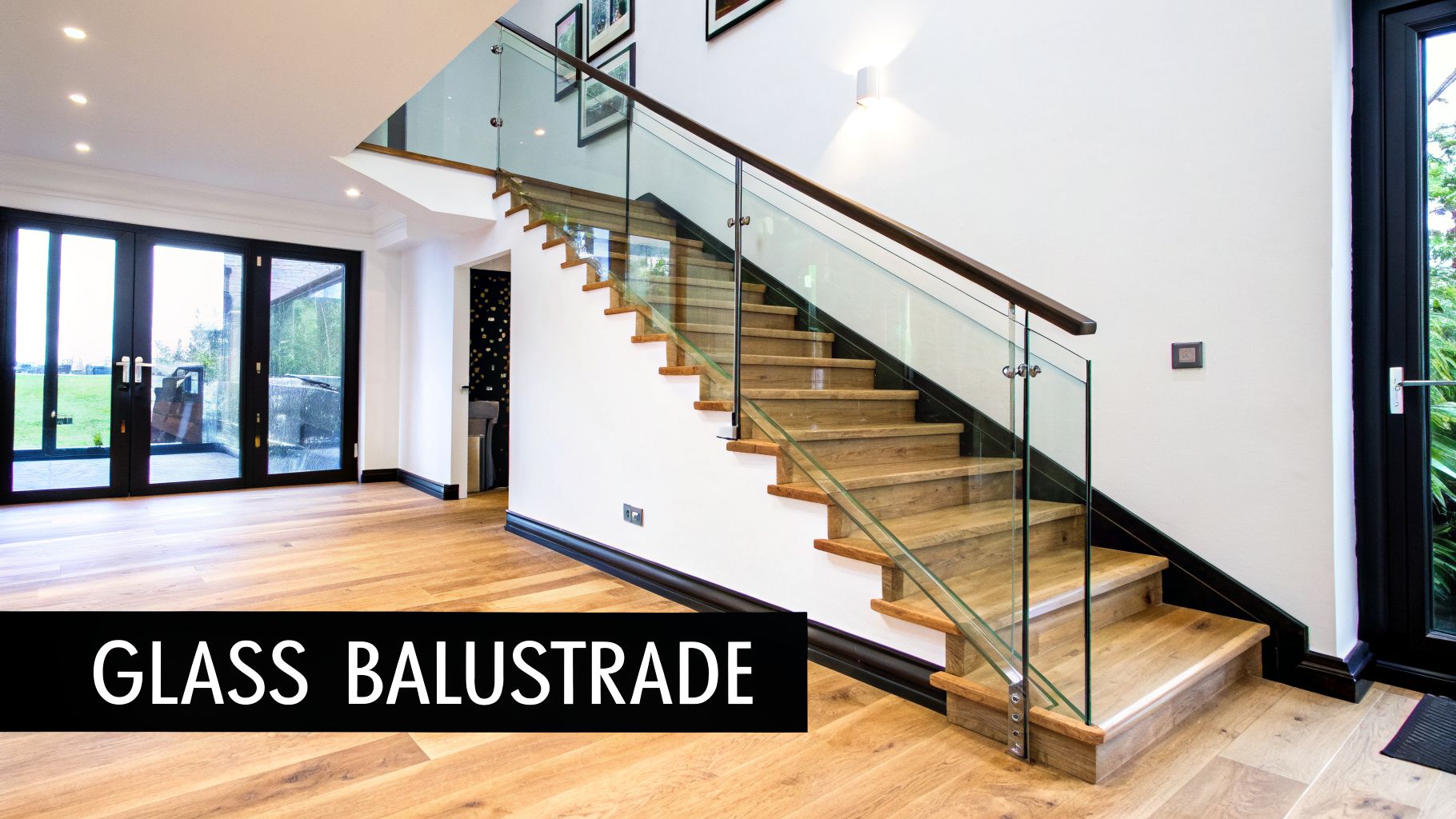
One of the first questions we always get is about the safety and durability of glass. Let me put your mind at ease. The glass used in balustrades is a highly engineered safety product, specifically designed to withstand the knocks and bumps of a busy family home. It's worlds away from the standard glass in your windows.
UK Building Regulations are very strict and mandate the use of specific safety glass to ensure every installation is robust and secure. You'll typically come across two main types:
Both options provide a completely secure barrier that meets the most stringent safety standards, giving you that beautiful, clear view without a single compromise on safety.
Visualising your new staircase is exciting, but understanding the cost to install a staircase with a stunning glass feature is what makes it feel real. To take the guesswork out of budgeting, we’ve developed a simple online tool to give you a clear, immediate cost.
Our Balustrade Calculator is designed to give you a precise, personalised quote for your project in just a few clicks. It puts you in control, allowing you to explore different options and see the costs right from your own home.
The process couldn't be simpler. You can price up your dream design by following four easy steps:
This tool is more than just a calculator; it's the first practical step in your renovation journey. It lets you play around with different designs and see exactly how each choice affects the final budget. By getting a handle on the pricing process early on, you can plan your project with confidence and get one step closer to creating an exceptional new feature in your home.
Getting a beautiful new staircase doesn't mean you have to empty your wallet. With some smart, informed choices, you can get a stunning result that doesn't blow the budget. It all comes down to strategic planning and knowing where you can make savvy savings without cutting corners on safety or style.
Think of it like doing your weekly shop. You could fill your trolley with all the top-shelf, premium brands, or you could cleverly mix in high-quality own-brand items where it makes sense. The end result is just as good, but your bill is much smaller. The same logic applies here; small, clever adjustments can lead to big savings. For a wider look at financial planning for home improvements, our guide on how to budget for home renovation is a great resource for managing your overall project funds.
The biggest lever you can pull to manage your budget is your choice of materials. Everyone loves the look and feel of solid oak, but it absolutely comes with a premium price tag.
Investing in durable materials and professional installation is a long-term saving. A well-built staircase avoids costly repairs and adds lasting value to your property, making it a smarter investment overall.
If your renovation plans go beyond just the staircase, it’s worth thinking about bundling jobs with a single specialist contractor. Here in Yorkshire, we see more and more homeowners modernising both their indoor and outdoor spaces at the same time.
For instance, if you’re installing a new staircase with a sleek glass balustrade, you might also be planning a matching glass balustrade for a garden patio or balcony. By getting the same company to do both, you can often streamline the whole process and get a better overall price.
This approach just makes sense. It simplifies project management and guarantees you get a consistent design look across your property. It also means you’re combining delivery costs, labour scheduling, and project oversight, giving you much more bang for your buck. It’s a really practical way to keep your budget in check while ticking off multiple home upgrades.
To wrap things up, let's tackle some of the most common questions we get from homeowners when they start planning a new staircase. Getting clear, straightforward answers to these points can help you finalise your plans with confidence, avoid any nasty surprises, and get a better grip on the overall cost to install a staircase.
This one really depends on the complexity of the job. A straightforward, like-for-like replacement of a simple timber staircase can often be done and dusted in just one to two days. That's assuming there are no major structural changes needed to make it fit.
But if you’re going for something a bit more special, you’ll need to allow more time. A bespoke design, like a spiral or winder staircase that needs to be fitted with absolute precision, will likely take somewhere between three and seven days. If you’re adding a modern glass balustrade system to the mix, that requires an extra level of care. We’d typically add another day or two to make sure every single panel is perfectly aligned and completely secure.
For most internal staircase jobs, the good news is you probably won’t need full planning permission. If you're simply swapping an old staircase for a new one in the same spot without touching the building's structure, it's usually considered 'permitted development'.
The big exception is when you get into significant structural work. Let’s say you’re cutting a brand new opening between floors to accommodate your staircase – that absolutely requires Building Regulations approval to make sure it’s safe. It’s always smart to have a quick chat with your local council, especially if you live in a conservation area or a listed building in places like York or Harrogate where the rules can be much stricter.
Refurbishing your current staircase can be a fantastic, budget-friendly option, but only if the core structure is solid. It's a great way to get a fresh new look without the cost and upheaval of a full replacement.
Refurbishing is a smart way to get a high-end look on a smaller budget. Swapping out old-fashioned spindles for a sleek glass system can completely modernise your space for a fraction of the cost of a brand-new flight.
A typical refurb might involve things like upgrading the balustrade, swapping out the newel posts, or cladding the steps with a new material. This kind of project often lands somewhere between £800 and £2,000. However, if the underlying structure is weak or you want to completely change the shape or location of your stairs, then a full replacement is the only safe and sensible way forward.
Ready to transform your home with a stunning, modern staircase? The first step is getting a clear idea of the costs. Use the Binks Balustrades online calculator for an instant, personalised quote or get in touch with our local experts today. Visit us at https://binksbalustrades.co.uk/contact-us to start planning.