
A Practical Guide to Glass Panel Balustrade Systems
At its heart, a glass panel balustrade is a simple concept: a modern safety barrier for stairs, balconies, or patios […]

At its heart, a glass panel balustrade is a simple concept: a modern safety barrier for stairs, balconies, or patios […]
At its heart, a glass panel balustrade is a simple concept: a modern safety barrier for stairs, balconies, or patios that swaps out traditional spindles and rails for sleek panels of glass. Think of it as an ‘invisible shield’—it provides the crucial protection you need but without blocking your view, making any space feel instantly bigger and brighter.
But to see it as just a safety feature is to miss the point entirely. A glass panel balustrade is a design statement, a sophisticated blend of function and style that transforms a space. We've seen homeowners and architects across the North of England embrace this look, whether it's to open up a gorgeous garden view from a Harrogate patio or to give a commercial terrace in Leeds a sharp, professional edge. The appeal is impossible to ignore.
This shift towards glass isn't just a fleeting trend. The numbers tell the same story. Within the UK balustrade market, glass panel systems have soared in popularity, now commanding the highest revenue segment. This isn't just a niche market; it's a mainstream movement driven by modern design demands in homes and businesses alike, with projected growth of 5.1% CAGR all the way through 2033. Since just 2019, adoption in homes has jumped by a huge 28%. It’s a clear sign that people recognise their value and trust their durability. You can dive deeper into the balustrade market trends to see the full picture.
The appeal of a glass panel balustrade really boils down to three core benefits. Together, they make it a smart, stylish investment for pretty much any property.
Unmatched Aesthetics: Glass just flows. It creates a seamless connection between inside and out, flooding your home with natural light and making everything feel more open. Unlike timber or metal, it doesn't put up a visual wall, so you get to keep those panoramic views while complementing a clean, minimalist design.
Lasting Durability: These aren't just pretty faces. Built from incredibly tough toughened or laminated safety glass, these systems are engineered to handle everything daily life—and the British weather—can throw at them. They won’t rust, rot, or corrode, making them perfect for the varied conditions across Northern England, from the salty coastal air in Hull to the bustling urban environment of Manchester.
Simple Upkeep: Let's be honest, nobody wants another high-maintenance feature. The beauty of glass is its simplicity. A quick wipe-down with soapy water or a standard glass cleaner is all it takes to keep the panels looking brand new. Forget about the yearly painting, staining, or sealing that traditional materials demand.
A well-designed glass balustrade does more than just stop you from falling; it elevates the entire character of a space. By removing visual clutter, it lets the architecture and the landscape around it take centre stage, creating an atmosphere of clean, uncluttered elegance.
Once you’ve settled on a glass panel balustrade for your space, the next exciting step is picking the perfect system. Not all glass barriers are created equal, and the right one hinges entirely on the look you want to achieve and the practical demands of your project. The three main styles—frameless, semi-frameless, and framed—each bring a distinct character to the table.
Getting your head around these differences is the key to matching the system to your vision. It doesn't matter if you're chasing that completely unobstructed view from a York city-centre balcony or a robust, classic barrier for a family home in Cumbria. Let's break down each option so you can make a confident choice.
If you're after the ultimate in minimalist design, the frameless system is the undisputed champion. This style delivers that stunning, uninterrupted 'infinity' look by doing away with visible posts and frames completely. It’s the closest you can get to a pure, unbroken wall of glass.
The secret is in the clever engineering. Large glass panels are secured at the bottom by a hidden base channel or discreet structural clamps. This creates a powerful, load-bearing structure that provides total safety without any visual clutter. It’s a hugely popular choice for modern architectural projects where the view is the star of the show.
This visual captures the core benefits that make glass balustrades, especially frameless designs, so appealing.
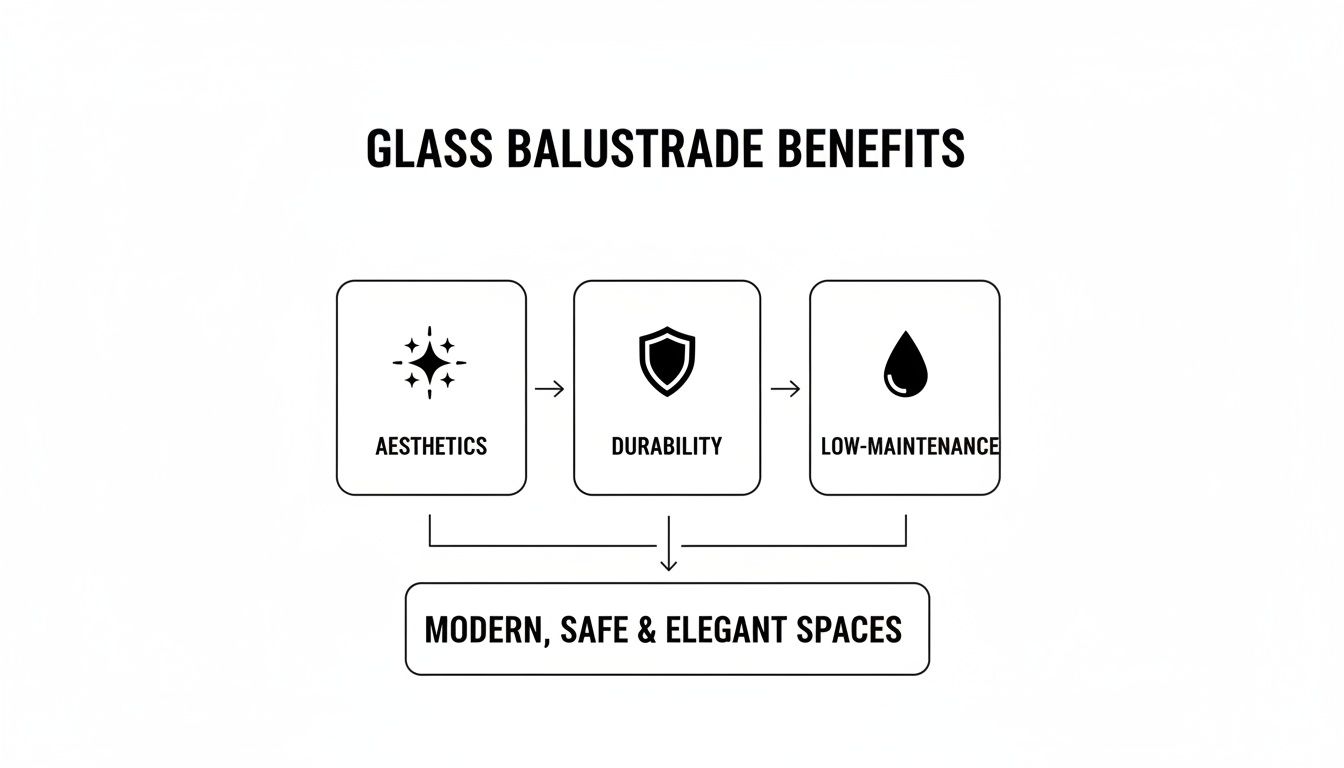
You can clearly see how aesthetics, durability, and low maintenance come together to provide a superior solution for any property.
The semi-frameless system offers a beautiful middle ground, blending the clarity of glass with the subtle structure of minimalist posts. Instead of being held by a continuous channel, this design uses slim, intermittent posts to support the glass panels.
These posts, usually made from stainless steel or powder-coated aluminium, provide solid structural support while keeping things feeling light and open. The result is a sleek, contemporary look that adds a touch of definition without hogging the limelight. For homeowners in places like Harrogate or Cheshire who appreciate clean lines but want a hint of structure, the semi-frameless option is an excellent choice. The fixings are crucial, and understanding the role of each glass balustrade clamp is key to ensuring total stability.
Think of a semi-frameless system like a perfectly framed photograph—the posts provide definition and strength, drawing attention to the beautiful view captured within the glass panels without detracting from it.
For a more traditional or robust look, the framed glass balustrade system is the classic choice. With this design, each glass panel is fully enclosed within a metal frame, complete with a top rail, a bottom rail, and posts.
This structure provides maximum support and creates a very defined, substantial appearance. While it does introduce more hardware into the design, it can be used to complement other architectural features, like window frames or door furniture. It's an incredibly sturdy and durable option, often chosen for high-traffic commercial areas or family homes where a more pronounced barrier is desired.
Across the UK, the preference for sleek, modern designs is undeniable. Glass balustrade systems are dominating modern architecture, with the frameless style alone capturing 45.8% of the market share thanks to its reliability and wide use in both homes and businesses. For property developers in Leeds or York, these systems can slash maintenance costs by 30% annually while seriously upgrading the look of a modern patio or balcony.
When you’re planning a new glass panel balustrade, it’s easy to get caught up in the aesthetics. But behind every stunning design, safety is the absolute, non-negotiable foundation. Thankfully, the UK has robust regulations in place to make sure every single installation is secure, strong, and completely fit for purpose.
While navigating these rules might seem a bit daunting at first, getting to grips with the basics will give you the confidence that a professionally installed system is an exceptionally safe choice for your home or business.
The real rulebook for balustrade safety in the UK is BS 6187:2011, which is the code of practice for barriers in and around buildings. This is the standard that professionals live and breathe. It lays out the minimum requirements for everything, from the specific materials used to the critical loads a barrier must be able to withstand to protect people from falls.
One of the most critical concepts you'll come across is line load resistance. It sounds complex, but it's really just a way of measuring how much horizontal force a balustrade can take at its highest point before it could fail. Think of it as the barrier’s strength to resist the pressure of people leaning against it.
The required line load changes depending on where the balustrade is being installed:
Understanding these load requirements is a crucial part of the design process. You can dive deeper by exploring our complete guide to UK glass balustrade regulations, which breaks down all the specifics.
Beyond just strength, building regulations also dictate the minimum height of a balustrade to prevent accidental falls. This height depends on the location and, most importantly, the height of the potential drop.
The type of glass specified is just as important. While toughened glass is incredibly strong, laminated glass is often a legal requirement in certain situations. This is particularly true for frameless systems or any installation protecting a significant drop. The magic of laminated glass is that if a panel ever breaks, its plastic interlayer holds the fragments together, maintaining a safe barrier and preventing a dangerous opening from forming.
"A compliant glass balustrade is not just about ticking boxes; it's about providing genuine peace of mind. Every regulation, from line load to glass type, is designed to ensure the system performs its primary function flawlessly—keeping people safe."
This intense focus on safety and compliance hasn’t slowed down the market at all. In fact, the UK’s frameless structural glass balustrade sector is seeing strong growth, with a consistent 4.6% annual increase fuelled by renovation projects and modern architectural trends. In northern cities like Leeds and York, developers are confidently using compliant glass panel balustrades to add value, knowing they meet strict standards like BS 6187. You can discover more insights about the growth of the frameless balustrade market on futuremarketinsights.com.
Right, this is where the fun really starts. Moving from vague ideas to the actual nuts and bolts of your project is always the most exciting part. Pinning down the details for your perfect glass balustrade is a pretty straightforward process once you know what to think about. It’s all about making a few key decisions that bring your style, practical needs, and the local environment together.
The first choice is the most fundamental: will your balustrade be for internal or external use? It seems simple, but it changes everything. An indoor staircase system for a home in Harrogate faces very different challenges to an outdoor patio barrier in a coastal town like Hull. This one decision will guide everything that follows, from the type of glass you need to the grade of stainless steel used for every last fixing.
Next up, you need to decide how the glass panels will actually be secured. This is a crucial detail that heavily influences both the final look and the structural integrity of your balustrade. Each method offers a completely distinct style.
You’ll generally come across two main options:
Often, the choice boils down to the structure you’re working with and the aesthetic you’re aiming for. Base-mounted gives a solid, grounded feel, whereas a side-fixed installation adds a bit of architectural flair.
It's absolutely essential to think about your local conditions, especially here in the North of England. The environment plays a huge part in choosing the right materials for your fixings and hardware, ensuring they last for years without corroding.
For instance, if your property is near the coast in places like Hull or anywhere along the Yorkshire coast, it's going to be exposed to salty sea air. In this scenario, 316-grade stainless steel is the only real choice for all your metal components. It contains an element called molybdenum, which gives it brilliant resistance to the corrosion caused by salt and moisture.
On the other hand, for an inland project in a city like Leeds or a town like Darlington, 304-grade stainless steel is usually perfectly fine and a more cost-effective option. It provides fantastic durability for typical urban and rural settings that don't face the harsh marine environment.
Selecting the right material grade for your location isn't just a technical detail—it's a long-term investment in your balustrade's appearance and structural health, preventing rust and degradation for years to come.
Once you have a clearer idea of these specifications, getting an accurate price is the next logical step. The easiest way to get a quick, reliable figure is with an online Balustrade Calculator, which breaks the whole process down into four simple steps.
By running through this process, you can confidently define every last detail of your glass balustrade, ensuring the final result is a perfect match for your vision and is truly built to last.
Let's be honest, the budget conversation is one of the first and most important parts of any project. When you're dreaming of a sleek glass balustrade, getting a grip on the costs involved is what empowers you to make smart choices that bring your vision to life without any nasty surprises. The final price isn't a simple off-the-shelf figure; it's a careful calculation of your unique design choices, each playing its part in the overall investment.
A few key variables have a direct impact on the final quote. The biggest one? The system type you go for. A fully frameless system – the kind that gives you that incredible, seamless wall of glass look using a hidden base channel – is naturally a premium option. It demands sophisticated engineering and a more complex installation process. On the other hand, semi-frameless or framed systems, which use posts for support, can often be a more budget-friendly route.
Your choice of glass specification is another major driver of the price. While toughened glass is a strong, popular, and perfectly suitable choice for many home projects, laminated glass is often a non-negotiable safety requirement for higher-level applications. The more involved manufacturing process for laminated glass, which involves bonding two panes of glass together with a tough interlayer, means it comes with a higher price tag.
Beyond the big ticket items, the hardware and finishes you choose also contribute to the final cost. Polished stainless steel, a more subtle brushed steel, or even a custom powder-coated colour for the posts and handrails will all have different price points. Even the complexity of the job itself, like fitting a balustrade to a curved wall or a tricky staircase, can shape the labour costs.
The price of a glass panel balustrade is a direct reflection of its quality, safety, and customisation. Investing in a compliant, well-engineered system isn't just about meeting regulations; it's about adding significant, lasting value and peace of mind to your property.
To bring all this into the real world, let's look at a couple of typical projects we might see across the North of England. These examples show how different scopes and specifications quickly shape the budget.
Scenario 1: A Harrogate Patio: For a standard 5-metre balustrade on a ground-floor patio in Harrogate, a homeowner might choose a cost-effective semi-frameless system. Paired with 10mm toughened glass and standard stainless steel posts, this creates a safe, stylish barrier without the premium cost of a fully frameless design.
Scenario 2: A York Commercial Venue: Now, let's picture a bigger 15-metre system for a first-floor terrace at a bustling venue in York. Because of the drop and the fact it's open to the public, regulations would almost certainly require a frameless system with thicker, laminated glass (say, 17.5mm) to handle the higher load requirements. This more robust, compliant specification naturally leads to a higher overall investment.
These scenarios make it clear why a one-size-fits-all price just doesn't exist. Every project has its own unique character, and the final cost is calculated based on the precise materials and labour needed to deliver a safe, beautiful, and fully compliant installation.
For a more detailed breakdown tailored to your specific ideas, take a look at our complete guide on the cost of glass balustrades.
To help you see how these elements come together, here's a table breaking down the key variables that determine the overall cost of a glass balustrade system.
| Factor | Description | Impact on Cost |
|---|---|---|
| System Type | Whether the system is frameless, semi-frameless, or framed with posts. | High: Frameless is the most premium; framed is typically the most cost-effective. |
| Glass Specification | The type and thickness of the glass, e.g., 10mm toughened vs. 17.5mm laminated. | High: Laminated glass is significantly more expensive than toughened glass due to its complex manufacturing. |
| Hardware & Fixings | The material and finish of handrails, posts, clamps, and base channels (e.g., stainless steel grade, powder coating). | Medium: Custom finishes and higher-grade 316 stainless steel for outdoor use will increase costs. |
| Project Size & Length | The total linear metres of balustrade required for the project. | High: A primary driver of the overall cost, affecting both materials and labour. |
| Installation Complexity | The difficulty of the installation, such as on stairs, curved surfaces, or difficult-to-access areas. | Medium: Complex installations require more time and specialist skills, increasing labour costs. |
| Site Location & Access | The geographical location and ease of access to the installation site for our team and materials. | Low-Medium: Can influence logistics and labour time. |
Understanding these factors helps you see where your money is going and allows you to make informed decisions when planning your project with our team.
A glass panel balustrade is a real investment in your home's style and value, and looking after it is surprisingly simple. While getting it installed by a professional is non-negotiable for safety and a perfect finish, the day-to-day upkeep is a breeze. A little routine care is all it takes to keep your glass panels looking crystal clear and structurally sound for years.
We can't stress this enough: always use a professional for installation. It’s a job that demands absolute precision, where every measurement has to be spot-on to meet UK safety standards. The process involves securely anchoring the base channels or posts, carefully slotting in each heavy glass panel, and making sure every component is perfectly aligned and tightened to handle the required forces. Trying to DIY this without specialist gear and know-how can seriously compromise the system's integrity, creating a major safety hazard.
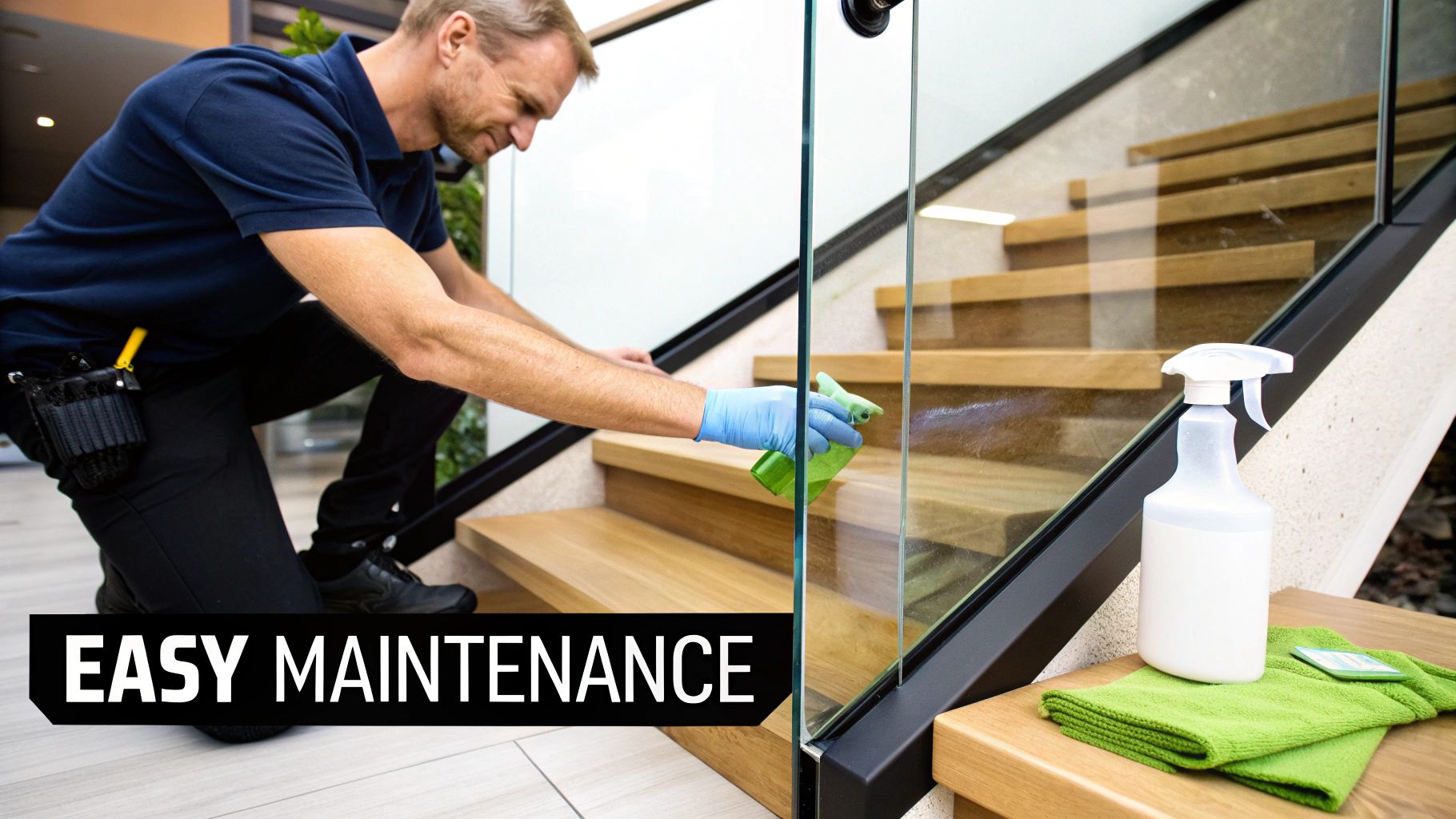
Maintaining that pristine, barely-there look is much easier than you’d imagine. Regular, simple cleaning stops any grime from building up and keeps it looking brand new.
Over time, especially in hard water areas, you might notice some mineral deposits. Knowing how to remove hard water stains from glass is a useful trick to keep your view completely unobstructed.
Beyond cleaning, a quick visual inspection every few months will give you total peace of mind. It only takes a couple of minutes.
Take a moment to check that all fixings—such as clamps, bolts, and post bases—are secure and show no signs of movement. Also, inspect the glass panels for any chips or damage, particularly around the edges. Early detection of any issue is key to maintaining long-term safety.
This proactive habit ensures your glass balustrade remains a safe, strong, and stunning feature of your property. If you do spot anything that doesn't look right or have any concerns, your first port of call should always be a professional.
When you're thinking about a new project, it’s natural to have a few questions. We get it. Here are some clear, straightforward answers to the queries we hear most often, helping you feel confident about choosing a glass panel balustrade.
Absolutely. When installed correctly by a professional, a glass panel balustrade is one of the safest barriers you can have in your home. It’s not just a case of putting up some glass; every installation must comply with strict UK Building Regulations, specifically BS 6187. These rules cover everything from the minimum height to how much force it has to withstand.
The secret lies in the safety glass itself. We use either toughened or laminated glass. Toughened glass, if it ever breaks, shatters into small, harmless cube-like pieces, much like a car side window. Laminated glass offers even greater security—an internal plastic layer holds the panel together even if it cracks. This makes them a solid, reliable choice for any home, especially with kids and pets running around.
You'll be pleasantly surprised. It’s far easier and less time-consuming than sanding down and re-staining a wooden balustrade every year. For day-to-day cleaning, a soft microfibre cloth with a bit of soapy water or any standard glass cleaner (just avoid ammonia-based ones) will do the trick.
To keep it looking pristine, never use scouring pads or harsh chemical cleaners that could scratch the surface. For most homes in the North of England, a quick wipe-down every few months is plenty. If you're lucky enough to live on the Yorkshire coast, you might want to do it a bit more often to clear away any salt spray and keep that stunning view crystal clear.
Yes, this is a very common and fantastic way to upgrade an outdoor living space. Installing a sleek glass balustrade onto a sturdy timber deck is perfectly achievable.
Before we start, a professional will always assess the decking’s structure. We need to be certain that the joists and framework underneath are strong enough to handle the weight of the glass and any load it might face. We then use specialised fixings designed specifically for timber, ensuring the entire system is safe, stable, and built to last.
The price difference comes down to a more complex manufacturing process and the superior level of safety it offers. Laminated glass is essentially a glass sandwich—it’s made of two panes of glass bonded together with a tough, clear plastic interlayer (known as PVB).
That interlayer is the game-changer. If the glass breaks, the interlayer holds all the pieces in place, preventing the panel from failing and leaving a dangerous opening. While toughened glass is perfectly suitable and safe for many domestic projects, Building Regulations often insist on laminated glass where there's a significant drop, like on a high balcony. It provides that crucial extra layer of protection when it matters most.
Ready to bring clarity and style to your space? The team at Binks Glass Solutions is here to help you design the perfect glass panel balustrade for your Northern England home or business. Contact us today for expert advice and a no-obligation quote.