Satin Glass vs Frosted Glass Which Is Best for Your Balustrade
When you're choosing the glass for your new balustrade, the decision between satin and frosted glass often boils down to […]

When you're choosing the glass for your new balustrade, the decision between satin and frosted glass often boils down to […]
When you're choosing the glass for your new balustrade, the decision between satin and frosted glass often boils down to a question of feel and function. It's really a trade-off between texture and subtlety. Frosted glass gives you a more textured, heavily obscured finish for maximum privacy, while satin glass offers a smoother, more refined translucence. The one you pick will have a big impact on your space's privacy, light, and overall feel.
As you plan a glass balustrade for your home, perhaps for a garden in Yorkshire or a staircase in Cumbria, the specific type of glass you choose is one of the most important decisions you'll make. It’s easy to look past standard clear glass and want something with a bit more privacy and style. This is where satin and frosted glass come in.
Many people use the terms interchangeably, but they are actually different products. They're made using distinct methods, which results in unique looks and performance. Getting to grips with these differences is the first step to making sure your project is a success, whether you're a homeowner in Harrogate creating a chic patio or a builder in Leeds specifying materials for a new development.
Before we get into the finer details, here’s a quick overview of what sets these two popular privacy glass options apart.
| Feature | Satin Glass | Frosted Glass |
|---|---|---|
| Finish | Smooth, velvety, and consistent | Slightly rougher, more textured |
| Manufacturing | A type of acid-etched glass | Can be acid-etched or sandblasted |
| Privacy Level | High, but with a softer look | Highest, heavily diffuses shapes |
| Light Diffusion | Soft and even | More scattered and diffuse |
| Aesthetic | Modern, subtle, and premium | Varies from decorative to functional |
| Maintenance | Less prone to showing fingerprints | Can be harder to clean if sandblasted |
This table gives you a solid starting point, but the perfect choice always depends on what you need for your own project. You can explore our specific satin and obscure glass options to see what we offer.
It’s also worth knowing about other methods for achieving a similar effect. For instance, some people look into window films, which offer light-diffusing properties through a different application method.
Now, let's break down each of these points in more detail, giving you the insight you need to make a confident decision for your home or project.
When you're choosing between satin and frosted glass, the look and feel are usually the first things you consider. And rightly so. While both are fantastic for privacy, they play with light and texture in completely different ways, each creating a distinct atmosphere.
Getting this choice right is crucial for your balustrade, whether it’s for a modern apartment in Leeds or a classic townhouse in York.
The biggest difference comes down to the surface. Satin glass gets its finish from an acid-etching process. This creates a surface that's perfectly uniform, smooth, and non-porous. It has a real premium, velvety texture.
"Frosted glass," on the other hand, is a bit of a broader term. While it can be acid-etched, it's often made by sandblasting. This involves firing tiny abrasive particles at the glass, resulting in a slightly rougher, more crystalline finish.
Imagine running your hand over them. Satin glass is silky smooth—almost like sea glass worn down by the waves. It has a sophisticated, low-sheen look that we see a lot in high-end architectural projects.
Frosted glass, especially the sandblasted kind, has more of a bite to it. The texture is what gives it that classic "frosted" appearance, like ice on a window on a cold morning in the Dales. This tactile quality is brilliant for creating a high degree of visual privacy.
To make it even clearer, here’s a quick summary of the visual differences.
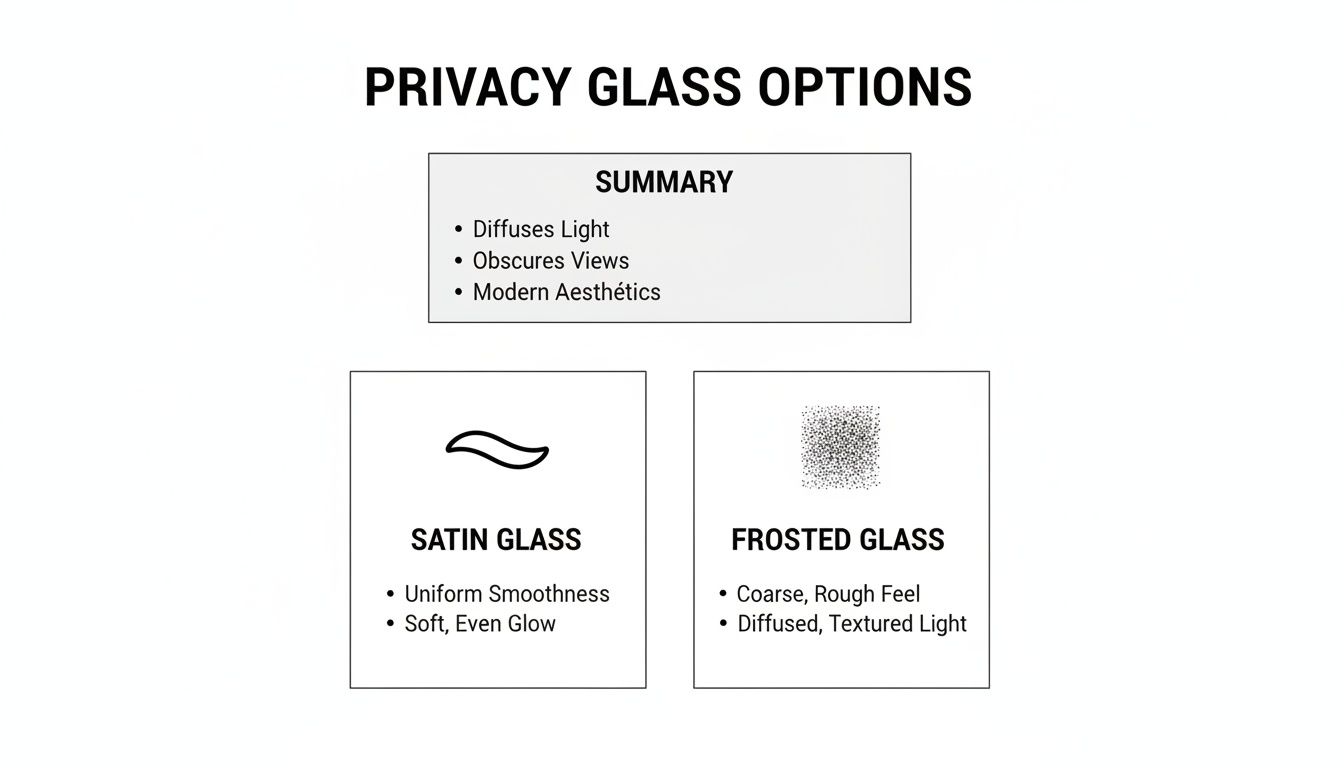
The key takeaway? Satin offers a sleek, consistent appearance, while the more textured surface of frosted glass provides greater light scattering.
How each glass handles light is probably its most important job. Both let daylight flood in, but they shape it differently, which directly impacts the feel of your space.
Satin Glass: This finish gives a much softer, gentler diffusion. Light is scattered evenly across its smooth surface, cutting out glare and harsh shadows without making the room feel darker. The result is a lovely, ambient glow.
Frosted Glass: This one scatters light far more aggressively. Its textured surface breaks up the light rays, making it perfect for maximum privacy. You get a bright, evenly lit space without any direct lines of sight.
The real secret is in the manufacturing. Acid-etching (for satin glass) creates a very fine, uniform haze. Sandblasting (a common method for frosted glass) creates deeper, more varied pits. This is why it produces a heavier, more crystalline blur for both light and shapes.
For instance, a satin glass balustrade on an internal landing in a Harrogate home would create a subtle, elegant light and keep things feeling open. On the other hand, a frosted glass screen for a ground-floor terrace in a busy part of Hull would give you fantastic privacy while still bathing the area in natural light.
To help you decide at a glance, here’s a quick head-to-head comparison.
| Attribute | Satin Glass | Frosted Glass |
|---|---|---|
| Appearance | Smooth, velvety, uniform haze | Textured, grainy, crystalline finish |
| Feel | Silky and smooth to the touch | Slightly rough, tactile surface |
| Privacy | High (objects are softly blurred) | Maximum (shapes are heavily obscured) |
| Light Diffusion | Soft, even glow with minimal glare | Strong, scattered diffusion, excellent glare reduction |
| Cleaning | Easier to clean, less prone to fingerprints | Can hold onto oils and marks more easily |
| Best For | Modern, elegant interiors; subtle privacy | Maximum privacy, high-traffic areas, reducing harsh sun |
This table should give you a clear, straightforward summary of where each glass type shines.
For many projects, especially commercial ones, the exact level of light transmission is a key factor. In our experience across Yorkshire and the North, frosted glass often gets the nod for its superior ability to diffuse light.
It typically transmits 85-90% of available light in a soft, scattered pattern. Compare that to satin glass, which transmits around 75-80% with a silkier sheen. That difference can be important. We’ve seen facilities managers in Leeds offices and Hull hotels favour frosted glass because it can cut distracting glare by up to 60% more than its smoother rival.
This powerful diffusion makes frosted glass an excellent choice for south-facing balconies or any space that gets hit with intense, direct sun. It simply turns those harsh rays into pleasant, usable light.
Satin glass, while still great at reducing glare, offers a more direct (though softened) light. It acts more like a gentle filter, which is perfect when you want to soften the sun but still feel a strong connection to the outside. You can see more examples of these effects by exploring the different styles of glass available for balustrade projects.
Ultimately, your choice in the satin glass vs frosted glass debate comes down to the atmosphere you want to create. For a crisp, modern look with a soft glow and a smooth-to-the-touch finish, satin glass is a brilliant choice. For maximum light diffusion and privacy, frosted glass remains a popular and incredibly functional option.
Looks and light are crucial, but a balustrade has to work in the real world, especially with the demanding weather we get across the North of England. A beautiful design is only half the story if it can't stand up to daily life. We need to look at durability, how easy it is to clean, and the non-negotiable safety standards.
The long-term winner in the satin glass vs. frosted glass debate often comes down to how each finish copes with wear and tear. This means resistance to scratches, how they handle fingerprints, and what it takes to keep them looking pristine—whether on a windswept Cumbrian coast or a busy family staircase in Cheshire.
How each glass is made has a direct impact on its resilience. Both satin and frosted glass begin life as standard glass, but the way their obscure finish is created alters their surface properties for good.
Satin Glass: The acid-etching process gives satin glass an incredibly smooth, non-porous surface. This makes it highly resistant to scratches and stains from everyday life. Because the finish is part of the glass itself, you never have to worry about it chipping away or peeling off.
Frosted Glass (Sandblasted): On the other hand, traditional sandblasted frosted glass has a more textured, porous surface. While tough, these tiny peaks and troughs can trap dirt more easily and are, in theory, a bit more vulnerable to showing deep scratches if something sharp is dragged across them.
It’s worth remembering that any modern architectural glass is incredibly tough. The subtle differences in texture are really about long-term appearance and cleaning effort, not a major weakness in structure.
For day-to-day resilience, satin glass generally has the edge. Its smoother finish simply offers fewer places for minor scuffs and marks to take hold.
For most of our clients, this is the clincher. The ease of cleaning is where the difference between satin and frosted glass becomes crystal clear, especially in homes with kids or in high-traffic commercial spaces.
Satin glass is the undisputed champion of low-maintenance living. Its velvety surface doesn't give fingerprints and smudges much to grip onto. A quick wipe with a microfibre cloth and your usual glass cleaner is typically all it takes to bring back that perfect, uniform look.
Sandblasted frosted glass can be more of a challenge. Its rougher texture can hold onto grease, making cleaning a bit more of a chore. The surface properties of glass, like the difference between hydrophilic and hydrophobic glass properties, can also play a role in how it looks over time.
That said, modern techniques are closing this gap. Acid-etched frosted glass can now offer high privacy with a much smoother, easier-to-clean surface. For architects specifying glass for residential blocks in Darlington, choosing a modern frosted glass with anti-fingerprint coatings can lead to 15% lower cleaning costs annually. According to the latest research on glass balustrade market trends, toughened frosted glass is incredibly robust, able to withstand 250kg impact tests, whereas the finer etching on some satin finishes might be more prone to micro-cracks under extreme stress.
No matter which finish you fall in love with, safety is paramount. In the UK, any glass used for balustrades and railings must meet strict regulations to ensure it’s completely safe for your home or business.
The key bit of legislation is Building Regulations Part K for the Protection from Falling, Collision and Impact. This states that any glass in critical areas like balustrades must be safety glass. You have two main options:
For any balustrade project, whether it's a new build in Leeds or a renovation in York, using either toughened or laminated glass is a legal must. At Binks Balustrades, all our satin and frosted options are available as toughened or laminated safety glass, guaranteeing your installation is fully compliant and secure. You can dive deeper into the details in our guide to laminated and toughened glass options.
This means your stunning new balustrade isn't just a design statement—it's a tough, protective barrier. The choice between satin and frosted really boils down to your personal taste and how much cleaning you’re prepared to do, as both can be specified to meet the highest safety standards.
Theory is one thing, but seeing how these materials perform in the real world is where the decision between satin and frosted glass really clicks into place. The best choice always comes down to your home, your vision, and the specific challenges of your location. We've fitted countless balustrades across the North of England, so let's walk through a few common scenarios to show you what works best, and why.
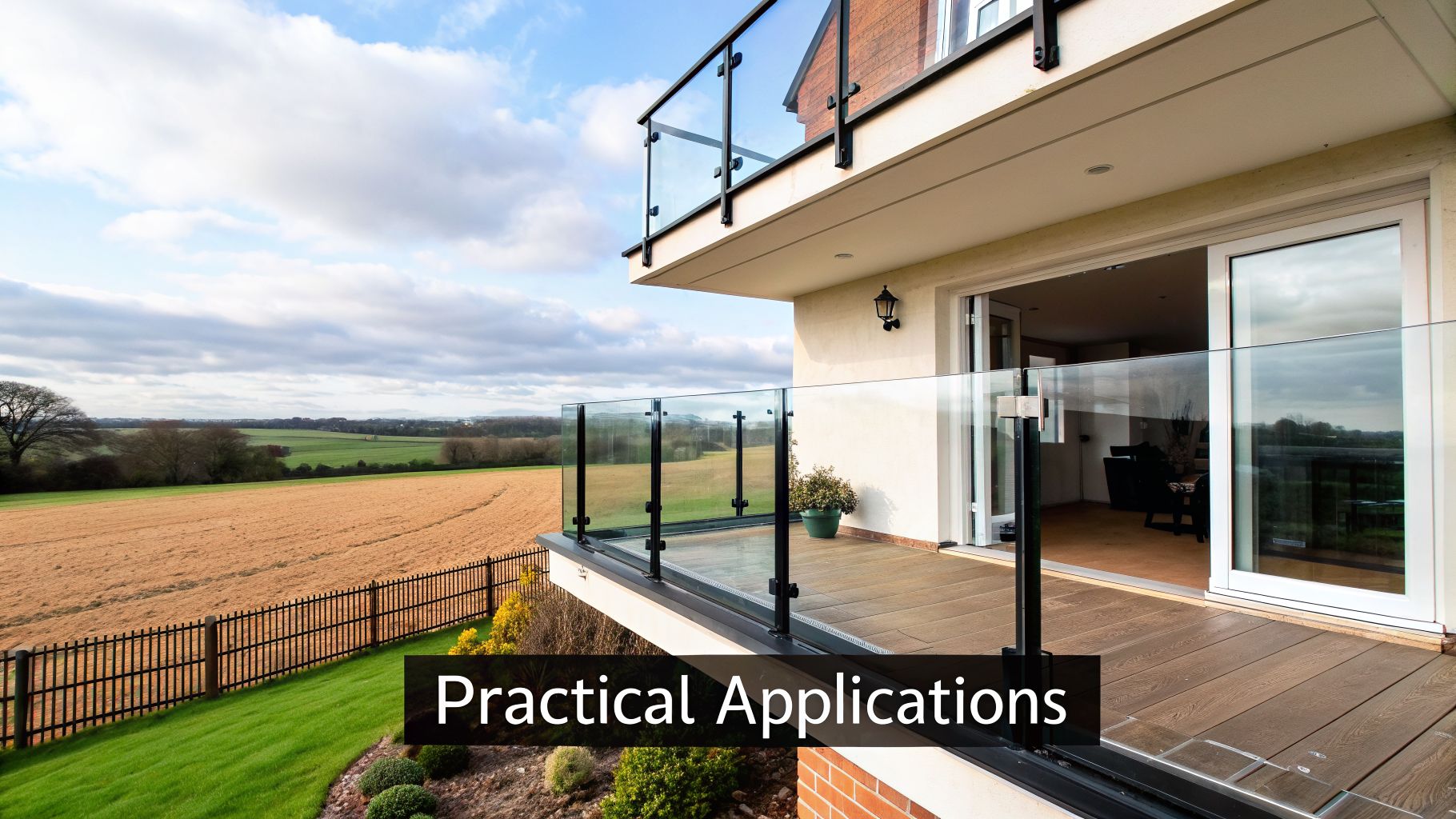
From a windswept balcony in Cumbria to a sophisticated townhouse in Harrogate, getting it right means balancing aesthetics with practical needs like privacy, light, and durability. Understanding the logic behind each choice is what will give you the confidence to pick the perfect glass for your home.
Picture a modern home overlooking the Cumbrian coast. The brief is to create a private outdoor space that feels connected to the indoors but can withstand everything the weather throws at it—wind, driving rain, and salty air.
In this situation, frosted glass is almost always the clear winner.
For a project like this, a toughened or laminated frosted glass balustrade delivers the ideal combination of robust safety, high privacy, and practical performance against the coastal elements.
Now let's head inland to an elegant period townhouse in Harrogate. The job is an internal staircase and landing balustrade. The goals are to make the space feel larger, encourage light to flow between floors, and inject a dose of modern luxury.
This is where satin glass truly shines. Its unique qualities are perfectly matched for this type of interior work.
For interior projects where a luxurious feel and minimal maintenance are priorities, the smooth, consistent finish of satin glass offers an unmatched combination of style and practicality. It blurs just enough for privacy while maintaining an open, light-filled environment.
Finally, think about a rooftop terrace on a modern apartment block in a busy part of Leeds. The terrace is overlooked by neighbouring buildings, making privacy a top priority. At the same time, the owners don't want to lose the sense of openness or block the urban views completely.
This is a classic scenario where the satin glass vs frosted glass debate comes down to personal preference, though one often has the edge.
In this urban setting, both have their merits. The final decision often rests on what the owner values more: the total seclusion offered by frosted glass, or the more subtle, stylish screen that satin glass provides.
When it comes to planning a new balustrade, budget is almost always a top consideration. It’s crucial to understand the cost differences between satin and frosted glass, as the price tag isn't just about the panel itself; it reflects the manufacturing process, the quality of the finish, and the long-term value you get.
For homeowners and developers across Leeds, York, and the North of England, getting a handle on these costs early on is the best way to keep your project running smoothly. Let’s break down the financials so you can weigh the initial outlay against the lasting benefits of each glass type.
At a glance, frosted glass is generally the more budget-friendly of the two. The reason for this comes down to how it’s made. The most common method, sandblasting, is a relatively quick, mechanical process that roughens the surface of the glass, which helps to keep the production costs down.
Satin glass, on the other hand, is a different story. It requires a far more controlled and intricate acid-etching process. This chemical treatment is what creates that signature smooth, consistent, and undeniably premium finish, but the multi-stage procedure is more time-consuming and expensive. That complexity in the workshop is what you see reflected in its higher price.
The core takeaway on cost is simple: satin glass commands a higher price due to its more refined and complex manufacturing process, resulting in a smoother, more luxurious finish. Frosted glass offers a more accessible price point, making it a popular choice for projects where budget is a primary consideration.
While the upfront cost is a major factor, it's also important to think about the investment over the lifespan of your balustrade.
To budget effectively, it helps to have some real-world figures in mind. While prices always vary based on the supplier and exact specifications (like glass thickness or whether it’s toughened or laminated), you can use these numbers as a reliable guide for per-square-metre costs.
We see these trends in our own work across the region. Satin glass provides that beautiful, pearl-like finish, but we see it used in around 8% of our installations, mostly due to its higher cost. In contrast, frosted glass is a staple, making up 22% of our recent balustrade projects in Yorkshire, which really highlights its popularity. If you want to dive deeper, you can explore more data on the frameless structural glass balustrade market to see how these trends are shaping the industry.
When choosing between satin and frosted glass, looking beyond the initial purchase price can lead to a smarter decision. The true value of your investment often reveals itself over time through durability and maintenance.
As we’ve covered, satin glass is remarkably resistant to fingerprints and smudges, which makes it far easier and cheaper to keep clean. For a busy commercial space or a family home, this reduction in cleaning time and effort adds up to a real long-term saving. Frosted glass, particularly sandblasted versions, can trap dirt and oils, meaning it may require more frequent or intensive cleaning to keep it looking pristine.
Ultimately, your choice is about balancing that upfront cost with long-term performance and the look you want to achieve. For a high-end architectural finish where a premium feel is non-negotiable, the extra investment in satin glass is almost always worth it. For projects where maximum privacy and cost-effectiveness are the main drivers, frosted glass delivers exceptional value. By understanding these financial nuances, you can confidently choose the glass that best aligns with both your budget and your vision.
When you're fine-tuning the details of a project, the final decision between satin and frosted glass often hinges on a few practical questions. Drawing on years of fitting balustrades for homeowners and architects across the North of England, we’ve put together the straightforward answers you need to make the right choice with confidence.
Yes, when you have a light on indoors or a spotlight shining from behind, both glass types will reveal shadows and silhouettes. The real difference is how clearly you can make them out.
Frosted glass, with its more deeply textured surface, scatters light far more aggressively. This means any silhouettes are heavily blurred and indistinct, giving it the edge for maximum privacy.
Satin glass offers a softer, more elegant level of obscurity. While it provides excellent privacy during the day, at night the shadows and outlines will appear a little more defined compared to the heavier blur of frosted glass.
For any outdoor balustrade in rainy parts of the country, from Cumbria to the Yorkshire Dales, frosted glass often has a practical advantage. Its textured finish is brilliant at masking water spots, rain streaks, and the general grime that comes with British weather. This means less frequent cleaning to keep your balustrade looking its best.
Satin glass, being perfectly smooth, will show water marks more easily, much like standard clear glass. The good news is that its non-porous surface makes wiping those marks away incredibly simple.
No matter which finish you lean towards, it's absolutely vital that any outdoor balustrade is built from toughened or laminated safety glass. This is non-negotiable, ensuring the structure can stand up to wind, rain, and impacts, keeping your family and guests safe.
The level of privacy you get is a direct result of the manufacturing process – specifically, how intensely the glass has been sandblasted or acid-etched. The key is to be clear about your privacy goals when we discuss your project.
We always encourage you to look at physical samples. There’s no substitute for seeing and feeling the difference firsthand, allowing you to compare how each finish diffuses light in the real world.
Being clear about your needs during your consultation ensures we supply the perfect glass for your home. You can find plenty of inspiration for how these finishes look in real homes on design blogs that focus on properties across the North of England.
Both satin and frosted glass balustrades are seen as a premium upgrade that significantly boosts a property's appeal and value. The "better" choice often comes down to the home's overall style and what potential buyers are looking for.
Frosted glass is a strong selling point for those who value maximum privacy and low-maintenance living, making it a smart, functional feature for family homes or properties that are overlooked. On the other hand, the luxurious and refined look of satin glass often appeals to buyers seeking that high-end, contemporary finish.
Ultimately, the biggest factor in adding value is a professional, compliant installation. A well-fitted, safe, and beautifully finished balustrade using either type of glass will always be a brilliant investment.
Now you have the facts, you’re in a great position to choose the right glass for your space. For expert advice and a bespoke quote for your project in Harrogate, Leeds, York, or anywhere across the North, get in touch with the Binks Balustrades team. We're here to help you create the perfect balustrade.
Ready to start planning? Contact us today for a free consultation and quote.