
Styles of Glass for Balustrades: Choose the Best Look and Safety
Choosing the right glass for your new balustrade can feel like a big decision, but it's more straightforward than you […]

Choosing the right glass for your new balustrade can feel like a big decision, but it's more straightforward than you […]
Choosing the right glass for your new balustrade can feel like a big decision, but it's more straightforward than you might think. At its core, the choice comes down to three main styles of glass: toughened, laminated, and frosted. Each one offers its own unique blend of safety, privacy, and visual flair for your home.
Picking the right glass for your balustrade isn’t all that different from choosing new windows or even your main Entry Doors. Some options are designed to give you that crystal-clear, uninterrupted view over a garden in York, while others are built to offer a bit of privacy or extra durability for a busy family home in Leeds. It’s all about finding that sweet spot between safety, style, and how you need it to function day-to-day.
This guide will break down the main styles of glass in simple, practical terms. We’ll look at how each type holds up in the real world, helping you find the perfect match for your project, whether it's a sleek staircase or a modern balcony. Once you understand the core options, you can make a choice you’re truly confident in—one that fits both your design vision and the crucial safety standards.
To get started, it helps to know the main players. Each style has a specific job, from creating an ultra-strong safety barrier to adding a subtle, decorative touch.
The diagram below shows how these common styles fit together.
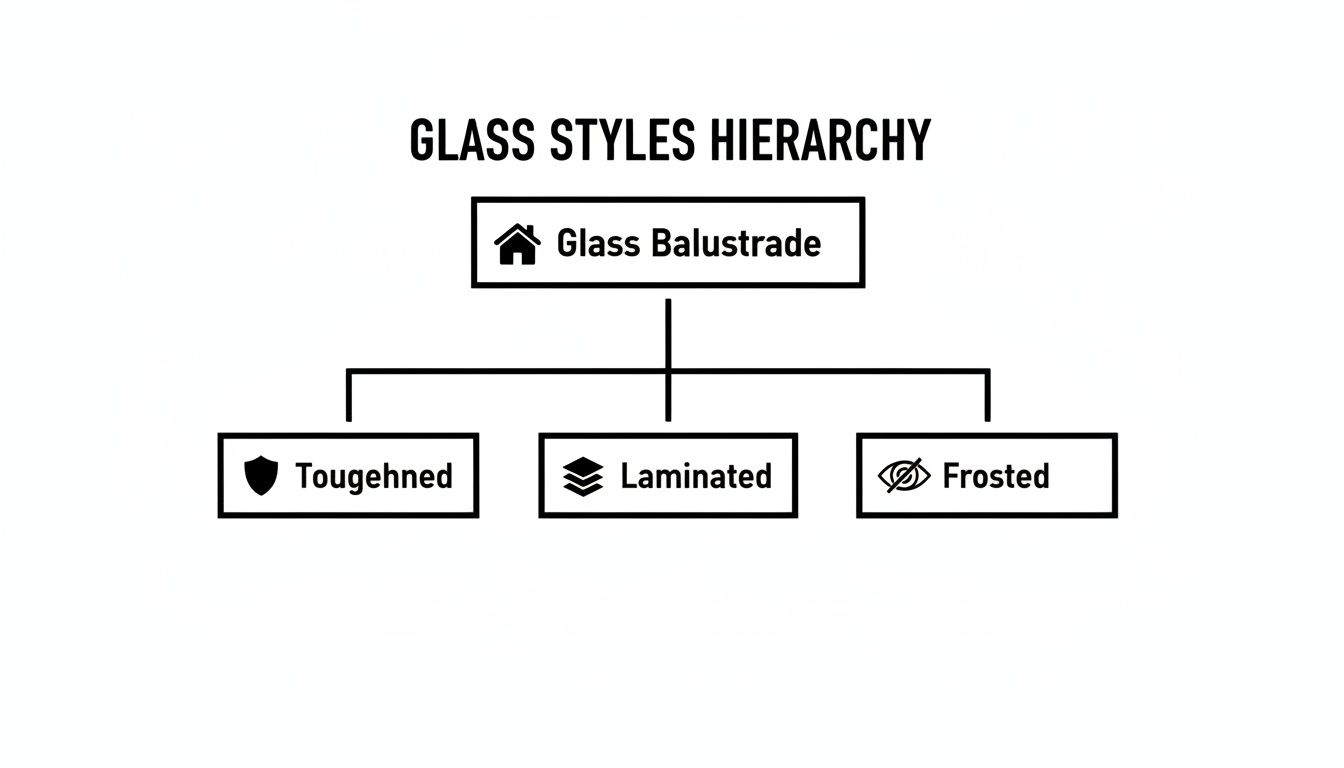
As the chart shows, your first considerations branch out into safety (with Toughened and Laminated glass) and aesthetics (like Frosted glass). Making the right choice ensures a cohesive and stylish finish not just for your balustrade, but for your entire property.
To help you see the differences quickly, here’s a simple table comparing the main types of glass we use and where they really shine.
| Glass Style | Key Feature | Best For | Common Application |
|---|---|---|---|
| Toughened | Up to 5x stronger than standard glass; shatters into small, blunt cubes. | Strength and clear views in most standard domestic settings. | Internal staircases, garden decking, Juliet balconies. |
| Laminated | Breaks like a car windscreen, holding together when shattered. | Ultimate safety, especially where there's a drop or for commercial use. | Frameless systems, raised patios, commercial spaces. |
| Frosted | Translucent finish that obscures views for privacy. | Creating private spaces without sacrificing natural light. | Overlooked balconies, bathroom screens, office partitions. |
| Low-Iron | Exceptional clarity with no greenish tint. | Projects where a pure, crystal-clear finish is essential. | High-end interiors, spaces with light-coloured decor. |
This table gives you a great starting point, but the best choice often comes down to the specifics of your home and your personal taste. Next, we'll dive deeper into each of these options.
When you’re looking at a glass balustrade for your home or business, it boils down to two core types of safety glass: toughened and laminated. Understanding the difference is crucial, not just for the look, but for safety and compliance right here in the North of England.
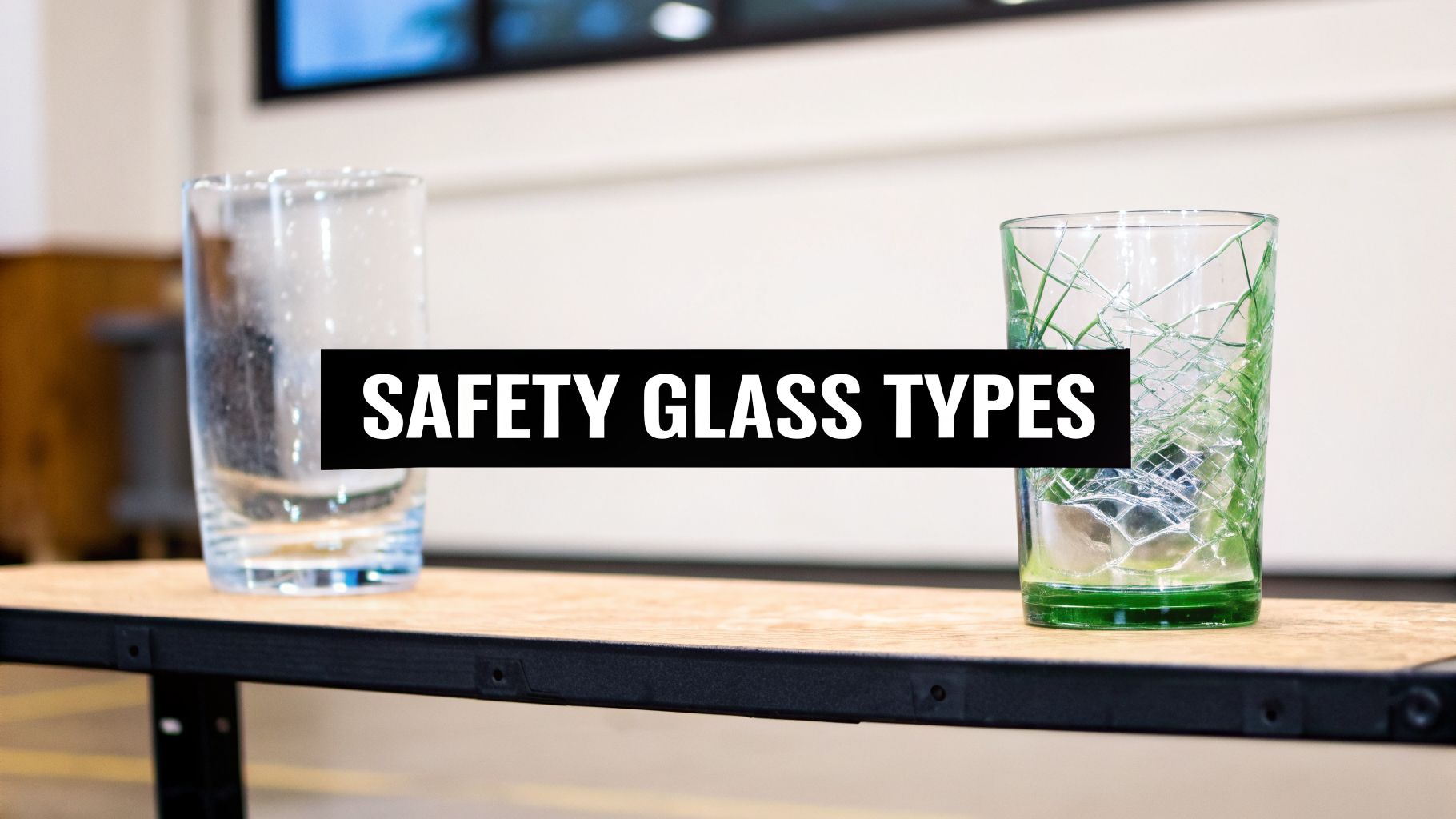
Think of toughened glass as being forged like steel. It goes through an intense heating and rapid cooling process that makes it 4-5 times stronger than ordinary glass. If it ever does fail, it’s designed to crumble into small, blunt, dice-like cubes, which dramatically reduces the risk of serious injury.
Laminated glass, on the other hand, is more like a high-tech sandwich. It’s made of two or more sheets of glass bonded together with a tough plastic interlayer. If the glass breaks, this interlayer holds the shards in place, much like a modern car windscreen.
Each style has its own distinct personality when it comes to performance.
Toughened Pros: Its exceptional rigidity is perfect for those crystal-clear, uninterrupted views. It also comfortably meets the BS 6180 standards required for most domestic settings.
Toughened Cons: The main drawback is that if it cracks, the entire panel shatters. While it breaks safely, it leaves a gap, meaning replacement becomes an urgent priority.
Laminated Pros: Its biggest advantage is that it holds together on impact, maintaining a barrier even when broken. It also offers a bit of natural sound dampening.
Laminated Cons: It's slightly heavier, which means it needs robust, well-engineered fixings. Over many years, there's a small chance the interlayer finish could degrade if not properly sealed.
To put it into a real-world context, we've seen projects on the Cumbria coast where laminated panels have proven their worth, withstanding gusty winds and airborne debris far better than standard glass, in line with BS 6187 guidelines.
So, which one is right for you?
For sleek internal stairs or landings, toughened glass is often the perfect choice. It keeps the architectural lines clean and makes for a simpler, more streamlined installation.
However, for commercial terraces, high-level balconies, or any area where a fall from height is a risk, laminated glass is the go-to. Its ability to remain in place after an impact provides that critical extra layer of safety. This is especially true in coastal locations across the North, where it can better resist knocks from wind-blown debris.
Choosing the right glass ensures your project is a perfect marriage of style and safety.
Recent data shows the UK's frameless glass railing market is expanding quickly. At Binks Balustrades, our installations reflect local needs, with a 42% market share in toughened glass and 58% in laminated products—a figure heavily influenced by the high-wind areas in places like Cumbria. Since the post-Grenfell regulations came into effect in 2022, compliant installations have surged by 35%, and today, 80% of architects in the North specify fire-rated glass variants for relevant projects. You can discover more insights about these market trends in this research.
Choosing your safety glass isn't just an aesthetic decision; it’s about protecting your family and visitors while meeting strict UK standards.
| Feature | Toughened | Laminated |
|---|---|---|
| Strength Gain | 4-5x stronger | 2-3x stronger (depending on layers) |
| Fragmentation | Breaks into blunt cubes | Shards adhere to interlayer |
| Weight | Standard | Heavier due to interlayer |
| Best Use Case | Internal stairs, landings | High balconies, exposed areas |
Ultimately, the choice between toughened and laminated glass shapes both the performance and compliance of your balustrade.
For most sheltered domestic settings, a simple toughened panel does the job beautifully. But for more exposed areas or high-level applications, a laminated barrier offers invaluable peace of mind. We recently worked with a homeowner in Harrogate who chose laminated glass for a raised deck; they specifically noted how it reduced noise from the garden below and gave them confidence during winter storms.
To get a clearer picture for your own project, the styles of glass calculator at Binks Balustrades can walk you through these options. The final decision will come down to your project's goals, location, and how you want to balance aesthetics with risk. Always consider things like wind load and public access to get the safest, most beautiful result.
The best way forward is to speak with local experts here in the North of England for some personalised guidance. A professional installation doesn't just guarantee you'll meet UK standards; it ensures your balustrade remains a safe and stunning feature for years to come.
Ready to get started? Use our online calculator to compare toughened and laminated glass options in minutes.
Once you’ve settled on the type of safety glass, the next big decision is how it’s all held together. This choice, between a framed or frameless system, is where you really define the visual personality of your balustrade. It’s about more than just structural support; it’s about the character and atmosphere you want to create.
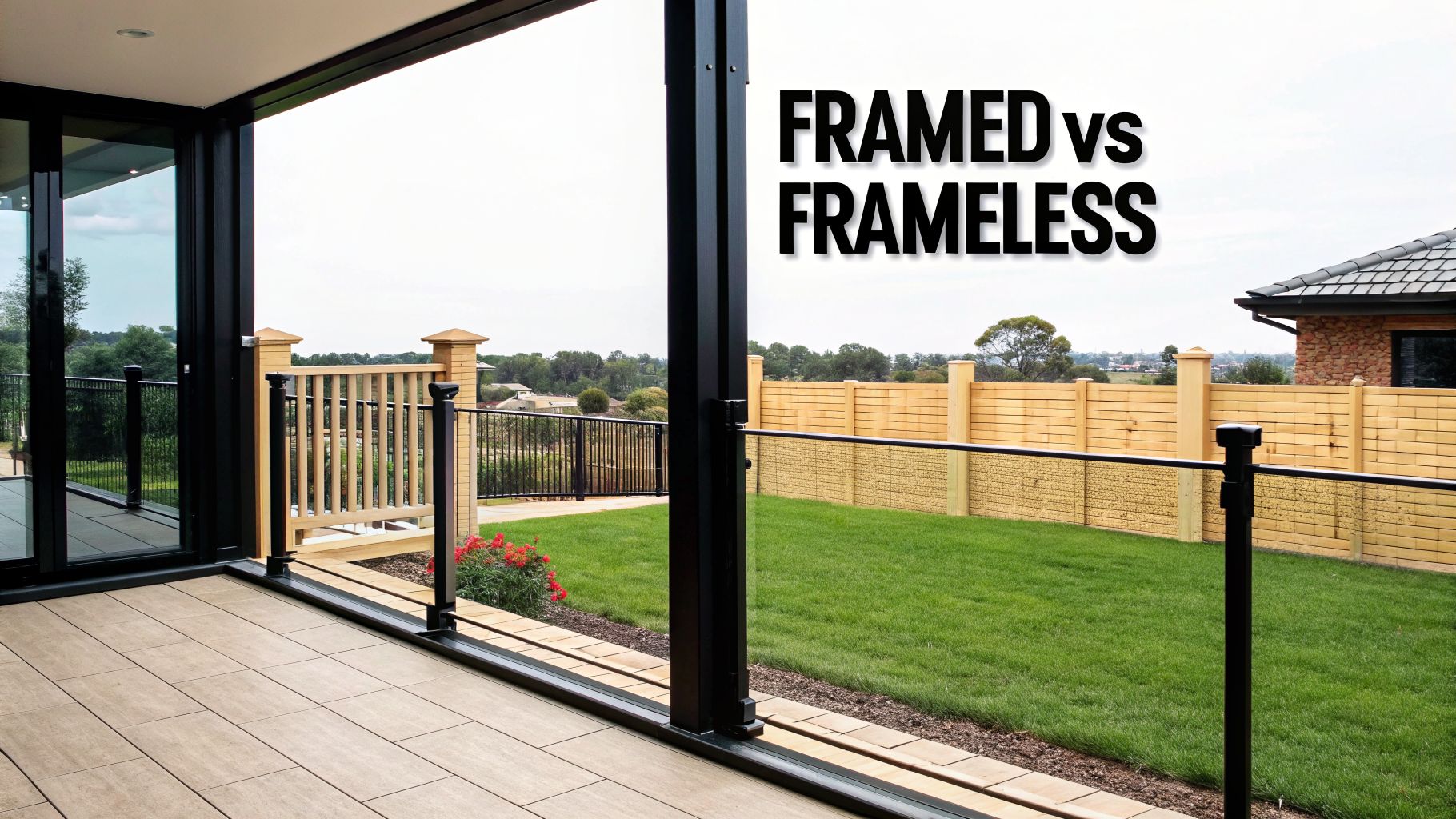
Think of a frameless system as an invisible shield. The whole point is to be as unobtrusive as possible, using subtle base channels or discreet point fixings to hold the glass panels securely. The result is a breathtaking, uninterrupted view that makes any space feel larger and more open—perfect for a modern patio looking out over a gorgeous Yorkshire garden.
A framed system, on the other hand, makes a bold design statement. It uses visible metal posts, often paired with a handrail, to create a more defined, traditional boundary. This approach can be a fantastic way to complement classic architecture, tying the balustrade in with other features like window frames or door furniture.
Frameless systems are far more than a passing trend; they represent a fundamental shift in how we think about modern design. Their popularity has soared, especially with homeowners aiming for those clean, architectural lines that scream sophistication. This style maximises light and space, turning the glass from a simple barrier into a functional, almost invisible, feature.
Here in the UK, especially across Yorkshire and the North of England, frameless structural glass has found a huge following in the home renovation market. Its popularity comes down to clever fixings like core-channels or top-mounted clamps, which can cut down visual clutter by up to 90% compared to old-school metal railings. According to market insights on glass balustrades, this minimalist appeal is exactly what architects and homeowners are looking for.
A frameless balustrade doesn’t just frame the view; it becomes part of it. It’s the ultimate choice when you want safety without sacrificing a single inch of your landscape.
So, how do you know which system is the right fit for your project? The choice usually boils down to your home’s architectural style and what you value most.
Frameless Systems Are Ideal For:
Framed Systems Work Well For:
Ultimately, both framed and frameless balustrades offer secure, stylish, and long-lasting solutions. The right one for you depends on a simple question: do you want your balustrade to make a bold statement, or elegantly disappear into the background?
While the structural integrity of your balustrade is non-negotiable, the finish of the glass is where the magic really happens. This is your chance to transform a simple safety barrier into a standout design feature. Moving beyond standard clear glass opens up a whole new world of creative possibilities, letting you inject personality, privacy, and pure class into your home.
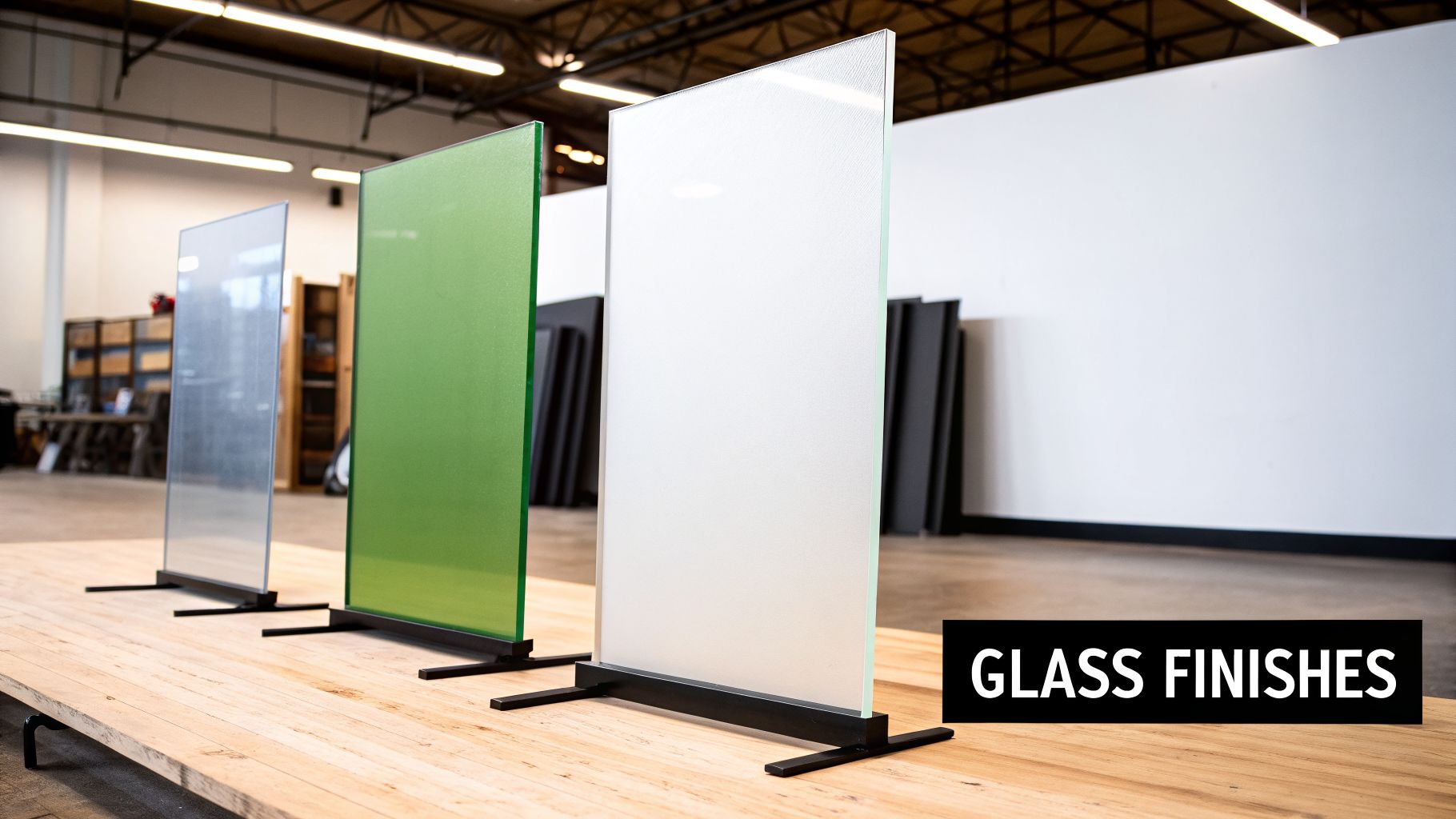
This is where you can tailor the look to perfectly suit your home’s unique character. Whether you’re in a sleek city apartment or a traditional Yorkshire house, each finish serves a different purpose, from creating a private sanctuary to making a bold, modern statement.
One of the most requested finishes we work with is frosted glass, sometimes called satin glass. Created by acid-etching or sandblasting the surface, this technique gives the glass a beautiful, translucent quality. It's the ideal solution when you need privacy but don't want to block out that precious natural light.
Think about a balcony that’s a little too close to the neighbours. Frosted glass completely obscures the direct line of sight, giving you a secluded spot to relax while still bathing the area in soft, diffused sunlight. It’s a classic way to turn a potential privacy problem into an elegant feature. We dive deeper into how you can use satin obscure glass to find that perfect balance between light and privacy in our detailed guide.
Frosted glass doesn’t just block a view; it softens it. By diffusing harsh sunlight into a gentle glow, it can make a space feel calmer and more welcoming.
If you're aiming for a contemporary, stylish edge, tinted glass is a fantastic choice. Usually available in subtle bronze or grey tones, this glass offers more than just good looks. It’s also incredibly practical for reducing sun glare, making it a smart option for south-facing patios or sun-drenched stairwells.
The tint brings a unique warmth and depth that complements other materials beautifully, like dark woods or modern metalwork. It's a subtle but powerful way to make a strong visual impact, adding a layer of character that standard clear glass just can't replicate.
At the other end of the spectrum, we have low-iron glass. Have you ever noticed the slight green hue on the edge of a standard glass panel? That’s caused by the natural iron content in the glass. For projects where absolute purity and colour accuracy are everything, low-iron glass is the only way to go.
By removing most of the iron oxide from its makeup, this glass delivers a crystal-clear, almost invisible finish. It’s the perfect choice for spaces with light-coloured décor or for anyone who wants absolutely nothing to come between them and their stunning view. The difference is subtle, but for a discerning eye, it provides an unparalleled level of transparency.
All the talk about glass types can feel a bit abstract, but this is where the theory hits the ground running. Getting the right match between the glass and its location in your home is absolutely vital. It’s a careful balancing act between stunning looks, robust safety, and ticking all the boxes for UK building regulations like BS 6180. The perfect choice means your new balustrade isn’t just beautiful—it’s completely fit for purpose.
For homeowners across the North, from Harrogate to Hull, knowing you've made the right decision brings real peace of mind. Think about a frameless system on a patio overlooking the garden; it's simply unmatched for protecting those views, letting the landscape feel like it’s flowing right into your living space.
When you’re dealing with elevated areas like balconies or terraces—anywhere with a significant drop—safety moves from a priority to the priority. This is the domain of laminated glass, and it’s the undisputed champion for these spots. Its most important feature is its ability to hold together even if it breaks, which is critical for containment.
Picture a high-level balcony on a blustery day. If a piece of garden furniture got blown into the glass, a laminated panel would crack, but it would stay in one piece. This prevents a gaping, dangerous hole from opening up. It's the go-to choice for maximum safety, hands down. If you're planning a project like this, it’s well worth exploring the specific benefits of glass for your balcony to see exactly why this choice is so crucial.
Inside the home, for applications like staircases, landings, or mezzanine floors, the safety demands are a bit different. In these settings, toughened glass is very often the ideal solution. Its incredible strength and safe shattering pattern—breaking into small, blunt cubes rather than sharp shards—make it a solid and visually clean option.
Because it’s a single sheet without a central layer, toughened glass can offer slightly better optical clarity, which helps keep internal spaces feeling bright and airy. It gives you a secure, modern barrier without the extra weight or cost that comes with laminated glass, making it a hugely popular and practical choice for indoor projects.
The right glass isn’t just about meeting regulations; it's about choosing the correct tool for the job. Laminated glass acts as a protective net for high areas, while toughened glass provides robust simplicity for indoors.
Choosing the right style of glass has become a huge part of modern home design. Glass railings are one of the fastest-growing choices in the UK's balustrade market. In 2023, while metal still held a strong position, glass balustrades carved out a major share, especially for homes across Yorkshire, Hull, and Darlington. Here, builders and homeowners are looking for stylish barriers that don't compromise on compliance. Toughened and laminated glass lead the charge, making up 60% of specifications thanks to their incredible safety performance.
And remember, safety doesn't mean you have to sacrifice style. You can always explore options like decorative glass films which can completely change the look and feel of your space. Whether you want to add a bit of privacy with a frosted effect or introduce a unique pattern, it allows you to combine top-tier safety with a look that’s all your own.
Feeling inspired? Once you start exploring the different styles of glass, it’s only natural to wonder how they might look in your own home. We’ve made that next step incredibly simple.
To help you turn those ideas into a concrete plan, we built a straightforward online Balustrade Calculator. It’s the perfect way to explore your options and get an instant, transparent price without any sales pressure or commitment.
The process is broken down into four easy steps. You just select the system you prefer, choose your glass type—like strong toughened or ultra-safe laminated glass—and decide if you’d like a handrail. Finally, pop in your measurements. It’s that simple.
Our goal is to make planning your project completely painless. Whether you’re in Cheshire, Cumbria, or right here in Yorkshire, our team of local experts is always just a phone call away if you need some friendly advice.
This calculator empowers you to experiment with different designs and finishes from the comfort of your own home, making it easier to visualise the final result and understand the investment.
You can instantly see how your choices affect the final price. For a more detailed look at what goes into the cost, you can learn more about balustrade pricing in our complete guide.
Think of this tool as more than just a quote generator; it’s a design resource we created to help bring your vision to life.
When you're thinking about adding a glass balustrade to your home, a few practical questions always come up. Here are the straight answers to some of the things we get asked most often.
Honestly, all balustrade glass is pretty simple to look after with a standard glass cleaner and a cloth. There’s no special secret to it.
However, if you want to make life even easier, you can opt for an easy-clean coating. Think of it like a non-stick coating for glass – it helps water and dirt just bead up and roll off, meaning you'll be cleaning it far less often.
Another great choice is low-iron glass. Because it’s so incredibly clear, it doesn't show up streaks and smears as easily as other styles of glass, so it tends to look cleaner for longer.
Yes, completely. When installed correctly by a professional company to meet UK Building Regulations, a glass balustrade is one of the safest barriers you can choose. We only use official safety glass – either toughened or laminated – which is engineered to take a serious amount of force.
For homes with young children or for high-level areas like balconies, we often recommend laminated glass. It's the ultimate 'belt and braces' option because if it ever did break, the plastic interlayer holds all the pieces together, so it remains a solid barrier. Every aspect, from the height to the gaps, is strictly regulated to prevent falls and keep your family safe.
Peace of mind is paramount. A professionally installed glass balustrade is one of the safest and most secure barrier options available, combining strength with visibility so you can always keep an eye on little ones.
While a very confident DIYer might be able to tackle a simple system with posts and clamps, frameless and more complex designs really need a professional touch. Getting it wrong isn't just about looks; it's a serious safety issue.
A specialist installer has the right tools and, crucially, the experience to make sure the system can handle the required structural loads and meets all those strict safety standards. It guarantees every component is perfectly aligned and securely anchored for the long term.
That's why we always recommend a professional installation. It protects your investment and, most importantly, protects your family.
Ready to explore the best glass styles for your home? The team at Binks Balustrades offers expert advice and professional installation across Yorkshire and the North of England. Get in touch with us today to discuss your project and receive a no-obligation quote.