
Toughened Laminated Glass A Complete Balustrade Safety Guide
Picking the right glass is probably the single most important decision you'll make for your balustrade project. It's a choice […]

Picking the right glass is probably the single most important decision you'll make for your balustrade project. It's a choice […]
Picking the right glass is probably the single most important decision you'll make for your balustrade project. It's a choice that has a direct knock-on effect on safety, the final look, and whether you'll sail through building regulations. For anyone planning a project across the North of England, from the heart of Yorkshire to the Cumbrian coast, getting your head around the differences between toughened, laminated, and toughened laminated glass is non-negotiable. This guide will cut through the jargon and make sure your installation is stunning, safe, and right from day one.
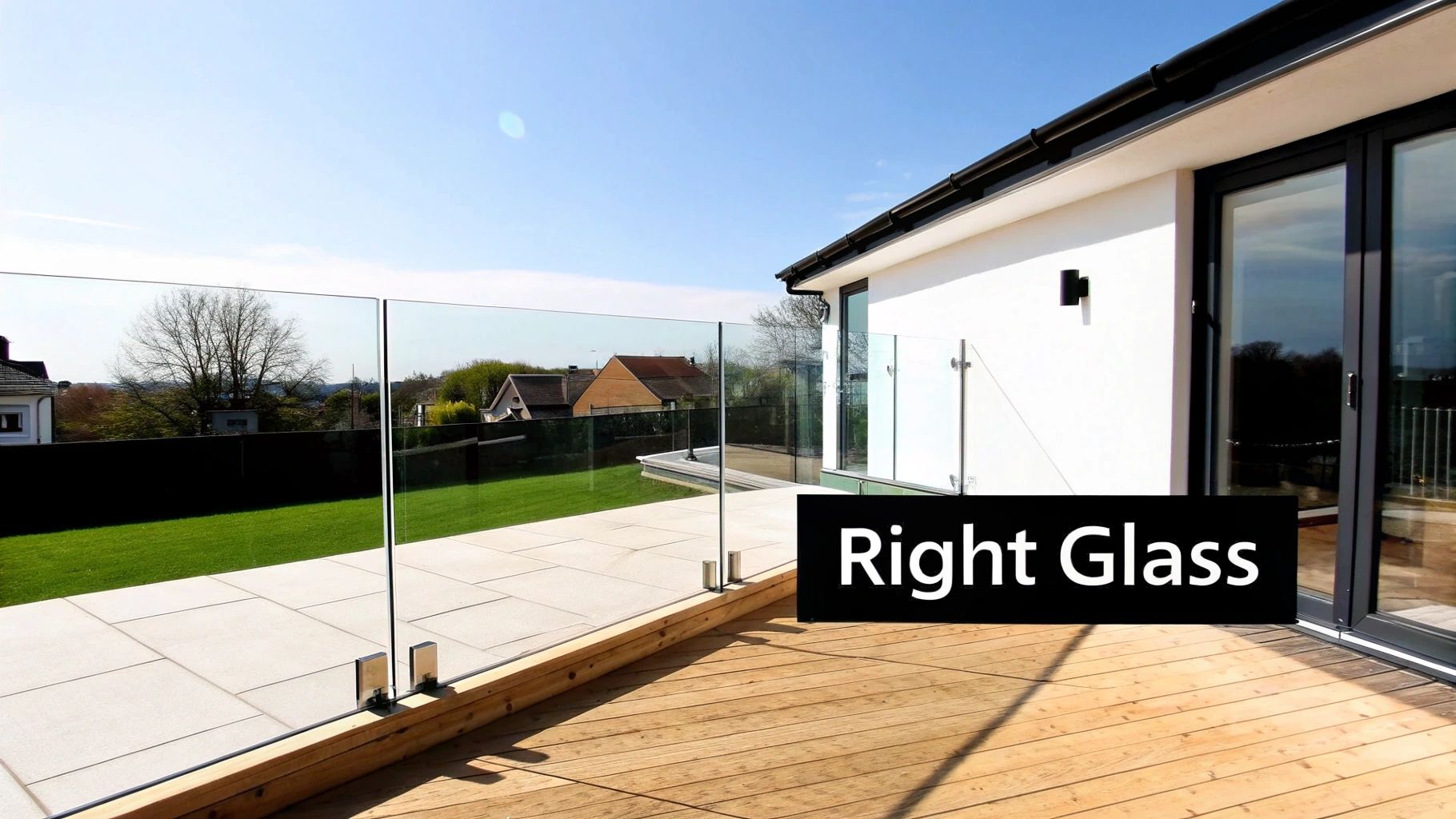
When you’re picturing a new balustrade for a modern patio in Leeds or a balcony with views over the Yorkshire Dales, the glass isn't just a detail—it's the very core of the system. Your decision really boils down to three main types of safety glass, and each one behaves very differently.
The two most common options you’ll come across are toughened glass and laminated glass. But there’s a third, premium option—toughened laminated glass—which brings together the best of both worlds to create the ultimate safety barrier. Understanding how they’re made and what they do is the first step to a project you can be proud of.
To make a smart choice, it helps to see how these materials stack up on a fundamental level. Each one is manufactured in a completely different way, and that process dictates how they perform under pressure.
Here’s a quick rundown of the key differences:
| Feature | Toughened Glass | Laminated Glass |
|---|---|---|
| Manufacturing Process | Heated to over 600°C then rapidly cooled to create surface tension. | Two or more panes of standard glass bonded with a plastic interlayer (PVB). |
| Strength | Up to five times stronger than normal annealed glass. | Similar strength to standard glass but is designed to hold together when broken. |
| Breakage Pattern | Shatters into thousands of small, blunt, dice-like cubes. | Cracks in a distinct spider-web pattern but stays held in place by the interlayer. |
| Common Uses | Framed systems, shower screens, internal doors. | Car windscreens, shopfronts, skylights, and certain balustrades. |
As you can see, while both are officially 'safety glass', their behaviour upon impact couldn't be more different. Toughened glass is designed to break into harmless pieces, while laminated glass is engineered to stay in one piece, preventing anything (or anyone) from falling through.
The crucial difference is what happens after the glass breaks. Toughened glass shatters and leaves an empty space. Laminated glass cracks but stays in place, maintaining a barrier. This is a vital consideration for any balustrade protecting a drop.
This brings us neatly to the top-tier solution: toughened laminated glass. This hybrid is made by taking two sheets of toughened glass and bonding them together with an interlayer. The result? You get the immense strength of toughened glass combined with the post-breakage safety of laminated glass. It's hands-down the safest and most robust choice for balustrades, especially frameless designs.
If you’re planning a project at height, you can find more specific details in our guide covering glass for balcony installations.
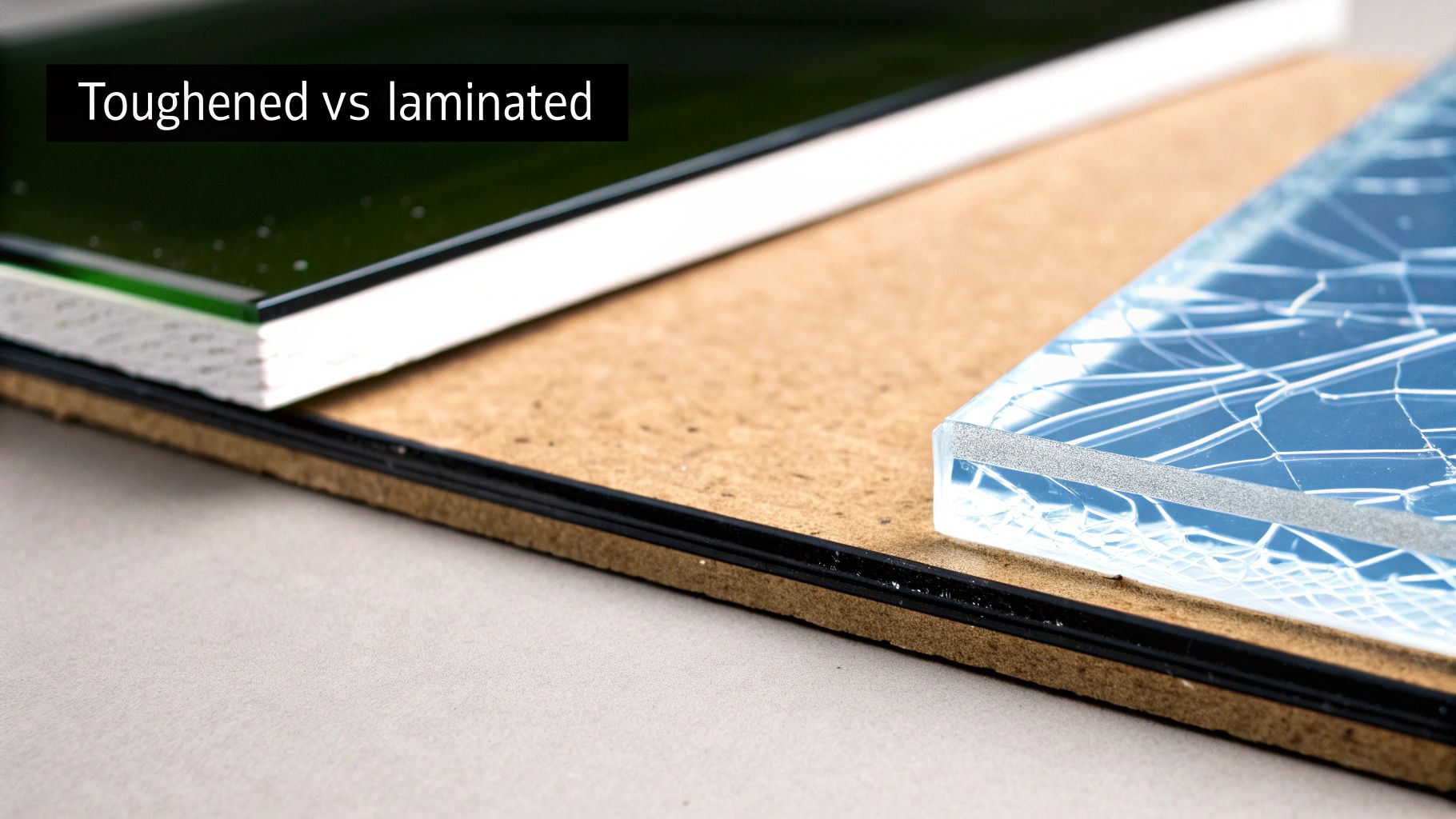
Before we get into the benefits of combining them, it’s crucial to understand what makes toughened and laminated glass so different. While both are rightly called ‘safety glass’, how they’re made and how they behave under pressure are worlds apart. This core difference is what dictates their best use and why putting them together creates such a formidable material for balustrades.
The secret lies in their creation. Toughened glass is a single sheet of glass put through an intense heating and cooling cycle. Laminated glass, on the other hand, is a sandwich made by bonding multiple sheets of glass together. This fundamental distinction defines their strength, safety, and role in your balustrade.
Often called tempered glass, toughened glass earns its strength through a process of extreme thermal tempering. We take a standard pane of annealed glass, heat it to over 600°C, and then blast it with jets of cold air for rapid cooling.
This forces the outer surfaces to cool and solidify far quicker than the molten centre. As the inside eventually cools and shrinks, it pulls on the rigid outer layers, creating a state of permanent high compression on the outside and tension in the core. This locked-in stress is what makes the glass up to five times stronger than the standard stuff.
Its most recognisable safety feature is how it breaks. When toughened glass fails, all that stored energy is released at once, shattering the entire panel into thousands of tiny, blunt, pebble-like pieces. This dramatically reduces the risk of serious cuts compared to the large, jagged shards from broken standard glass.
Laminated glass takes a completely different route to safety. It’s a composite—a sandwich, really—made by bonding two or more sheets of glass together with a tough plastic interlayer, usually Polyvinyl Butyral (PVB). These layers are fused under intense heat and pressure into a single, unified panel.
Unlike toughened glass, the real strength of laminated glass isn't its resistance to breaking, but what happens after it breaks. When a laminated panel is hit hard enough, the glass might crack into a spiderweb pattern, but the fragments stick firmly to the plastic interlayer. This prevents the panel from disintegrating and falling out of its frame.
The most critical takeaway is how each glass type fails. Toughened glass breaks into safe fragments but leaves an open void, whereas laminated glass cracks but remains in place, maintaining a protective barrier. This is the central reason laminated glass is favoured for overhead glazing and vehicle windscreens.
This ability to hold together is precisely why it’s a key ingredient for the ultimate safety glass in balustrades. Once you understand these two distinct principles—one focused on pre-breakage strength and the other on post-breakage integrity—it becomes clear why their combination in toughened laminated glass creates a solution that excels in both areas.
When we talk about performance for a glass balustrade, it isn't just one thing. It's a blend of raw strength, how it behaves under pressure, and its resilience in real-world situations. While both toughened and laminated glass have their own safety merits, combining them into toughened laminated glass creates a far superior, multi-layered defence system that covers the weaknesses of each.
This hybrid glass is engineered to excel across every single criterion that matters for a balustrade. It can take a serious knock, but more importantly, it maintains its integrity even after it breaks. By marrying the incredible pre-breakage strength of toughened glass with the vital post-breakage security of laminated glass, it delivers a level of safety that neither can offer on its own.
A balustrade's primary job is to withstand force, whether that's someone leaning on it or an accidental collision. This is where the toughening process is so crucial. The thermal tempering creates intense surface compression, making the glass dramatically more resistant to direct impacts than standard annealed glass or panels that are only laminated.
A single toughened glass panel can be up to five times stronger than ordinary float glass of the same thickness. When you use this process on both panes in a laminated setup, you get a barrier with exceptional load-bearing strength. It easily meets and sails past the requirements of UK building regulations, which mandate that balustrades must endure specific line loads without failing.
The combination of two toughened panes means the panel is far less likely to break in the first place, offering robust protection against everyday bumps and scrapes. It's this strength that makes toughened laminated glass the leading choice in the UK for high-strength applications, a trend driven by rising construction safety demands. After the 2018 updates to Approved Document K, fall protection systems must handle forces of 0.74 kN/m; toughened laminated glass surpasses this, withstanding impacts four to five times more effectively and contributing to a noticeable drop in accident rates on public terraces, as noted in HSE data from 2020-2025. You can dig deeper into the toughened glass market growth to see its industry significance.
The real measure of a safety barrier is what happens when it fails. Toughened glass is great because it shatters into relatively harmless, blunt cubes, but it leaves a gaping void where the panel used to be. For any balustrade protecting a drop—think of an exposed residential balcony in Cumbria or a high-level terrace in Leeds—this is simply unacceptable.
Laminated glass solves that problem by holding the broken shards together, but a standard laminated panel is more prone to breaking in the first instance. This is where toughened laminated glass shows its true class.
If one of the toughened panes breaks, it shatters into its trademark small pieces, but they are all held securely by the interlayer. The second toughened pane often remains completely intact, providing an immediate backup barrier. Even in the rare event that both panes fail from an extreme impact, the interlayer will keep the thousands of fragments locked in place, holding the panel in the frame and preventing anyone from falling through.
The ultimate safety advantage of toughened laminated glass is its ability to fail gracefully. It combines the strength to resist breaking with the integrity to remain a barrier even after it has failed, offering unparalleled peace of mind.
This dual-action safety mechanism is precisely why it is the mandatory choice for frameless glass balustrades and any system where there is no continuous handrail to act as a secondary line of defence.
Beyond its core safety role, toughened laminated glass brings some valuable secondary perks that can really improve a property's environment. The plastic interlayer, usually PVB, has excellent sound-dampening qualities. It works by disrupting sound waves as they try to pass through the glass, leading to a significant reduction in noise transmission.
This makes it a perfect solution for properties in bustling urban areas or near busy roads. A balustrade on a city-centre apartment balcony in York, for instance, would not only provide first-class safety but also help craft a quieter, more tranquil outdoor living space.
Best of all, you don't have to sacrifice aesthetics. For those who want the purest view possible, toughened laminated panels can be specified with low-iron glass. This type of glass has a much-reduced iron content, which gets rid of the subtle green tint you see on the edge of standard glass. The result is crystal-clear edges and phenomenal light transmission, ensuring that a stunning view across the Cheshire plains or a beautifully designed garden remains completely unspoiled.
To pull all these points together, we've created a simple table to give you a clear, side-by-side look at how each glass type stacks up across the key metrics for a balustrade project.
| Performance Metric | Toughened Glass | Laminated Glass | Toughened Laminated Glass |
|---|---|---|---|
| Impact Resistance | Excellent (4-5x stronger than standard glass) | Good (similar to standard glass) | Exceptional (combines two toughened panes) |
| Post-Breakage Safety | Poor (leaves an open void upon shattering) | Excellent (interlayer holds fragments) | Superior (interlayer holds shattered cubes) |
| Load-Bearing Capacity | Very Good | Good | Excellent |
| Acoustic Insulation | Poor | Good (interlayer dampens sound) | Good |
| Optical Clarity | Very Good | Very Good | Excellent (with low-iron option) |
This direct comparison really highlights why toughened laminated glass is widely regarded as the premium, all-round solution. It consistently outperforms the other options in the areas that matter most for safety, durability, and structural integrity.
Getting your balustrade installation right isn't just about looks; it’s a legal requirement. For anyone specifying or installing a balustrade in the UK, understanding the rules is the only way to guarantee your project is safe, compliant, and won’t need costly changes down the line.
The two documents that really matter are Approved Document K (which covers protection from falling) and BS 6187:2011 (the code of practice for barriers). These standards take complex engineering principles and make them clear, giving you a blueprint for a safe installation, whether it’s for a home in York or a commercial project in Darlington.
While standard toughened glass is strong, there are high-risk situations where UK regulations demand the superior performance of toughened laminated glass. This isn't a matter of choice—it’s about ensuring the barrier remains intact even if a panel fails.
The rules are especially strict for designs where the glass itself is the main protective element. This typically applies in two key scenarios:
The principle is straightforward: if one glass panel breaking could create an opening large enough for someone to fall through, you must use a material that stays in place after impact. That’s precisely what toughened laminated glass is designed to do.
The UK's firm stance on building safety is driving growth in high-performance materials. The glass facade market, for instance, is projected to hit USD 1,391.4 million by 2028, largely thanks to updated regulations. Rules like UK Building Regulations Part K, which now mandate materials like toughened laminated glass for balustrades over 900mm high, are central to this. This glass has an incredible failure rate of under 1% in tests, a stark contrast to the 25% failure rate for untreated glass. We see this trend locally, too—residential balcony retrofits in Yorkshire have surged by 28% between 2019-2025, with over 70% of these new installations featuring this safer glass.
Once you’ve determined that toughened laminated glass is required, the next step is choosing the right specification. This isn’t a one-size-fits-all decision. The right thickness and makeup depend entirely on your system's design, its location, and the loads it needs to handle.
For domestic projects, especially frameless designs, you’ll typically encounter these specifications:
Don't overlook the interlayer. While PVB (Polyvinyl Butyral) is the industry standard and perfectly suitable for many applications, more advanced options like SGP (SentryGlas Plus) offer much greater rigidity and moisture resistance. This makes SGP an excellent choice for exposed coastal locations, such as properties in Hull or Cumbria, where the elements are harsher.
Finally, the finishing touches are crucial for both safety and aesthetics. All exposed glass edges must be polished smooth, removing any sharpness left over from the cutting process. This results in a safe, professional, and clean finish. To learn more about how these rules apply in practice, our complete guide on building regulations for balustrades is a great resource. Getting these details right from the start is the key to a successful project.
Moving on from the technical specs, let's get practical. The best glass for your balustrade isn't a one-size-fits-all answer; it hinges entirely on your project's unique situation. What works for a ground-floor patio is worlds away from the needs of a city-centre balcony. It’s a decision shaped by location, design, and most importantly, risk.
By looking at a few real-world examples from across the North of England, we can see exactly how these factors drive the decision-making process. This approach ensures your final choice is not only beautiful but perfectly suited to its environment, ticking every box for safety and regulations.
Picture a classic garden patio on the ground floor of a home in a quiet Harrogate suburb. The balustrade is mostly there to define the edge of the space, maybe protecting a small drop of less than 600mm. In a low-risk setting like this, a framed system using standard toughened glass is often the ideal, cost-effective solution.
Because the frame itself provides the main structural support, the glass isn't doing all the heavy lifting. With minimal risk of a serious fall, the post-breakage integrity of laminated glass simply isn't a regulatory must-have. This makes toughened glass a smart, practical option that delivers a clean, modern look without over-engineering for the situation.
Now, let's switch gears completely. Imagine a sleek, frameless glass balcony on a new high-rise apartment in the middle of Leeds. Here, the safety considerations are massively different. This balustrade is the only barrier preventing a very significant fall, and its design relies completely on the inherent strength of the glass panels.
For any application like this, toughened laminated glass is the only acceptable option. Its superior strength is needed to handle the higher wind loads experienced at height. Crucially, its laminated structure means that if a panel ever breaks, it holds together, preventing a catastrophic failure. UK building regulations are crystal clear, making this choice mandatory for high-risk, frameless installations.
The core principle is simple: the greater the risk, the more robust the safety solution must be. For any 'at-height' application without a supporting frame or continuous handrail, toughened laminated glass is non-negotiable.
This whole process of balancing design ambitions with strict regulations can feel a bit daunting, but it doesn't have to be. This flowchart breaks down the key questions that determine when toughened laminated glass becomes a mandatory requirement for your project.
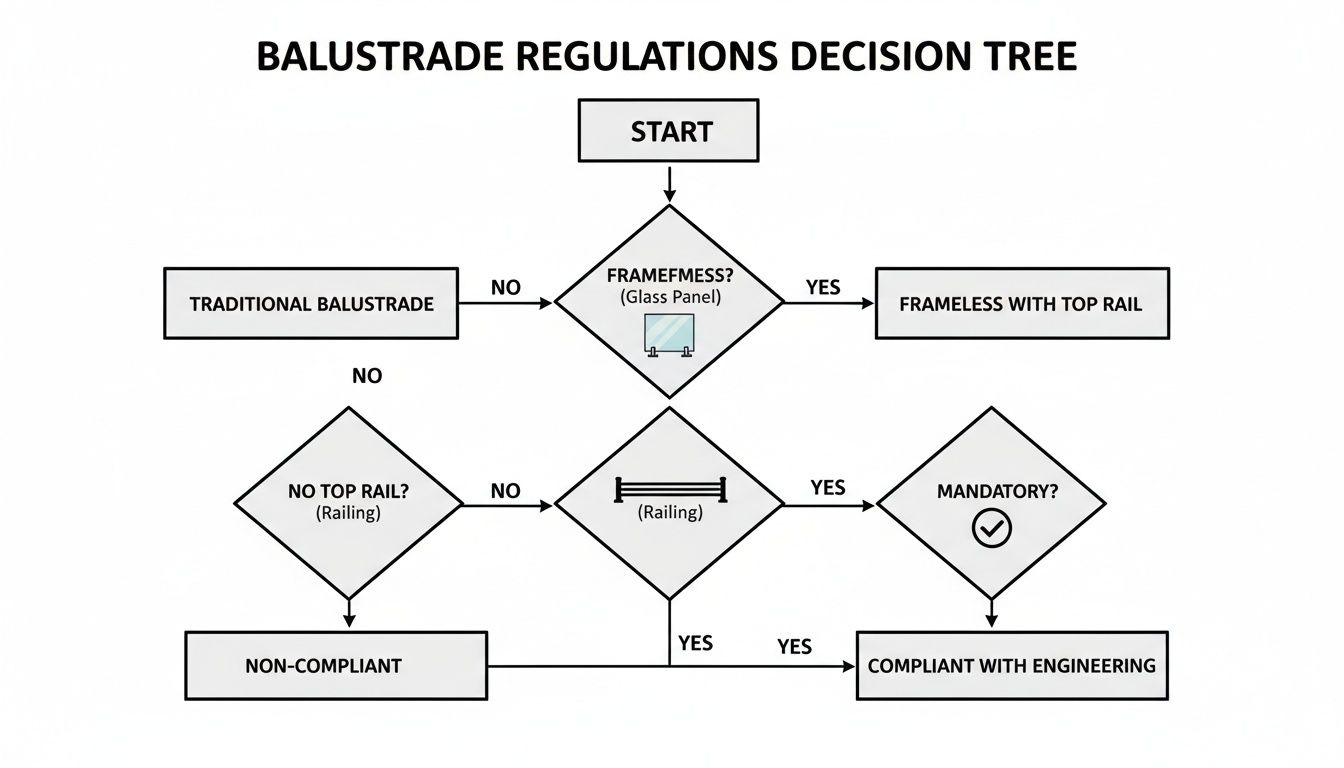
As you can see, factors like opting for a frameless design or removing the top rail immediately point the specification towards the enhanced safety of toughened laminated glass.
Finally, let's think about a project where the environment throws a curveball. Consider a terrace for a home or a café right next to a busy road in Hull. While safety from falls is obviously the priority, the constant drone of traffic can seriously spoil the enjoyment of the space.
In a scenario like this, the acoustic dampening properties of toughened laminated glass offer a massive secondary benefit. That PVB interlayer is brilliant at disrupting sound waves, helping to carve out a much quieter, more peaceful outdoor area. Here, the choice delivers not just top-tier safety but also a real improvement in quality of life, making it a clever investment that goes beyond its structural duty.
Choosing the right glass is the bedrock of a great balustrade project. As we've seen, toughened laminated glass is consistently the superior choice for both safety and resilience. Its blend of immense strength and the ability to stay intact even after breaking makes it the definitive material for any modern, secure balustrade. But even the best materials need expert hands to guarantee a flawless, compliant installation.
That’s why partnering with a local specialist is so crucial. An expert who truly understands the unique architecture and weather conditions across Yorkshire, Cheshire, and Cumbria can give you advice that’s genuinely fit for purpose. They bring a deep knowledge of regional building quirks and can recommend the exact specifications for your project, whether it’s a coastal home battered by the sea air in Hull or a sleek city terrace in Leeds.
A local specialist offers more than just the convenience of being nearby; they provide tailored advice grounded in real-world experience. They're your guide through everything from navigating local planning permissions to choosing finishes that will stand up to the tough Northern weather, ensuring your investment is not only beautiful but built to last.
When you're looking for a provider, it’s always a good idea to see how they present themselves online. A professional, well-put-together website, like this example of a successful digital presence of a glass company, often reflects a genuine commitment to quality and customer care.
Choosing a local expert means you’re not just buying a product. You’re investing in a partnership with someone who is accountable, accessible, and completely dedicated to getting the best result for your home.
The demand for high-performance glass is certainly on the up. The laminated glass market is set to grow at a CAGR of 5.9% through to 2035, a trend heavily influenced by the UK's strict building regulations. Here in Northern England, we’ve seen a 15% rise in patio modernisations since 2020, and statistics show that 65% of new balustrade installations now use toughened laminated glass for its durability and clean aesthetic. This shift makes local specialists essential guides for creating robust, budget-friendly balustrades that look the part.
Ready to move forward? The first step is making sure your project is handled by specialists who know your area inside and out. You can explore our service areas at https://binksbalustrades.co.uk/locations/ to find an expert near you and get the conversation started. Working with a dedicated local team is the best way to feel confident that your toughened laminated glass balustrade will be a safe, stylish, and long-lasting feature for your property.
We've dived deep into the technical side of things, but we know that when it comes to planning your project, it’s the practical questions that matter most. Here are the straight-up answers to a few of the queries we hear most often from customers across the North of England.
It’s true that toughened laminated glass carries a higher price tag upfront. That's because it goes through a complex, multi-stage manufacturing process to give it that superior strength and safety. However, for applications like frameless balustrades, its use isn't a luxury—it’s a non-negotiable regulatory requirement.
Think of it less as a cost and more as a long-term investment. The real value comes from its durability and the peace of mind knowing you won't be facing costly repairs or replacements down the line. To get a clear idea for your own project, a good online balustrade calculator is the best place to start comparing figures.
This is the easy part. Maintenance is refreshingly simple. A periodic clean with a soft cloth and either a mild soap-and-water solution or any standard glass cleaner is all it takes to keep it looking brand new.
It’s also a good idea to give the structural fixings and fittings a quick check every now and then, especially if you’re in a windy or coastal spot like Hull or Cumbria. This just makes sure the whole system stays rock-solid and performs flawlessly for years.
Regular, gentle cleaning is all the glass itself needs. The one golden rule is to avoid abrasive scouring pads or harsh chemicals, as they could scratch the surface over time.
Absolutely. This is where you can really tailor the look to your property. Toughened laminated glass is incredibly versatile and can be customised to hit your exact aesthetic goals.
Some of the most popular choices include:
A local specialist can walk you through the options and help you land on the perfect finish for your home.
Ready to figure out the right glass for your project? The team here at Binks Glass Solutions has the local knowledge to help you make a choice that’s safe, stylish, and ticks every compliance box. Get in touch for a no-obligation chat and advice that’s tailored to you.