
A Homeowner’s Guide to Wire Rope Balustrade Systems
Imagine a safety barrier that protects your family but doesn't steal your view. That’s the simple promise of a wire […]

Imagine a safety barrier that protects your family but doesn't steal your view. That’s the simple promise of a wire […]
Imagine a safety barrier that protects your family but doesn't steal your view. That’s the simple promise of a wire rope balustrade. It's a sleek, modern system that swaps out traditional spindles or solid glass for runs of taut, marine-grade stainless steel wire.
Think of it like the rigging on a ship—strong, minimal, and built to withstand the elements. It’s this clean, open design that has made it a firm favourite for homeowners looking to modernise their properties across the North of England.
At its heart, a wire rope balustrade is a robust safety barrier for staircases, decking, and balconies. The system is built from a combination of sturdy posts—often in stainless steel or timber—and several horizontal runs of high-tensile steel wire rope. These wires are pulled incredibly tight with special tensioning fittings, creating a secure screen that’s almost invisible.
The real magic is in its minimalist feel. Unlike bulky wooden fences or even large glass panels that can dominate a space, the slim profile of the wires keeps your sightlines completely open. This allows sunlight to flood in and makes gardens, patios, and even indoor landings feel much larger and more connected to the world outside.
From the rolling Yorkshire Dales to the rugged Cumbrian coast, we're seeing more and more homeowners choose wire rope systems to update their properties. The clean, industrial-chic lines bring a sharp architectural edge that works just as well with a contemporary new-build in Leeds as it does framing a classic stone patio in Harrogate.
The popularity comes down to a few key benefits:
In short, a wire rope balustrade pulls double duty. It’s a critical safety feature that solves the problem of securing an edge without taking away the very view you want to enjoy.
This blend of form and function is precisely why it’s become such a go-to choice for so many. It offers a practical solution that not only makes your property safer but also boosts its aesthetic appeal and overall value. It’s a smart way to add a stylish, secure, and long-lasting finish to your home.
At first glance, a wire rope balustrade looks incredibly sleek and simple. And the truth is, it is. The beauty of the design lies in its elegant simplicity, using just a few high-performance parts working in perfect harmony to deliver safety without stealing your view.
Think of it less like a complex construction project and more like assembling a high-end kit. Every single component has a vital role, from the strong anchor posts to the tensioners that keep the wires guitar-string tight. Understanding how these pieces fit together will give you the confidence to plan your own project, whether you're bringing a modern touch to a York terrace or framing a new garden deck in Cheshire.
The posts are the bedrock of the entire system. These are the vertical supports that do the heavy lifting, anchoring the wires and transferring all the tension safely into the ground or deck structure. The material you choose for your posts is a huge decision, defining both the look and the long-term resilience of your balustrade.
This simple diagram shows how these core elements work together to create that signature 'barely there' look.

As you can see, the posts create the frame, the wires provide the secure infill, and the result is an uninterrupted view. It's a clever, minimalist approach to safety.
This is what it's all about. The wire rope, typically made from several strands of stainless steel wound together, provides incredible tensile strength from a remarkably slender profile. As with the posts, settling for anything less than Grade 316 marine-grade stainless steel is a false economy for any outdoor UK installation. It’s your guarantee against unsightly rust spots and ensures the system's integrity for years to come.
This focus on durable, high-strength materials is why steel wire rope is becoming increasingly popular in UK construction, with market projections showing steady growth right through to 2029. It's a recyclable, resilient material perfectly suited to our climate.
The final pieces of the puzzle are the fittings and hardware. They might look small, but these components are absolutely critical for getting the tension right, which is essential for safety and compliance.
A correctly tensioned wire is the difference between a stylish safety barrier and a hazardous, non-compliant installation. The fittings are what make this precision possible.
The key bits of hardware you'll encounter are:
When you bring these three elements together—robust posts, high-quality wire, and precision hardware—you create a complete wire rope balustrade that is safe, incredibly durable, and visually stunning. For those who want to make the process even simpler, you can explore our complete wire balustrade kit options to get every component you need in one perfectly matched package.

When you're looking to bring a modern touch to your property, the choice often comes down to two fantastic options: wire rope or glass balustrades. It's a question we get asked all the time. Both systems give you that sleek, high-end finish, but they achieve it in very different ways and offer a completely different experience.
Choosing the right system for your home in Yorkshire and the North isn't just about looks. It’s about how you use your space, how much maintenance you’re prepared to do, and what you really value—be it an uninterrupted view or a bit of shelter from the wind. Let's break down the practical, real-world differences to help you decide.
To see how these two popular systems stack up, it helps to compare them side-by-side. The table below lays out the key features that matter most to homeowners, from the visual effect to the long-term upkeep.
| Feature | Wire Rope Balustrade | Glass Balustrade |
|---|---|---|
| View Obstruction | Minimal. Creates a 'barely-there' look with thin horizontal lines. Disappears from a distance. | None. Offers a completely seamless, invisible barrier for a true "infinity" feel. |
| Aesthetic | Industrial, nautical, and sharp. Adds texture and an architectural edge. | Sleek, luxurious, and polished. Creates a premium, high-end look. |
| Maintenance | Low. Requires occasional tension checks and a wipe-down of stainless steel components. | Moderate. Needs regular cleaning like a window to remove fingerprints, water spots, and dirt. |
| Wind Protection | None. Wind passes straight through the cables, reducing structural load. | Excellent. Acts as a solid windbreak, creating a sheltered, comfortable area. |
| Best Suited For | Coastal properties, barn conversions, modern rustic homes, and high-wind areas. | Contemporary new-builds, minimalist extensions, and anywhere a premium, clear view is paramount. |
| Feel of Security | Feels open and connected to the outdoors. The barrier is physical but not visual. | Feels more substantial and enclosed, offering a greater sense of security for some. |
This comparison highlights a simple trade-off: wire rope offers a rugged, low-upkeep system that embraces the elements, while glass provides a pristine, sheltered space that demands more cleaning. Your personal preference will ultimately guide the best choice for your home.
The first thing you’ll notice is how each system frames your view. A wire rope balustrade is all about minimalist structure. Its slim, taut steel cables create a subtle pattern that almost vanishes when you look past it, perfect for preserving those stunning Yorkshire landscapes. The effect is open and almost industrial, connecting you directly with the outdoors.
Glass, on the other hand, is pure transparency. It acts as a flawless, crystal-clear shield, giving you that luxurious "infinity edge" look you see in high-end hotels. It feels more substantial, creating a sense of a completely protected space without sacrificing a single inch of your view.
Think about the character of your property:
Here’s where practicalities really come into play. While both are far lower maintenance than old-fashioned timber, their upkeep routines couldn't be more different.
A glass balustrade is essentially another window you need to clean. It shows up every fingerprint, water spot, and speck of dust, so it needs a regular wipe-down with a squeegee to look its best. Think of it like cleaning your car windscreen—a frequent but simple task.
In contrast, a wire rope balustrade swaps frequent cleaning for occasional checks. The main job is simply making sure the wires are still tight, which is crucial for safety.
A quick visual inspection every few months is usually enough, with maybe a minor tweak with a spanner once a year. A simple wipe-down is all the stainless steel needs to stay looking sharp. For many, it's a "fit and forget" solution, but you do need to be mindful of tension. If a wire gives more than a few millimetres when you push it, it's time for a quick tighten.
Living in the North of England means your balustrade has to stand up to wind, rain, and everything in between. Both systems are built for it, but they cope in opposite ways.
Glass panels are incredibly strong, but they act as a solid wall against the wind. This is fantastic for creating a sheltered, calm spot on your balcony on a blustery day. The downside is that the glass takes the full force of the gale, putting a significant load on the posts and fixings.
A wire rope balustrade, however, lets the wind pass right through. This dramatically reduces the pressure on the structure, making it an incredibly stable choice for exposed locations like coastal homes or rooftop terraces. Of course, the trade-off is you get zero protection from the elements yourself.
Ultimately, your choice boils down to a key question. Do you want an invisible barrier and a windbreak badly enough to commit to regular cleaning? Or do you prefer the rugged, low-effort nature of wire, even if it means feeling the breeze and having a more textured view? Answering that is the key to finding the perfect system for your home.
While the sleek, almost invisible look of a wire rope balustrade is a massive draw, its number one job is, and always will be, safety. In the UK, this is something that’s taken very seriously. All balustrades must comply with strict Building Regulations to ensure they’re fit for purpose and prevent falls, and understanding these rules is essential for any project in Leeds, York, or across the North of England.
Safety isn’t just a good idea; it’s a legal requirement. The rules are laid out in a government document called Approved Document K, which covers protection from falling, collision, and impact. These regulations aren't vague guidelines—they are non-negotiable rules that dictate exactly how your balustrade must be designed and built. Getting this right from the start means your stunning new feature is also a fully compliant, safe, and legal installation.
This focus on safety is a huge driver in the industry. The UK market for steel stranded wire, the very material used in these systems, is expected to see steady growth. Experts forecast a rise of 3.0% in volume and 3.4% in value each year between 2024 and 2035, partly because safety regulations demand strong, reliable barrier systems.
The required height of your balustrade isn’t a one-size-fits-all figure. It all depends on where it's being installed, as the rules are different for internal stairs compared to an external balcony where the potential fall is greater.
These are absolute minimums. They’re designed to provide an effective barrier and prevent anyone from accidentally falling from height.
This is probably the most famous rule in the world of balustrades: the 100mm sphere rule. In simple terms, it means that no gap anywhere in your balustrade system can be big enough for a 100mm sphere to pass through. The reason is very specific—to prevent a small child from being able to fit their head through a gap.
For a wire rope balustrade, this rule is absolutely paramount. It dictates not just the spacing of the wires, but also how tight they have to be. A sagging wire instantly creates a larger gap, making the entire system non-compliant and, more importantly, dangerous.
This is exactly why professional installation is so crucial. An expert installer knows how to apply the precise tension needed so that even if someone pushes against the wires, the gap never exceeds that critical 100mm limit.
A balustrade is only as strong as its weakest link. Approved Document K also sets out clear demands for the structural strength of the whole system, from the posts and their fixings right down to the wires themselves. The balustrade has to be able to handle specific forces without bending, breaking, or failing.
This is tested against two key types of forces:
To meet these standards, you need robust posts, rock-solid fixings into a substantial base (like a deck's substructure), and correctly tensioned wires. It really highlights that a compliant wire rope balustrade is a complete system, where every single component has to work together to create a safe, resilient barrier.
For a deeper dive into the specifics, you can check out our guide on the key building regulations for balustrades.
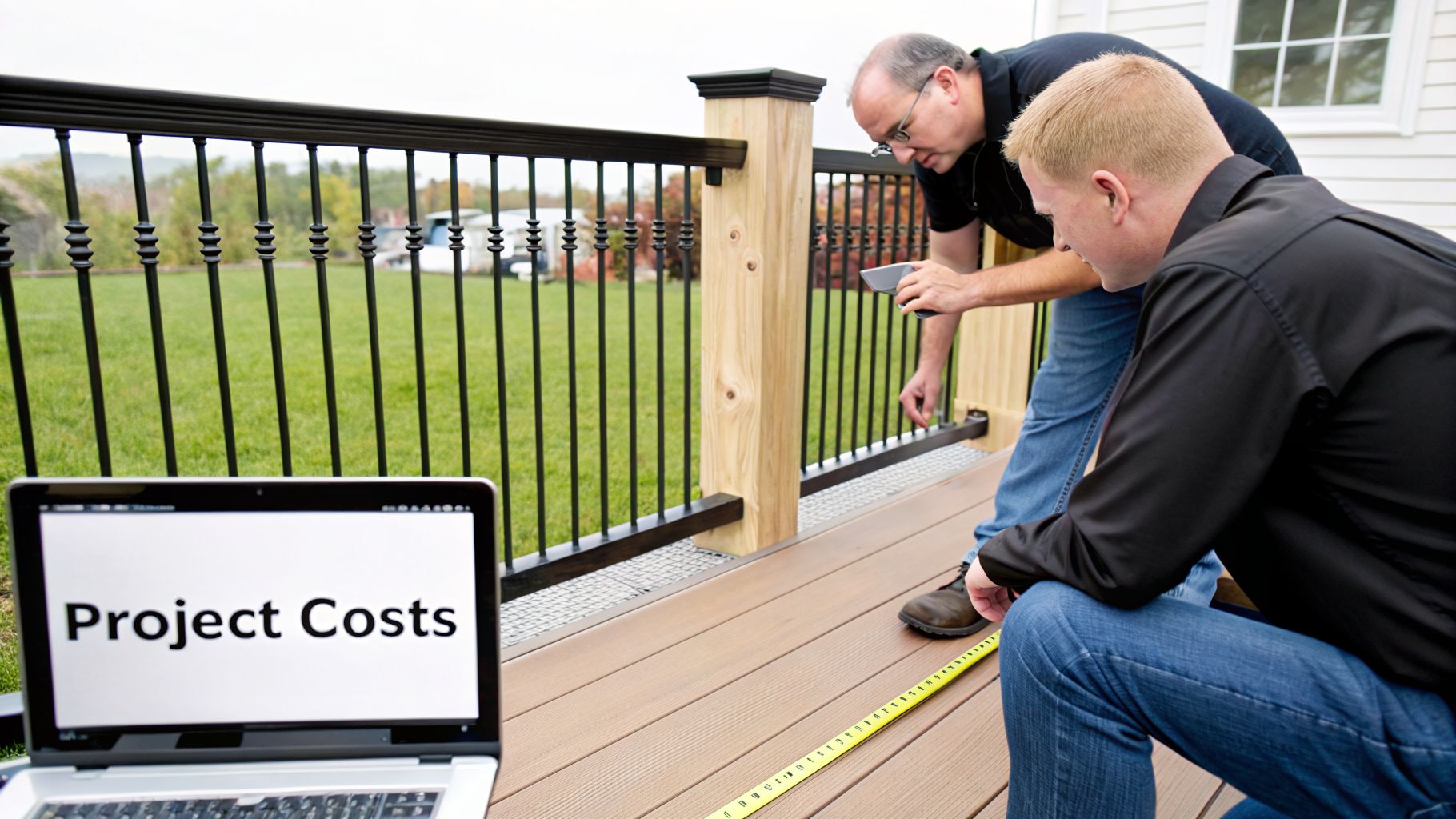
Budgeting for a new balustrade can feel like a bit of a minefield, but when you break it down, a clear picture of the investment starts to form. If you’re planning a wire rope balustrade project here in Yorkshire or anywhere across the North of England, a few key elements will shape the final figure.
Getting a handle on these factors from the outset helps you build a realistic budget and make smart choices, ensuring there are no nasty surprises down the line. It's about more than just the length of your decking; it’s a mix of materials, design complexity, and the labour involved.
The total cost of your system really comes down to a few primary variables. Each one plays a part in the materials we’ll need and the work required, which directly affects the price you'll pay.
Here are the main cost drivers to keep in mind:
This style of balustrade is becoming increasingly popular, and not just in our region. The demand for rope products, including the high-tensile wire used for balustrades, is rising across the country, with revenue projected to grow substantially by 2033. This trend highlights a strong appetite in Northern cities like Harrogate, Hull, and Darlington for systems that are both stylish and fully compliant. You can learn more about the trends shaping the UK rope market.
One of the first questions we often get is whether to install the system yourself or bring in a professional. A DIY approach can certainly save you money on labour, but it’s not without considerable risks.
Achieving the correct wire tension to satisfy the 100mm sphere rule isn’t as easy as it looks and requires specialist tools and a real feel for the job. Get it wrong, and you could end up with a non-compliant and unsafe barrier.
A professional installation gives you complete peace of mind. Local experts based in areas like Leeds or York will have years of hands-on experience with wire rope balustrade systems. They’ll guarantee a build that’s not only beautiful but also fully compliant with UK Building Regulations.
This expertise is invaluable. An experienced installer makes sure your posts are securely anchored and every wire is tensioned to perfection, creating a robust system that’s built to last. For a different perspective on balustrade costs, you can explore our guide on the cost of glass balustrades.
If you're working on a larger project or just want to understand the contractor landscape, you might find it useful to check out a guide to the top construction companies in the UK. Ultimately, speaking with local specialists is the surest way to get an accurate, tailored quote and ensure your investment is a safe and lasting one.
To round things off, let's tackle some of the most common questions we get from homeowners. Think of this as a quick, straight-to-the-point guide to help you get clear on the details and make your final decision with confidence.
The good news is that wire rope systems are very low-maintenance, but a little bit of attention is vital to keep them safe and looking sharp. We always recommend giving the system a quick visual check-over every six months or so. You're just looking for any loose fittings or signs of damage and checking the wire tension feels right.
Because of the UK's temperature swings, the wires can slacken a tiny bit over the year. For most systems, a simple re-tensioning with the turnbuckles once a year is all it takes to keep the barrier perfectly taut and safe. If you're near the coast or in a high-pollution area, wiping the stainless steel down now and then will stop any salt or grime from building up and keep that finish looking brand new.
Absolutely, provided they are installed correctly to meet UK Building Regulations. The single most important rule is ensuring the wires are tensioned and spaced so that a 100mm sphere cannot pass through any gap. This is the industry standard designed to prevent a small child from squeezing through.
Some parents do raise the point about a potential ‘ladder effect’ if a child tries to climb the horizontal wires. While proper tension makes this incredibly difficult, it's a fair point to consider for your own family. For areas with very young, unsupervised children, some people find that a solid glass balustrade offers that extra bit of peace of mind.
For those who are confident and experienced with DIY, a self-installation is certainly possible, especially for simple, straight runs. You'll need the right tools and a good eye for detail. However, getting the wire tension exactly right for safety and compliance is trickier than it looks and is something you can't afford to get wrong.
For any complex layout, especially with corners or stairs, or if you have even the slightest doubt about meeting regulations, we strongly recommend bringing in a professional. It's the only way to guarantee the system is safe, fully compliant, and structurally sound from day one.
For the famously unpredictable UK weather, there's only one real choice: Grade 316 stainless steel. This should be used for every metal part of the system, from the wire rope itself to the posts and all the little fittings. It has outstanding corrosion resistance, which is perfect for the damp conditions and coastal salt spray we see across Northern England.
This "marine-grade" steel is built to handle rain, frost, and sea air, ensuring your balustrade will last for years with very little upkeep. While you can get systems with timber posts, for the best performance and lowest maintenance, a wire rope balustrade made from Grade 316 steel is the smart long-term investment.
Ready to explore how a modern balustrade could transform your space? The team at Binks Balustrades offers local expertise for projects across Yorkshire and the North of England, ensuring a safe, compliant, and beautiful finish. Contact us today for a personalised quote.