
Your Guide to External Metal Staircases in Northern England
Picture an external metal staircase, not just as a set of steps, but as a striking architectural feature that seamlessly […]

Picture an external metal staircase, not just as a set of steps, but as a striking architectural feature that seamlessly […]
Picture an external metal staircase, not just as a set of steps, but as a striking architectural feature that seamlessly connects a home's interior to its garden or provides crucial access to an upper-floor flat. It’s more than just a functional necessity; it's a design statement that marries robust practicality with sharp, contemporary style.
For homeowners, architects, and contractors across the North of England—from the rolling hills of Yorkshire to the bustling cityscapes of Leeds—understanding the immense value of a well-crafted metal staircase is the first step towards a smarter, more durable property upgrade.
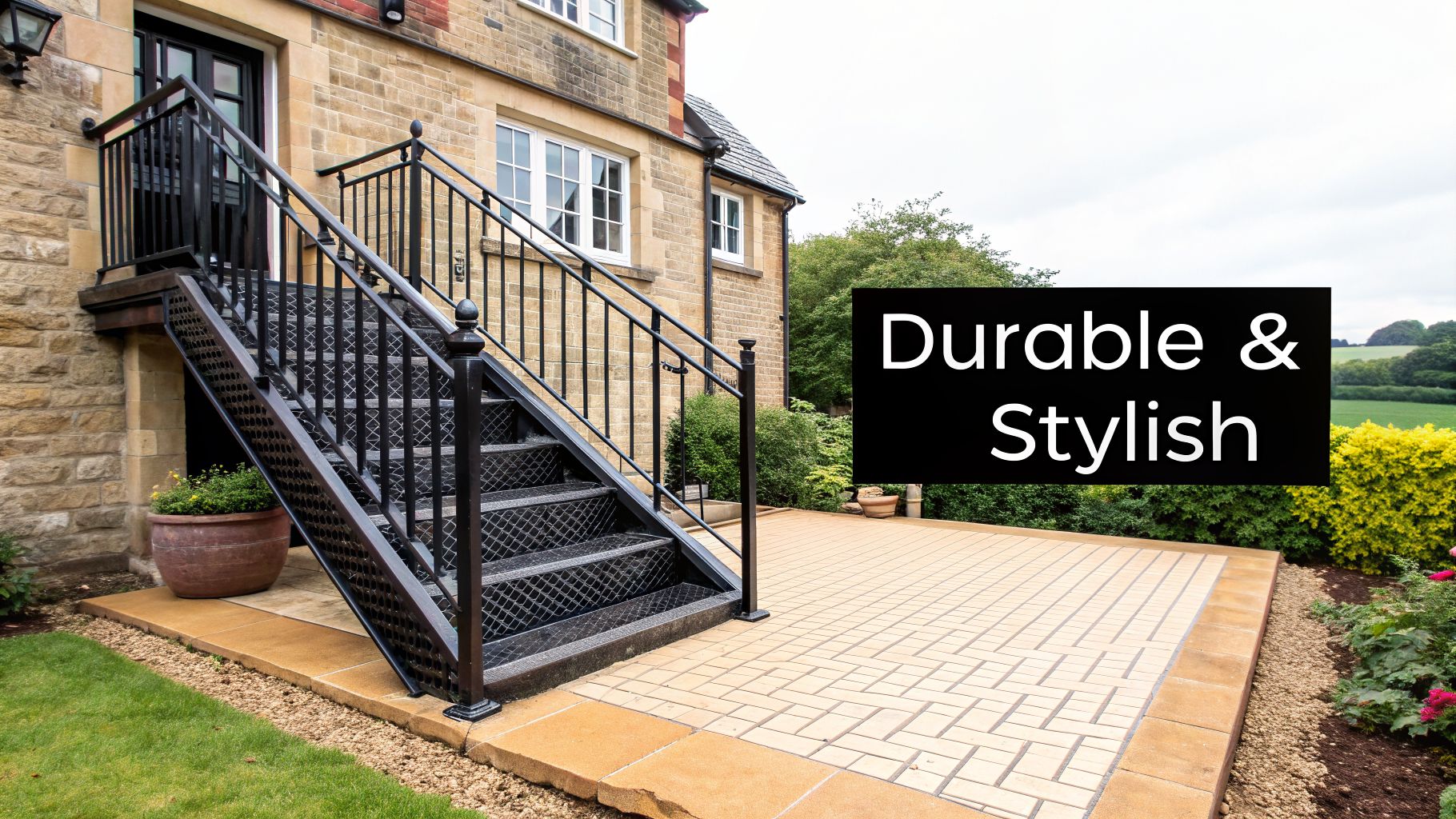
Let's be honest, the weather in places like Harrogate, Cumbria, and along the Hull coastline is famously unpredictable. We get our fair share of rain, frost, and relentless damp, which demands building materials that can stand up to the elements without needing constant, costly maintenance.
This is where metal truly proves its worth.
A properly specified metal staircase isn't just a purchase; it's a long-term investment in your property's safety, value, and visual appeal. Its inherent strength and resistance to the elements make it an ideal choice for the demanding Northern climate.
Unlike timber, which will inevitably rot, warp, or become dangerously slippery when wet, metal offers superior durability and far safer footing. With modern options like a hot-dip galvanised finish for ultimate corrosion protection and specialised non-slip treads, these structures are engineered for decades of reliable service. They bring peace of mind that other materials simply can't match.
This guide is your complete resource for planning an external staircase project in the North. We'll walk you through everything you need to know, drawing on years of experience to ensure your final choice is not only beautiful but also safe, compliant, and perfectly suited to your needs.
We will cover:
When it comes to your external metal staircase, picking the right material is probably the most important decision you'll make. This single choice will define not just the look and feel of your staircase, but how it holds up over time, how much maintenance it needs, and of course, the final cost. Here in Northern England, with our famously demanding weather, this decision is absolutely vital for a safe, long-lasting investment.
The two main players for external stairs are galvanised steel and stainless steel. Think of it like choosing a car to navigate the Yorkshire Dales; you've got the rugged, reliable 4×4, and you've got the sleek, high-performance saloon. Both are brilliant, but they’re built for very different priorities and aesthetics.
Galvanised steel is the trusty 4×4 of the staircase world. It starts out as standard mild steel, which we then put through a process called hot-dip galvanisation. This involves completely submerging the staircase parts in a bath of molten zinc, which creates a tough, metallurgically bonded coat over every inch of the steel, inside and out.
This zinc layer acts as a sacrificial barrier, protecting the steel underneath from the rust and corrosion that rain, frost, and salty air love to cause. It's this robust protection that makes galvanised steel the go-to choice for functional, hard-wearing external metal staircases in all sorts of industrial and residential projects.
For projects where maximum durability and cost-effectiveness are the top priorities, especially against our challenging Northern weather, galvanised steel is the definitive choice. Its performance is proven time and again, from fire escapes in Leeds to garden access steps in Cumbria.
This is why you see it everywhere in high-traffic environments. The e-commerce boom has led to massive logistics hubs in cities like Hull and Darlington, all needing tough multi-level access. You can see this type of robust construction in many industrial estates across the North.
If galvanised steel is the 4×4, then stainless steel is the luxury saloon. It offers a much sharper, more refined look that brings a modern feel to any property. This material is an alloy that contains chromium, which gives it its natural, built-in resistance to rust and staining.
Unlike galvanised steel, which has a protective coating, the corrosion resistance in stainless steel is part of the material itself. This gives you a clean, bright finish that’s especially popular for high-end homes in places like Cheshire or stylish commercial spaces in central Manchester.
While it does come with a higher price tag, stainless steel gives you a premium look that’s hard to beat. It looks fantastic paired with glass balustrades, creating a design that feels light, open, and incredibly contemporary. We explore how to best use stainless steel for railings in our other guides, but for now, the key thing to remember is its stunning visual appeal.
To help you see the differences clearly, here’s a quick side-by-side comparison of the two materials.
Use this table to quickly understand the key differences, benefits, and best uses for galvanised and stainless steel in your external staircase project.
| Feature | Galvanised Steel | Stainless Steel |
|---|---|---|
| Aesthetics | Industrial, rugged, slightly mottled grey finish. Can be powder-coated for colour. | Sleek, modern, and bright metallic finish. Available in brushed or polished looks. |
| Durability | Extremely high. The zinc coating provides excellent, long-lasting corrosion protection. | Very high. Inherently rust-resistant, though specific grades perform better in coastal areas. |
| Maintenance | Very low. May require occasional inspection and minor touch-ups over many years. | Low. Requires regular cleaning with specific products to maintain its pristine finish. |
| Cost | More budget-friendly and offers exceptional value for its performance. | A premium material with a significantly higher initial cost. |
| Best For | Functional access, fire escapes, industrial use, and budget-conscious residential projects. | High-end homes, commercial entrances, architectural features, and modern designs. |
Ultimately, choosing between galvanised and stainless steel comes down to finding the right balance between your project’s budget, the look you want to achieve, and its day-to-day functional needs.
An external metal staircase is much more than just a way to get from A to B. Getting the design right from the start is about making sure it's safe, easy to use, and looks like it truly belongs to your property. It’s a process of matching the right shape to your space, picking treads that can handle the weather, and choosing a balustrade that pulls the whole look together.
Let's walk through the key decisions you'll need to make.
Your first big decision is the shape of the staircase. This isn't just about looks; it’s dictated by the space you have and where you need the stairs to start and end. Think of it like planning a path through a garden – you want it to feel natural and flow well, not cramped or awkward.
For most projects, whether it's for a home or a business, it comes down to one of three main layouts.
While a straight flight is direct, the L-shape and U-shape designs are fantastic for working around obstacles or creating a more gradual journey from a ground-floor patio up to a first-floor balcony.
Here in Northern England, we know a thing or two about damp mornings and frosty nights. The surface of your steps isn't a minor detail; it’s a critical safety feature. Standard flat metal can become a real hazard when wet, so choosing a tread with proper grip is a must.
For a climate like ours, tread selection is not just a design choice—it's a crucial safety specification. The right tread actively works to prevent slips and falls by effectively managing water and providing superior traction underfoot.
Two of the best and most reliable options we use are:
Both of these options make a huge difference to safety in wet or icy weather, giving you solid footing and peace of mind all year round.
The balustrade isn't just the safety rail; it’s what gives your staircase its final character. A combination we’re seeing more and more of—for good reason—is a strong metal staircase frame paired with a sleek, modern glass balustrade. This duo is a winner for creating a sense of openness, keeping your garden views, and letting natural light flood in. It’s one of the top requests we get for our projects across Yorkshire.
The infographic below shows the foundational material choices that make these stunning combinations possible.
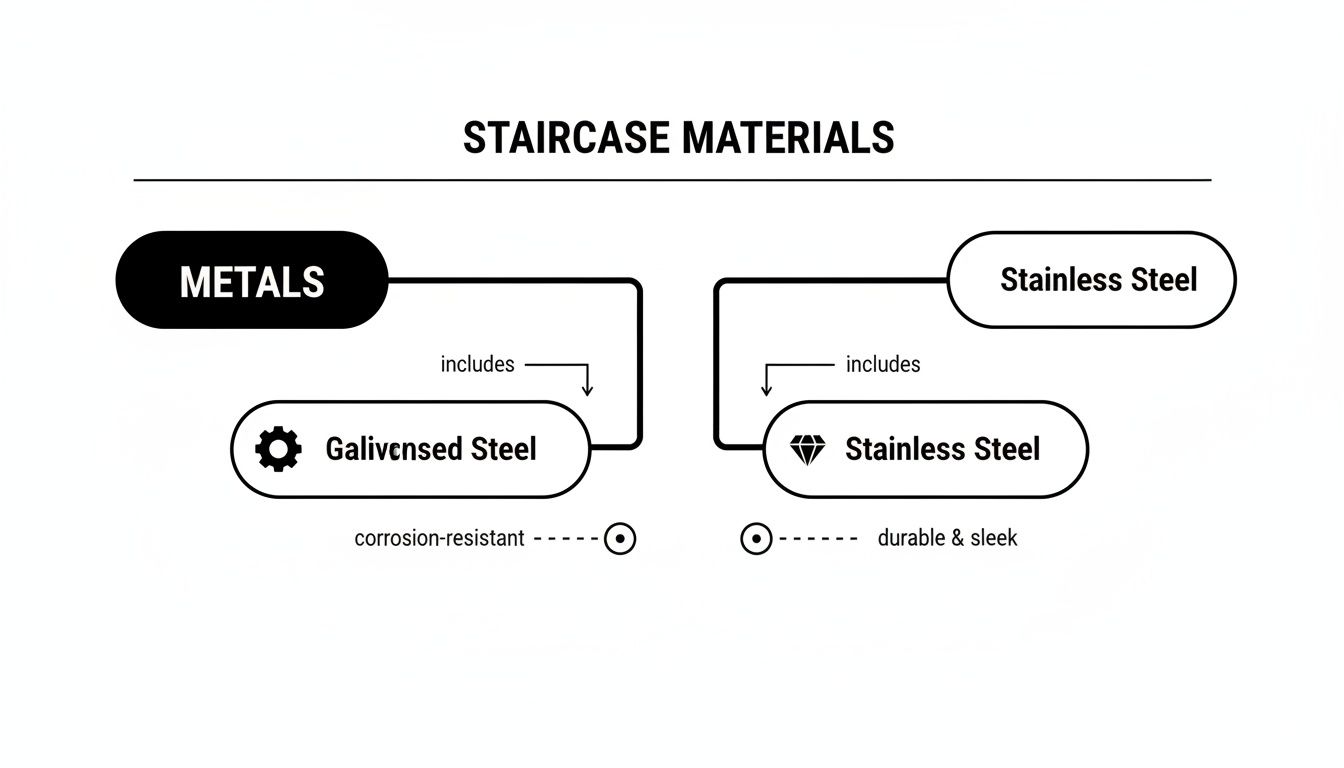
As you can see, you can go for the rugged, hardworking nature of galvanised steel or the premium, polished look of stainless steel. Each provides a different aesthetic, but both offer the strength needed to create a secure and beautiful framework for a glass installation.
This isn’t just a passing trend. High-end property developments in regions like Yorkshire are increasingly demanding stylish solutions. You can see this trend reflected in popular design blogs and home renovation features focused on Northern properties, where the mix of traditional stone and modern metalwork is highly prized.
Pairing these elements doesn't just look fantastic; it adds real, measurable value to your property. For more inspiration on railings, you can also check out our guide on external handrails for steps.
Getting the design and materials spot-on for your new external metal staircase is only half the battle. The other, equally critical part, is navigating the rules and regulations that make sure your staircase is safe, compliant, and built to last. It might sound like a bit of a headache, but it’s perfectly manageable when you know what to look for.
Before you start any work, it’s vital to get a grip on understanding building regulations. These aren’t just red tape; they are a crucial set of rules designed to protect you, your family, and anyone who uses the stairs. For any external staircase project, the key rulebooks are Approved Document K (which covers protection from falling) and British Standard BS 5395 for stairs. Let’s break down what they actually mean for your project in plain English.
Think of these documents as the safety manual for your staircase. They set out the exact measurements and features your stairs need to prevent accidents. Getting these details wrong isn’t an option—it can lead to an unsafe structure that you’re forced to alter or even tear down, so paying close attention here is non-negotiable.
The core requirements zero in on a few key areas of your design.
These dimensions aren’t just vague suggestions; they’re legal requirements for a good reason. They work together to create a natural, safe rhythm as you walk up or down.
It’s not just the steps that matter. The regulations are just as strict about landings and the balustrades or handrails that provide that essential protection from falls. Getting this part wrong can make an otherwise perfect staircase non-compliant.
A landing is simply the flat platform that breaks up a flight of stairs. You must have a landing at both the top and bottom of your staircase. What’s more, if your design includes more than 16 risers (steps) in a single flight, you need to add an intermediate landing to give people a resting point. This landing has to be at least as wide and as long as the staircase is wide.
Handrail height is one of the most critical safety features of any external metal staircase. For a domestic property, the top of the handrail must be at least 900mm above the pitch line of the stairs and the surface of any landing. This height is designed to provide an effective barrier against falling.
The rules for balustrades also specify that any gaps—whether between vertical bars or underneath the handrail—must not allow a 100mm sphere to pass through. This is often called the ‘baby’s head rule’, and it’s there to stop small children from getting stuck or falling through. For a deeper dive into these specifics, you can learn more about the building regulations for balustrades and how they apply to your project.
Finally, there’s the separate matter of planning permission. This has nothing to do with building regulations; instead, it's about how your new staircase affects your neighbours and the local area. While many external staircases at the back of a house fall under 'permitted development' (meaning no formal permission is needed), you can't assume this will be the case.
You will almost certainly need to apply for planning permission if:
Councils in areas like York, Leeds, and across the North of England can have their own local policies. The smartest and safest move is always to make a quick call to your local planning authority before you commit to anything. It’s a simple five-minute check that can save you from a world of trouble later on.
Let’s get down to brass tacks: the budget. Planning the finances for your external metal staircase is one of the most important steps, and it’s crucial to know what really drives the final cost. There's no such thing as a one-price-fits-all solution; your total investment will hinge entirely on the materials you settle on, the intricacy of the design, and how you want it installed.
Whether you're a contractor in Hull after a supply-only price or a homeowner in York looking for the full design and installation package, a clear grasp of these costs is key. Knowing where your money is going empowers you to make confident decisions, with no nasty surprises when the final invoice arrives.
The final quote for your staircase is built from several core elements. Tweak any one of them, and you’ll see the overall price shift. A good way to think about it is like specifying a new car—the base model has its price, but every optional extra, from the engine to the leather seats, adds to the final figure.
Your main cost drivers will be:
Getting clear on these three fundamentals will give you a solid baseline for your project's budget.
Beyond the main frame, the details you choose for the steps and railings also play a big part in the final cost. These aren't just cosmetic afterthoughts; they are vital functional and aesthetic components.
Tread selection is a perfect example. Standard chequer plate or perforated treads deliver excellent value and safety. But you might have your eye on something different, like cast metal treads or even stylish timber inserts. Each choice comes with its own price tag.
The balustrade is another major variable. A simple, functional galvanised steel handrail system will be far more affordable than a sophisticated stainless steel and glass balustrade. The latter demands precision engineering, toughened glass panels, and specialist fittings—all of which contribute to a higher cost but deliver that premium, high-end finish.
A smart way to budget is to think in layers. Start with the base cost for a simple, straight, galvanised steel staircase. Then, add the ‘premiums’ for things like a more complex design, a switch to stainless steel, or high-end features like a glass balustrade. This helps you prioritise what matters most to you.
It's also vital to factor in any challenges specific to your property. Tricky site access, the need for special groundwork, or complex fixing points can all add to the installation time and, consequently, the cost. Finally, understanding potential planning constraints is crucial for a smooth project, helping you sidestep unexpected delays and costs from the local council. This is especially true in the historic hearts of cities like York or in designated conservation areas across the North.
An external metal staircase is a serious investment in your property's function and kerb appeal, built to handle everything the unpredictable weather in the North of England can throw at it. To make sure it stays looking its best and remains rock-solid for decades, you don’t need a complicated regime. A little bit of consistent, simple care is all it takes to protect your investment.
Think of it like the annual MOT for your car. A quick, regular check-up is the best way to spot small issues before they have a chance to grow into bigger, more expensive problems.
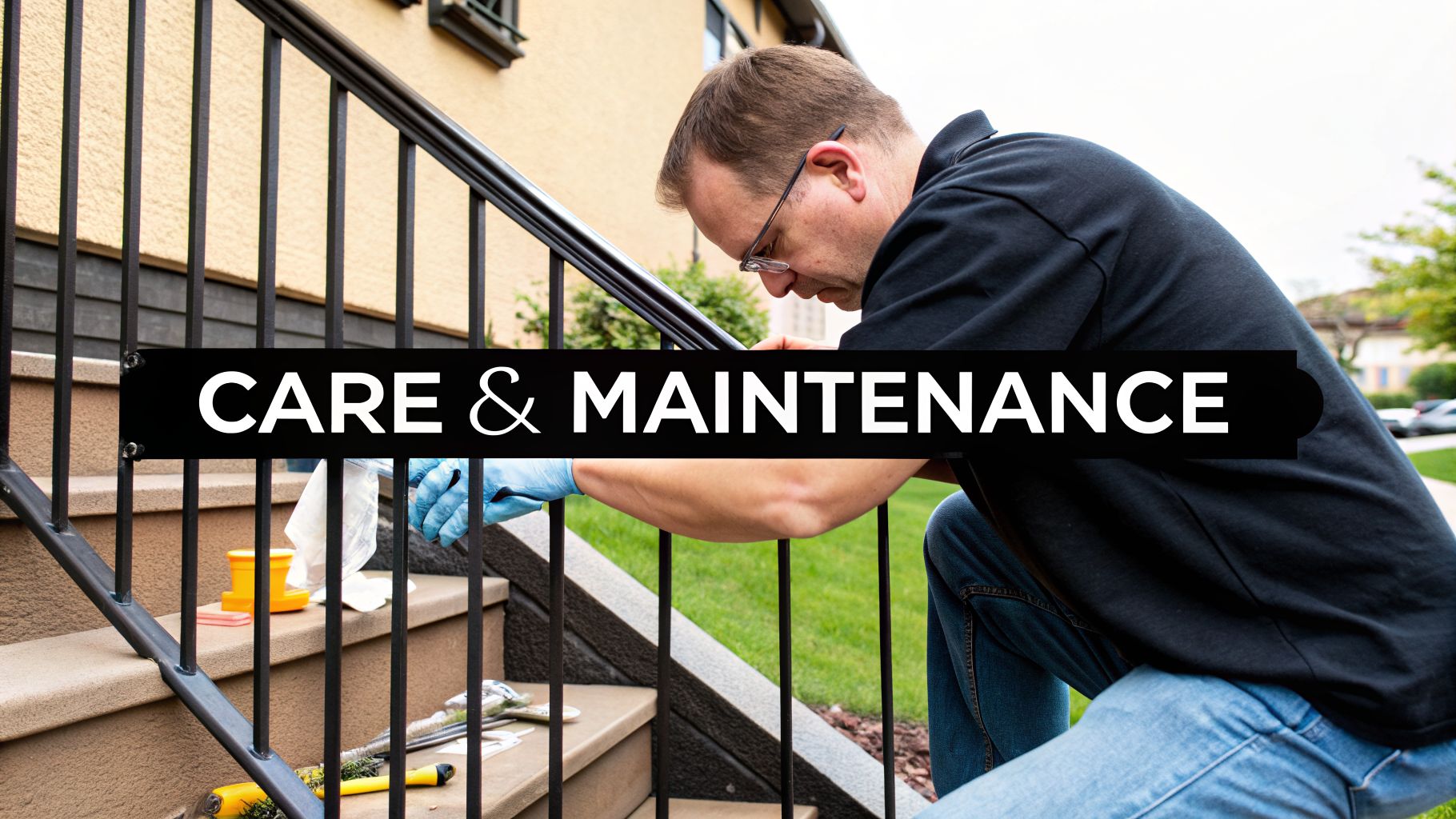
For both galvanised and stainless steel, the heart of good maintenance is regular cleaning. This isn't about heavy-duty scrubbing, just removing surface dirt, grime, and any salt deposits that can accumulate, even in areas well inland from the Yorkshire coast. In most cases, a simple wash-down with warm, soapy water and a soft cloth is all you’ll ever need.
The real beauty of a hot-dip galvanised finish is its rugged, almost 'fit-and-forget' nature. That said, getting into the habit of a quick annual inspection is a very smart move.
Stainless steel gives you that premium, architectural look, and keeping it looking pristine is surprisingly straightforward. The main goal is to prevent surface contaminants from settling on the steel, which over time can cause minor discolouration known as 'tea-staining'.
To keep that brilliant lustre, regular cleaning is your best friend. Use a gentle, non-abrasive cleaner and a soft cloth, always wiping in the direction of the steel’s grain. This prevents putting tiny scratches on the surface. For any stubborn marks, specialist stainless steel cleaners are easy to find and do a fantastic job.
Here’s a tip that often gets missed: check all the fixings. Once a year, take five minutes with a spanner to make sure all the bolts and anchors holding the staircase to the building and the ground are tight and show no signs of corrosion. A secure structure is a safe structure.
By following these simple care routines, your external metal staircase will continue to be a safe, dependable, and genuinely attractive part of your property for many years to come.
When you're planning a new external staircase, a lot of questions come up. We get calls every day from homeowners and architects across the North, so we've put together answers to the most common queries we hear.
This is the big one. The short answer is: sometimes. Often, a simple staircase at the back of your house won't need full planning permission and falls under 'permitted development', especially if it doesn't overlook a neighbour's property.
However, the rules can change dramatically from one council to the next. Things get much stricter if you're in a Conservation Area or working on a Listed Building. We always say a quick, ten-minute phone call to your local planning department in Leeds, York, or rural Cumbria is the best first step. It costs nothing and can save you a world of headaches and expense later.
Up here in the North, we know a thing or two about rain. Safety is everything, and that means choosing a tread that gives you solid footing, whatever the weather throws at you.
Both of these are a massive improvement on standard flat treads and a very wise investment for any external metal staircase in our part of the world.
Absolutely, and it's a combination we love. It’s the perfect blend of industrial strength and modern, clean aesthetics. We use specialised, heavy-duty clamps and toughened or laminated safety glass that bolts securely to the steel frame.
This approach gives you the robust safety barrier you need to meet UK building regulations, but without sacrificing your garden views or blocking natural light. It's become one of the most popular ways to modernise patio and balcony access right across Yorkshire.
Rest assured, our installations ensure every single component meets or, more often, exceeds British safety standards.
This really depends on the path you choose. A simple, straight-run staircase in galvanised steel might start in the low thousands. On the other hand, a bespoke, multi-level stainless steel staircase with sharp turns and a full glass balustrade will be a more significant investment.
The key cost drivers are always the material (galvanised steel vs. stainless steel), the overall size and height, and the design's complexity. The only way to get a real figure is to have a proper chat and get a detailed quote based on your specific site and vision.
Ready to talk about your project? The team at Binks Balustrades brings local expertise and honest advice to help you get the perfect staircase for your home or business in Harrogate and across the North. Get in touch with us today to start planning.