A Homeowner’s Guide to Tinted Safety Glass in Northern England
It's easy to think of tinted safety glass as just a cosmetic touch, like picking a paint colour. But in […]

It's easy to think of tinted safety glass as just a cosmetic touch, like picking a paint colour. But in […]
It's easy to think of tinted safety glass as just a cosmetic touch, like picking a paint colour. But in reality, it's one of the most practical and sophisticated materials you can choose for your home. It’s a high-performance solution that combines the strength of a safety barrier with the comfort of solar control, all in one sleek package.
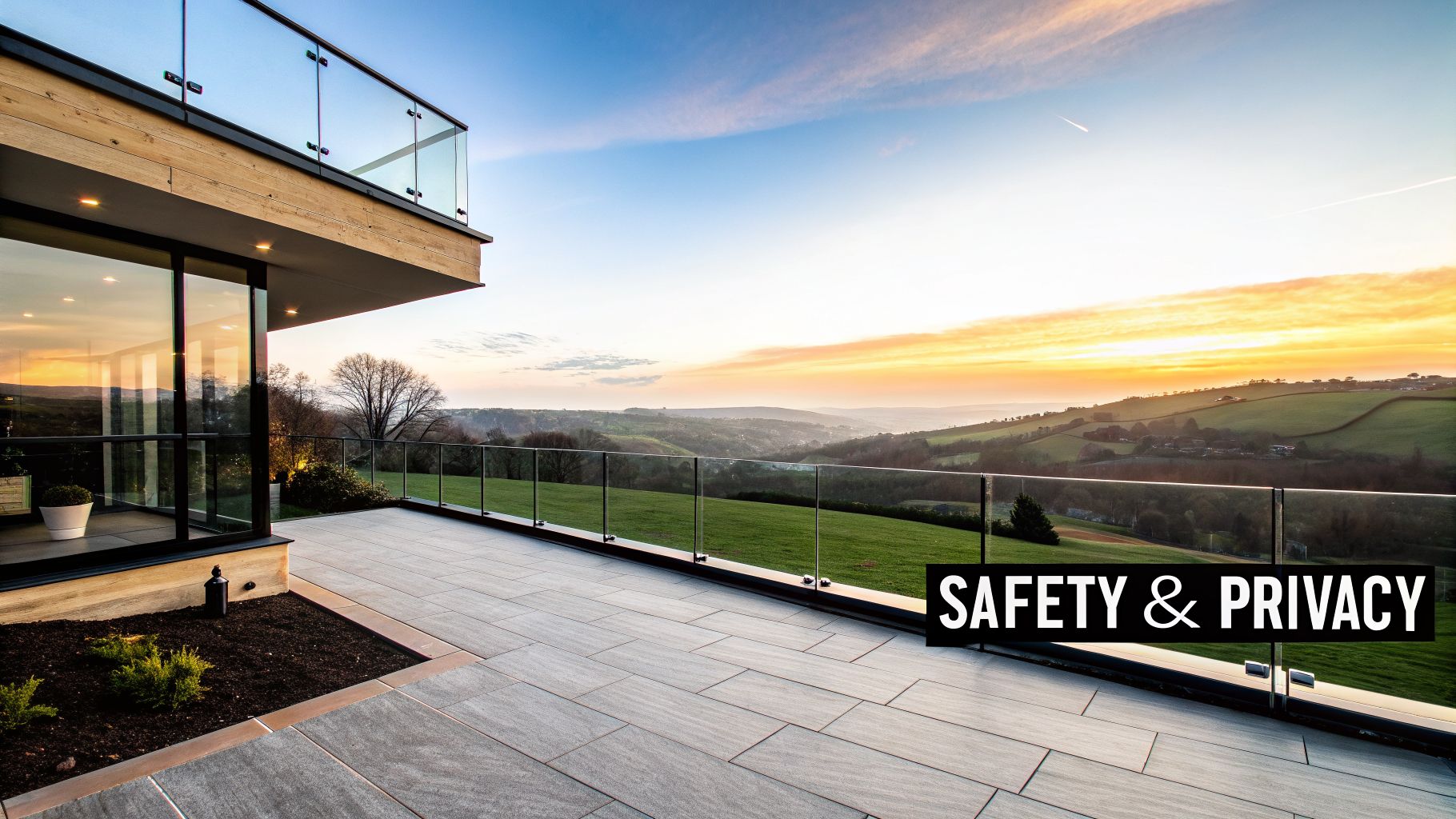
Many homeowners we speak to initially see tinted glass as purely an aesthetic choice. The truth is, modern tinted safety glass is engineered to solve genuine household problems while adding significant style.
Imagine enjoying the view from your patio in Leeds or your balcony in York without squinting into the harsh glare of the sun. This is where tinted safety glass truly shines. It isn't just about adding a hint of colour; it’s a functional upgrade that enhances how you experience your living space.
The real genius of tinted safety glass is its dual role. It’s working hard for you on two fronts: providing certified safety and managing your home’s environment. This powerful combination makes it a go-to choice for property owners across Northern England, from the rolling Yorkshire hills to the stunning Cumbrian coast.
Here’s what it delivers:
When we talk about safety glass, we’re generally referring to two main types: toughened and laminated. Both can be tinted, but they achieve their safety ratings through very different manufacturing processes.
Toughened glass is heat-treated to become up to five times stronger than ordinary glass. If it breaks, it shatters into small, blunt, cube-like pieces. Laminated glass, on the other hand, is a sandwich of two glass panes bonded with a plastic interlayer, which holds the shards in place even when cracked.
Beyond its stylish appearance, the inherent strength of tinted safety glass offers an extra layer of security. For a broader look at protecting your home's most vulnerable points, you might find it useful to learn how to secure windows from burglars. Understanding these options is the first step toward creating a safer, more comfortable, and incredibly stylish home.
When you’re specifying tinted safety glass, you’re making a choice that goes far beyond just picking a colour. The most fundamental decision you’ll face is between two distinct types of safety glass: toughened and laminated.
They might look identical to the naked eye, but the way they're made and how they behave under stress are worlds apart. Your choice here has a direct impact on the safety, compliance, and long-term performance of your balustrade. Getting this right is crucial, whether it’s for a modern patio in Cheshire or a stylish staircase in a Harrogate home.
Toughened glass, often called tempered glass, gets its incredible strength from an intense manufacturing process. It's heated to extreme temperatures and then rapidly cooled, a thermal treatment that completely rearranges its internal structure. Think of it like a blacksmith forging a sword—the process makes it up to five times stronger than ordinary annealed glass.
This strength makes it highly resistant to knocks and impacts. But its real safety feature is how it behaves if it ever does fail. Instead of breaking into large, dangerous shards, it shatters into thousands of small, granular, cube-like pieces. This predictable breakage pattern is why it’s so widely used, as it dramatically reduces the risk of serious injury.
Laminated glass takes a completely different approach to safety. The best way to think of it is as a "safety sandwich." It’s constructed by bonding a tough, clear plastic interlayer—usually Polyvinyl Butyral (PVB)—between two panes of glass under heat and pressure.
This interlayer is the hero of the system. If a laminated glass panel breaks, the interlayer tenaciously holds the broken pieces of glass together. The panel will crack in a spider-web pattern but remains a single, solid barrier. For tinted glass, the colour is often incorporated within this PVB interlayer, which also provides excellent UV protection.
Laminated glass provides crucial post-breakage integrity. This means that even when cracked, it can still act as a barrier, preventing a dangerous fall. This feature makes it a mandatory choice for specific applications under UK building regulations.
For a balustrade on an elevated deck, a Juliet balcony, or a mezzanine floor, this integrity isn’t just a nice-to-have feature—it’s a critical safety requirement. If a toughened glass panel were to fail in one of these locations, it would leave a gaping hole, creating an immediate fall hazard. Laminated glass, by contrast, stays in place, continuing to protect the opening until a replacement can be fitted. This is precisely why it's the required choice for any balustrade that doesn't have a continuous, supportive handrail, as specified in standards like BS 6180.
To help you decide, here’s a straightforward comparison between the two. For homeowners across the North of England, understanding these key differences is the first step to a successful and safe balustrade project.
| Feature | Toughened Glass | Laminated Glass |
|---|---|---|
| How It's Made | Single pane of glass, heat-treated for strength. | Two or more panes of glass bonded with a plastic (PVB) interlayer. |
| Strength | Up to 5 times stronger than standard glass. Highly resistant to direct impact. | Strong, but its key feature is the interlayer, not just brute force resistance. |
| How It Breaks | Shatters into thousands of small, relatively harmless granular pieces. | Cracks in a spider-web pattern but is held in place by the interlayer. |
| Post-Breakage Safety | Leaves a completely open gap where the panel was. | The panel remains intact, continuing to act as a protective barrier. |
| Best For | Balustrades with a continuous top handrail, shower screens, and internal doors. | Frameless balustrades, Juliet balconies, and anywhere a fall from height is a risk. |
| Tint Options | Tint is mixed into the glass during manufacturing (body-tinted). | Tint is typically added to the PVB interlayer, offering very consistent colour. |
Ultimately, the choice depends entirely on your specific application. Laminated glass offers superior post-breakage safety, making it the non-negotiable standard for frameless systems or any area where the glass is the only thing preventing a fall. Toughened glass is a robust and cost-effective option for systems where a handrail provides independent structural support.
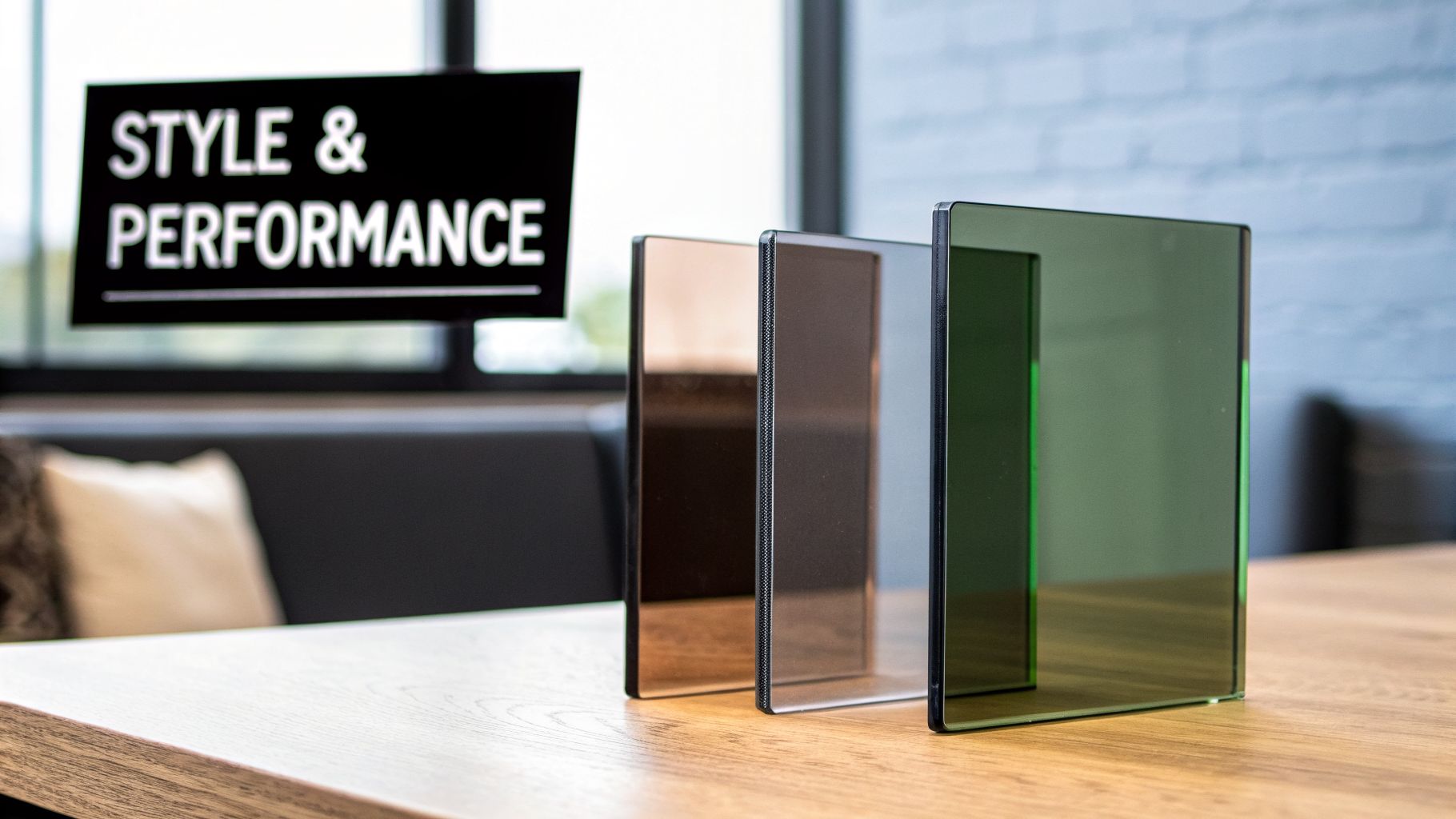
Choosing the colour for your tinted safety glass isn’t just about matching your home’s look; it’s about carefully tuning the atmosphere and performance of your space. Each tint carries its own distinct personality and delivers practical benefits that can genuinely change how you experience your patio, balcony, or garden.
The most popular choices we see—bronze, grey, and green—are favourites for a reason. They have a brilliant knack for complementing a huge range of architectural styles, from a rustic stone farmhouse in North Yorkshire to a sleek new-build in Cheshire. A bronze tint casts a warm, inviting glow, while grey offers a sharp, contemporary edge. Green tints, on the other hand, allow a glass balustrade to blend almost invisibly into its natural, leafy surroundings.
But the colour you see is only half the story. The real magic happens in how tinted glass manages light and heat. This is where it shifts from a style choice to a seriously practical upgrade for your home.
A tint’s effectiveness is measured by its Visible Light Transmission (VLT). This is just a simple percentage telling you how much visible light can pass through the glass. The lower the VLT number, the less light gets through, which means more privacy and a welcome reduction in glare.
This is a game-changer, especially in built-up urban and suburban areas. If you have a terraced house in Leeds with a south-facing patio or a balcony that overlooks the neighbours, a tinted glass balustrade with a lower VLT creates an instant private sanctuary. It lets you enjoy your outdoor space without feeling on display, all while stopping you from squinting on those bright, sunny days.
Think of VLT like the dimmer switch on a light. A high VLT is like having the lights on full brightness, flooding the area with light. A lower VLT gently dials down that intensity, creating a much more comfortable and controlled environment.
Beyond just managing the light we see, tinted safety glass is also fantastic at controlling solar heat gain. The tint works by absorbing a large chunk of the sun's infrared radiation—the part of the spectrum that we feel as heat. By blocking this energy before it can bake your patio or flood into your home, the glass helps keep everything at a much more comfortable temperature.
This becomes a very noticeable benefit during the warm summer months we get across the North of England. By cutting down the direct heat hitting your patio or passing through your windows, tinted safety glass can make your indoor and outdoor living areas far more pleasant. It can even help trim your energy bills by lessening the need for fans or air conditioning to stay cool.
Here’s a quick rundown of how the common tints typically behave:
Ultimately, picking the right tint is a balancing act. It’s about finding that sweet spot where the look you want to achieve meets the practical performance your home really needs.
Putting in a stunning glass balustrade is one of the most exciting upgrades you can make to your home, but nothing is more important than getting the safety and legal details right. Here in the UK, that means following specific Building Regulations and British Standards.
At first glance, the rulebook can look a bit daunting. But the core principles are actually quite straightforward, and understanding them will give you the confidence you need to get your project spot on.
These rules exist for one simple, vital reason: to protect people from falls and injury. For glass balustrades, the key document is BS 6180:2011, which sets out the performance requirements for barriers in and around buildings. This standard covers everything from the height of the balustrade to the exact type of tinted safety glass you need for different situations.
While the full regulations are detailed, they all boil down to a few core principles designed to keep everyone safe. When you’re planning a project in Harrogate or York, your installer will handle the compliance, but it really helps to know what they’re working towards.
Here’s what the standard demands:
The presence of a structural handrail is one of the biggest factors determining which type of glass you need. It fundamentally changes how the system keeps you safe.
A continuous top handrail provides an independent line of defence. If a single glass panel were to break for any reason, the handrail stays securely in place, forming a protective barrier that prevents a fall. This is why toughened glass is often a perfectly suitable choice for these systems.
However, for that popular, minimalist frameless look where there is no continuous handrail, the rules get much stricter. In these installations, the glass itself is the only thing providing protection. If a panel were to fail, there's nothing else to stop a fall from height.
For this very reason, laminated glass is mandatory for any balustrade system without a continuous top handrail. Its ability to hold together when broken provides the essential post-breakage integrity needed to comply with safety standards.
Getting your head around these critical safety points is essential. If you want to dive a little deeper into the specifics, you can find more detail in our guide to the British Standard BS 6180. This knowledge empowers you to have confident conversations with professionals, ensuring your beautiful new balustrade is not just a design feature, but a completely safe and compliant addition to your home.
Turning your vision for a sleek glass balustrade into a technical specification can feel daunting, but it’s really just about making a few key decisions. Think of it as a practical checklist that ensures your balustrade is not only stylish but also safe, compliant, and perfectly suited to your home.
Specifying the right tinted safety glass goes well beyond just picking a colour. You'll need to decide on the glass thickness, the finish of the edges, and the fixing method that holds it all together. Each choice is crucial, influencing both the final aesthetic and the structural integrity of your installation.
One of the very first, and most critical, decisions you'll make is choosing the correct glass thickness. For most residential projects, the choice boils down to 10mm toughened glass or 17.5mm laminated glass. Which one is right for you? It all depends on your balustrade's design and where it's located, as guided by UK safety standards. As we've covered, frameless systems without a handrail must use laminated glass for its post-breakage security.
This is a non-negotiable safety decision, and the simple chart below makes the choice crystal clear.

The takeaway is simple: the presence of a structural handrail is the defining factor that determines whether toughened or laminated glass is required to make your installation safe and fully compliant.
To make this even easier, we've put together a quick reference table based on typical residential projects we handle every day.
This quick reference guide is based on typical UK residential standards, helping you make an informed choice for your project.
| Application Area | Minimum Recommended Toughened Glass | Minimum Recommended Laminated Glass |
|---|---|---|
| Internal Staircase (with handrail) | 10mm | 13.5mm |
| External Decking/Patio (with handrail) | 10mm | 13.5mm |
| Juliet Balcony (with handrail) | 10mm | 13.5mm |
| Frameless Balustrade (no handrail) | Not Recommended | 17.5mm |
| Balcony/Roof Terrace (no handrail) | Not Recommended | 21.5mm |
Always remember, these are general guidelines. A professional survey will confirm the exact specification needed for your unique project, considering factors like wind load and fixing type.
With the glass type decided, the next detail is the edgework. Insisting on polished edges is standard practice for any quality installation. It’s a small detail that makes a huge difference, removing any sharp remnants from the cutting process for a smooth, safe, and premium finish that feels great to the touch.
Next up is the fixing method, and this is where you can really stamp your style on the project. The system you choose has a massive impact on the balustrade's final look and how it performs.
Common fixing options include:
The fixing system isn't just a piece of hardware; it’s the backbone of your balustrade. It provides the necessary structural support to meet load-bearing requirements, ensuring the glass can safely withstand pressure from wind or leaning.
For example, the demands on a windswept balcony balustrade are completely different from those on a quiet internal landing. You can learn more about specifying the right glass for a balcony to ensure it meets both your design dreams and crucial safety needs. Getting these choices right from the start is the key to a beautiful balustrade that's built to last.
The most exciting part of any project is starting to picture how a tinted safety glass balustrade will look at your own home. This isn't just about picking out parts; it's about creating a specific feeling and solving real-world problems with a single, elegant feature.
Imagine a sleek, grey-tinted balustrade lending a sharp, contemporary edge to a new-build in Cheshire. The tint offers crucial privacy from prying eyes while perfectly accenting the home's modern lines. Or, picture a warm, bronze-tinted barrier on a seaside balcony in Scarborough, beautifully taming the harsh glare off the water to create a comfortable, usable outdoor space. These are the kinds of practical, beautiful results that are possible.
Once you’ve got a clear vision, the next logical step is to understand the budget. The final price tag for a tinted glass balustrade isn’t one single figure—it’s the result of several key decisions you'll make along the way.
The main factors that shape your quote are:
Understanding these elements gives you the power to make informed choices, balancing your design goals with your budget. Every decision contributes to the final look, safety, and price of your installation.
The most direct way to get a clear and accurate price is by using a tool that takes all these variables into account. You can explore all the factors that determine the cost of a glass balustrade in our detailed guide.
For an instant, personalised quote tailored specifically to your project, our online Balustrade Calculator is the perfect place to start. It walks you through the choices and gives you a precise cost in just a few clicks, taking the guesswork out of budgeting.
Here are some of the questions we get asked most often by homeowners across Northern England. We hope the answers give you the confidence to make the right choice for your project.
Not at all. This is a common worry, but it’s one you can put to rest. While tinted safety glass is brilliant at cutting down on that harsh, uncomfortable glare on a bright day, it’s engineered to keep your space feeling bright and open.
Lighter bronze or grey tints are specifically designed to filter out the worst of the sunlight while letting plenty of lovely, natural light stream through. The result is a much more comfortable and usable outdoor area, not a darker one.
There is a slight price difference when you opt for tinted glass over standard clear safety glass, but it's often a case of 'you get what you pay for'.
Most of our clients find it’s an investment that pays for itself. When you factor in the benefits—better privacy from neighbours, less sun glare, and that really sophisticated, high-end look—the value it adds to your home and your comfort easily justifies the modest extra cost.
Keeping your tinted glass looking pristine is just as easy as cleaning any other glass. There’s no special treatment required.
Simply use a soft cloth or a squeegee with a standard, non-abrasive glass cleaner. A bit of soap and water works perfectly well, too.
The tint isn't a film or a coating that can peel away. It's either part of the glass itself or protected within the laminate interlayer. This means you can't scratch it off with regular cleaning, ensuring that flawless look lasts for years. Just be sure to avoid any harsh, gritty cleaners or abrasive scouring pads that could scratch the glass surface itself.
Ready to bring your vision to life? The expert team at Binks Balustrades is on hand with local advice for projects in Harrogate, York, Leeds, and the surrounding areas.
You can get a precise, instant quote with our online Balustrade Calculator or contact us directly to chat through your ideas with one of the team.